

Someone in your local network needs a venue, a volunteer, a ride, a designer, a repair contact, a warm intro, or three people to show up on Saturday. Someone else has the exact resource, but the connection never happens.
AI content asks and offers sound like a content problem: better wording, better prompts, better posts, better newsletters. Teams think the problem is getting more people to publish more asks and offers. The real problem is turning messy human intent into a reliable coordination workflow.
That changes the conversation. The practical question is not “Can AI write community posts?” It is “Can AI help us capture, structure, route, verify, and follow up on local needs without flattening trust?”
For local organizers and network operators, the UI is not the system. The system is intake, consent, context, routing, ownership, reminders, and proof that something actually happened. AI can help, but only if it is wired into the operating model instead of sprayed over the top.
Table of contents
- AI content asks and offers are a coordination architecture problem
- The operating model behind AI content asks and offers
- Design the intake layer before you design the prompt
- Classify asks and offers so routing is not guesswork
- Use AI to draft, normalize, and translate without removing voice
- Build trust gates into AI content asks and offers
- Route asks and offers like tickets, not announcements
- What breaks when AI content asks and offers are implemented badly
- A practical implementation workflow for local operators
- Make d0rz the coordination layer
AI content asks and offers are a coordination architecture problem
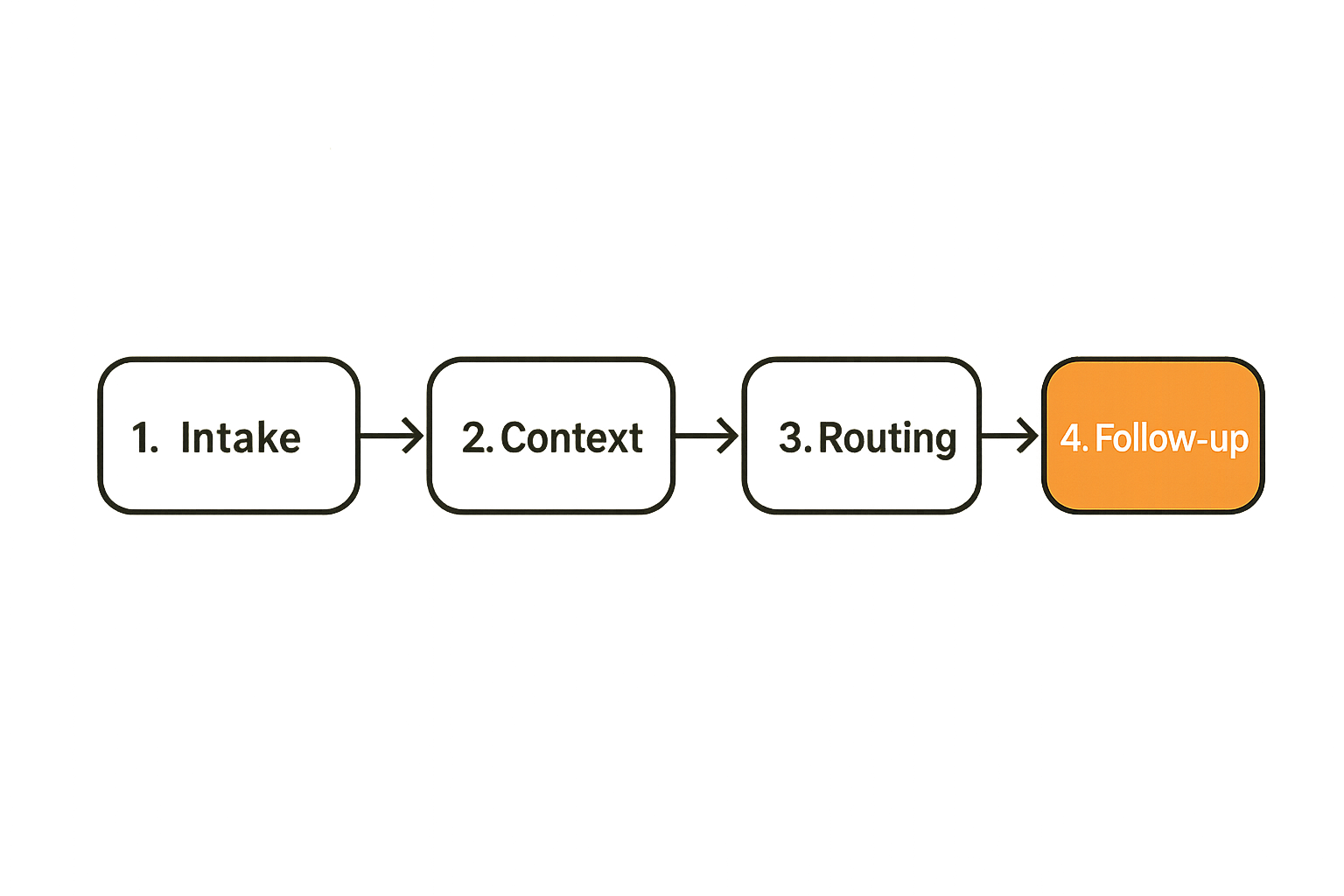
Most community tools treat asks and offers as messages. Someone posts, other people react, and the organizer hopes the right person sees it. That works when the group is small, active, and socially dense. It breaks once the network grows beyond the people who already know each other.
AI content asks and offers should be treated as records moving through a workflow. A post is one output. A DM is another output. A summary in an organizer dashboard is another. The record underneath should carry enough context to route the need, protect the people involved, and confirm the outcome.
The ask is not the whole request
An ask like “Does anyone know a local printer?” is rarely just a request for a printer. It may include budget limits, urgency, neighborhood preference, accessibility needs, quality expectations, and whether the requester is comfortable being introduced directly.
The mistake teams make is feeding the visible sentence into AI and asking it to make the post nicer. Better wording helps, but it does not solve the operational problem. The useful work is extracting the missing fields:
- What outcome is needed?
- By when?
- Where does it need to happen?
- Who can see the request?
- Is the requester asking for advice, a referral, labor, funding, space, or equipment?
- What would count as resolved?
The offer is not the whole capacity
An offer like “I can help with design” is also incomplete. Does that mean one hour of feedback, a full poster design, brand work, paid work, volunteer work, mentoring, or an introduction to another designer?
Offers need boundaries. Without boundaries, strong contributors get overused, new contributors get ignored, and organizers end up doing the emotional work of clarifying every interaction manually.
Practical rule: Never route an offer until you know its scope, availability, cost expectation, geography, and preferred contact method.
Why AI makes the gap visible
AI can generate clean-looking content from weak input. That is useful and dangerous. A vague request can become polished enough to circulate widely while still being impossible to act on.
A useful way to think about it is this: AI reduces the friction of publishing, so your coordination debt shows up faster. If your intake model is weak, you get more unclear asks. If your trust model is weak, you get faster mismatches. If your follow-up model is weak, you get more unresolved threads that look active from the outside.
The operating model behind AI content asks and offers
AI should sit inside an operating model, not outside it. For local networks, that operating model has three jobs: collect clean-enough intent, route it to the right people, and close the loop.
Intake before generation
Before asking AI to draft a post, ask what the system needs to know. Intake can happen through a form, a conversation, a group chat, a voice note, or an organizer entering details after a phone call. The format matters less than the record.
For example, a simple ask record might include:
| Field | Why it matters | Example |
|---|---|---|
| Need type | Routes to the right people | Venue, ride, volunteer, repair |
| Location | Keeps help local and practical | East side, downtown, school gym |
| Urgency | Prevents stale matches | Today, this week, flexible |
| Visibility | Protects privacy | Public, members-only, organizer-only |
| Trust level | Sets routing boundary | Open call, warm intro, vetted contact |
| Resolution state | Tracks outcome | Open, matched, completed, declined |
This is not bureaucracy. It is how you prevent the same organizer from becoming the router for every human detail.
Context before matching
Matching is not just category similarity. In local networks, context is the difference between a useful match and a socially expensive one. A person may have a truck, but not be available after dark. A venue may be free, but not accessible. A volunteer may be skilled, but only comfortable helping through a known organizer.
AI can assist by summarizing context and suggesting likely matches. It should not silently override local knowledge. The organizer’s job is not replaced; it becomes more focused.
Follow-up before reporting
Many teams report activity: number of posts, comments, reactions, form submissions, or newsletter clicks. Those numbers are easy to collect and often misleading.
The better metric is resolved coordination. Did the person get the ride? Did the venue get booked? Did the volunteer show up? Did the offer convert into real support? Did anyone have a bad experience that needs repair?
The team at bl0ggers.com often frames AI content as an editorial-control problem, and the same principle applies here: automation is only useful when humans still control what matters.
Design the intake layer before you design the prompt
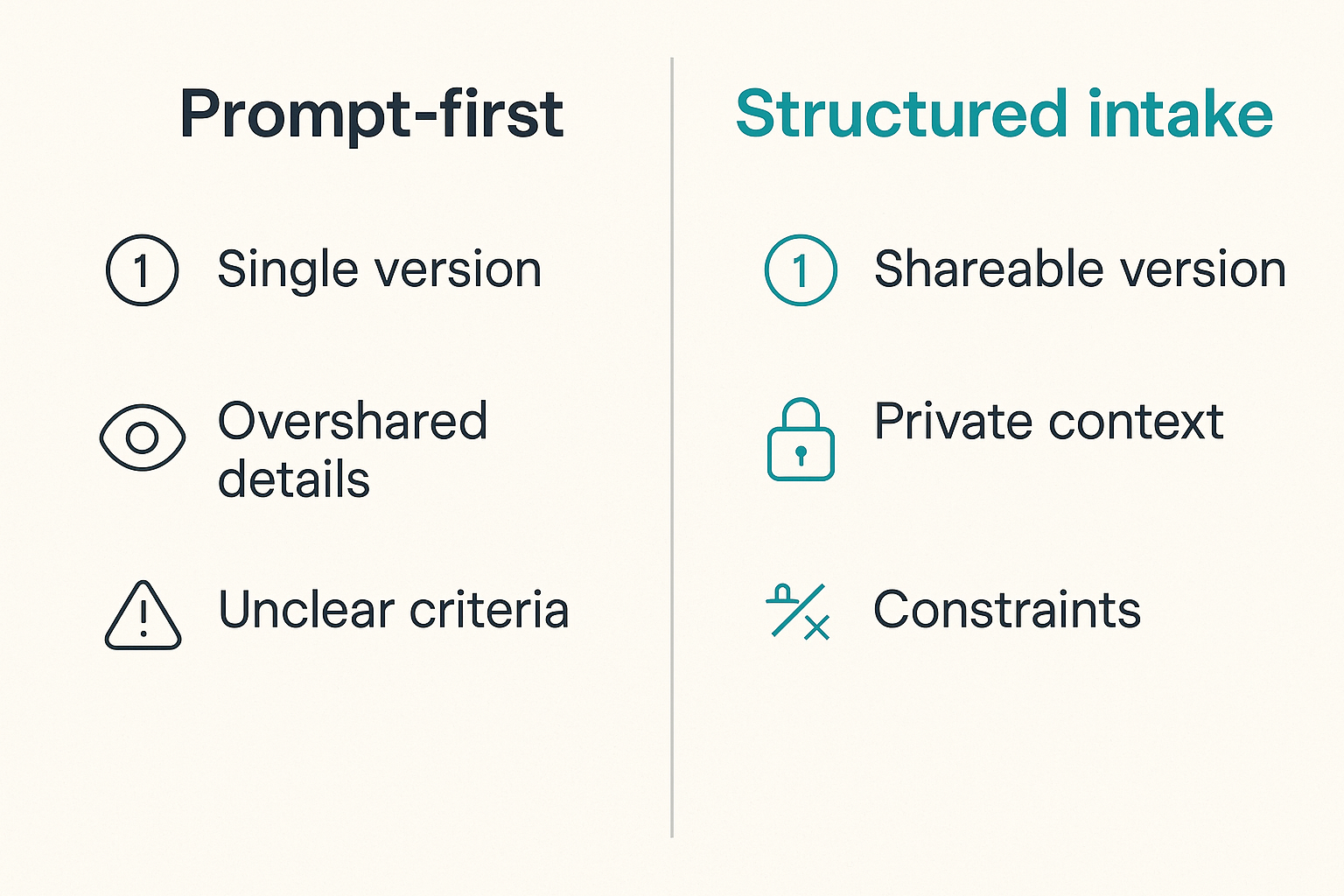
Prompt design gets too much attention. Intake design does more work. If you collect the right information, prompts become simple. If you collect the wrong information, no prompt will save the workflow.
Separate public language from private context
A person may write, “Need a ride to the clinic on Friday.” The public version might be, “A neighbor needs a Friday morning ride near Oak Street.” The private context might include the exact pickup address, health sensitivity, preferred gender of driver, mobility needs, and whether reimbursement is available.
Do not force the requester to choose between being too vague and oversharing. Store private context separately from public language.
Practical rule: Every ask should have at least two versions: a shareable version and an operator version.
AI can help generate both versions from the same intake, but your system needs the distinction. Without it, you either leak sensitive details or make the ask too vague to act on.
Capture constraints, not just needs
Constraints are where coordination succeeds or fails. Common constraints include:
- Time windows
- Transportation limits
- Budget ceilings
- Language needs
- Accessibility requirements
- Safety concerns
- Required skills or credentials
- Relationship preference, such as “known member only”
The mistake teams make is treating constraints as optional notes. In practice, constraints are routing rules. If a request needs a Spanish-speaking volunteer with a car before 3 p.m., that is not a detail for later. It is the core of the match.
Use structured fields without making people feel processed
Local networks are relational. A cold intake form can feel like a service desk, which may be wrong for your community. But fully unstructured intake creates hidden labor.
The middle path is conversational structure. Ask simple questions in plain language, then map answers into fields behind the scenes:
- “What are you trying to make happen?”
- “When does this need to happen?”
- “Where is it relevant?”
- “Who is it okay to share this with?”
- “What should people know before responding?”
- “How will we know this is resolved?”
This gives AI enough context to draft, classify, and summarize without making the person feel like they are submitting a procurement ticket.
Classify asks and offers so routing is not guesswork
Classification is where AI can be useful quickly. The goal is not a perfect taxonomy. The goal is consistent enough routing that organizers stop rereading every message from scratch.
A practical taxonomy for local networks
Start with categories that match your actual coordination work. A neighborhood mutual aid group, a local business network, a creator collective, and a volunteer coalition will not use the same taxonomy.
A practical starting set:
| Category | Typical ask | Typical offer | Routing owner |
|---|---|---|---|
| Space | Need a room for 20 people | Can host after-hours events | Venue coordinator |
| Labor | Need setup help | Can volunteer two hours | Volunteer lead |
| Skills | Need grant review | Can help with bookkeeping | Skills broker |
| Goods | Need folding tables | Can lend tools | Inventory contact |
| Transport | Need pickup or delivery | Have a van Saturday | Logistics lead |
| Introductions | Need a school contact | Know someone at district office | Trusted connector |
| Funding | Need small sponsorship | Can contribute $250 | Treasurer or sponsor lead |
Keep categories operational. If a category does not change routing, it may not be worth tracking.
Match by intent, urgency, and trust boundary
A useful match depends on more than category. AI can suggest matches by reading semantic similarity, but the workflow should score or filter by practical conditions:
- Intent: advice, referral, labor, loan, donation, paid service
- Urgency: immediate, soon, flexible, ongoing
- Geography: same block, same town, remote okay
- Trust boundary: public, members-only, vetted, organizer-mediated
- Capacity: one-time, recurring, limited, professional
- Sensitivity: low, moderate, high
If someone asks for a child-care referral, the trust boundary matters more than content similarity. If someone offers a projector, geography and availability matter more than biography.
Keep a human in the ambiguous cases
AI is good at sorting obvious things. It is less reliable with social nuance, risk, and implied meaning. The workflow should flag ambiguous cases for review, not pretend they are solved.
Examples that should trigger human review:
- Requests involving children, health, housing, immigration, or domestic conflict
- Offers that sound generous but have unclear expectations
- High-urgency asks from unknown participants
- Requests that require credentials, insurance, or background checks
- Repeated asks that may indicate a deeper problem
Practical rule: Use AI to reduce triage load, not to remove judgment from high-trust decisions.
Use AI to draft, normalize, and translate without removing voice
AI content asks and offers are most useful when they make participation easier while preserving human specificity. The writing should become clearer, not generic.
What AI should rewrite
AI can safely help with mechanical and structural improvements:
- Turn a rough voice note into a readable ask
- Shorten a long request for a group chat
- Generate a public version with sensitive details removed
- Convert an offer into a clear capacity statement
- Produce alternate versions for newsletter, SMS, and organizer dashboard
- Summarize a thread into current status and next action
This is content operations. It saves time because organizers stop manually rewriting the same kinds of posts.
What AI should not decide
AI should not decide whether someone is trustworthy, whether a sensitive request should be public, whether an offer is appropriate, or whether a person deserves support. Those are governance decisions.
What breaks in practice is the quiet shift from “AI drafted this” to “AI handled this.” The first is useful. The second can create harm if no one owns the judgment.
A safe workflow separates AI tasks from human decisions:
| Task | AI role | Human role |
|---|---|---|
| Clean up wording | Draft and simplify | Approve tone and accuracy |
| Classify request | Suggest category | Correct category if needed |
| Find possible matches | Rank candidates | Choose route and introduction method |
| Remove sensitive details | Propose public version | Confirm privacy and consent |
| Follow up | Draft reminder | Decide timing and escalation |
Multilingual and accessibility workflows
Local networks often operate across languages, reading levels, and communication preferences. AI can help translate asks and offers, simplify language, and create audio-friendly summaries.
But translation is not only words. It includes context. An AI-generated translation can miss tone, formality, or community-specific meaning. For important requests, use a human reviewer who understands the local context.
A practical pattern:
- Capture the original ask in the person’s preferred language.
- Generate a structured operator summary.
- Translate the shareable version into target languages.
- Flag sensitive or high-impact requests for bilingual review.
- Store the language preference for follow-up.
That gives you reach without pretending machine translation is community trust.
Build trust gates into AI content asks and offers
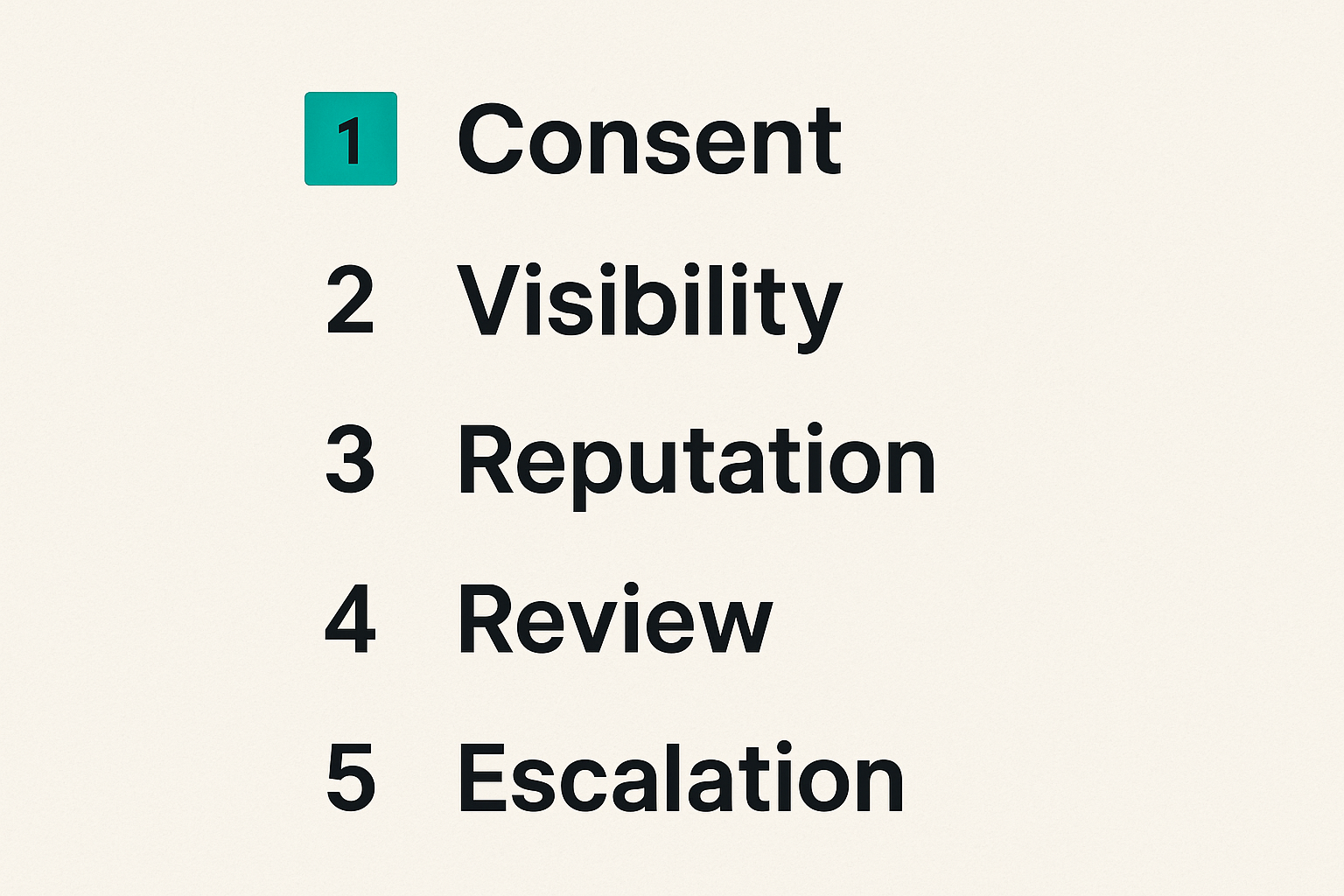
Trust is not a vibe. In local coordination, trust is a set of routing rules, visibility rules, and escalation rules. AI content asks and offers need those rules built in from the beginning.
Consent is an operational field
Consent should not live in someone’s memory. The system should record what can be shared and with whom.
Useful consent fields include:
- Can this be posted publicly?
- Can this be shared with members only?
- Can an organizer make direct introductions?
- Can the requester’s name be used?
- Can contact details be shared before approval?
- Can this be included in a digest or recap?
The mistake teams make is assuming community goodwill covers privacy. It does not. Goodwill helps people forgive mistakes, but a repeated privacy failure will damage participation.
Reputation should be specific, not vague
Avoid vague labels like “trusted,” “active,” or “high value” without context. They create hierarchy without operational clarity.
Use specific reputation signals instead:
- Has completed rides before
- Has hosted events safely
- Has lent equipment and received it back
- Has professional credentials verified
- Has been vouched for by two organizers
- Prefers paid work, not volunteer asks
Specific signals help routing. Vague labels create politics.
Escalation paths prevent quiet harm
Every local network eventually receives asks that are urgent, sensitive, or beyond its capacity. If the workflow has no escalation path, organizers improvise under pressure.
Define escalation rules before you need them:
- Who reviews sensitive requests?
- Who can pause or hide an ask?
- When should an ask be referred to a professional service?
- When should a participant be blocked from responding?
- How are concerns reported after a match?
- Who follows up if something goes wrong?
This is not about making the network rigid. It is about making care repeatable.
Route asks and offers like tickets, not announcements
An announcement hopes the right person responds. A ticket has an owner, state, priority, and next action. Local networks do not need corporate service-desk culture, but they do need operational closure.
Assign ownership for every open loop
Every open ask should have an owner. The owner is not responsible for solving it personally. They are responsible for making sure it does not disappear.
Ownership can be lightweight:
- One person owns venue requests this month
- A volunteer lead owns event staffing asks
- A trusted connector owns introductions
- A rotating operator reviews unmatched asks twice a week
Without ownership, the network appears active but becomes unreliable.
Use channels based on action, not audience size
Bigger distribution is not always better. A sensitive ask may need one warm intro. A general volunteer call may need a newsletter. A time-sensitive logistics request may need SMS or a small operator chat.
Match channel to action:
| Channel | Best for | Risk if misused |
|---|---|---|
| Public feed | Low-risk broad participation | Oversharing or noise |
| Member digest | Routine asks and offers | Slow response for urgent needs |
| Small operator chat | Fast triage | Hidden bottlenecks |
| Direct intro | High-trust matching | Too much load on connectors |
| SMS | Time-sensitive action | Fatigue and opt-outs |
| In-person meeting | Complex coordination | Poor documentation |
AI can recommend channel options, but channel policy should come from the network.
Close the loop with status states
A simple state model prevents confusion:
- New: captured but not reviewed
- Clarifying: missing important details
- Ready: approved for routing
- Matched: someone is likely to help
- In progress: action is happening
- Resolved: outcome confirmed
- Closed unresolved: no match or no longer needed
These states matter because people behave differently when they know where something stands. Contributors do not waste effort responding to solved asks. Organizers can see bottlenecks. Requesters do not feel ignored.
What breaks when AI content asks and offers are implemented badly
Bad implementation does not usually fail loudly. It creates more content, more apparent activity, and more hidden work for the same few people.
Noise increases faster than coordination
If AI makes it easy to generate posts, the network may fill with polished but low-action content. People skim, stop responding, or wait for organizers to personally route everything.
Signals that noise is winning:
- Many posts get likes but few get resolved
- The same asks are repeated in multiple channels
- Contributors ask basic clarifying questions every time
- Organizers maintain private spreadsheets to compensate
- People say “I didn’t know that was still open”
The fix is not less content. The fix is better state, routing, and closure.
Local trust gets abstracted into bad labels
AI systems like categories. Communities run on relationships. If the workflow reduces people to broad tags, routing becomes brittle.
For example, labeling someone as “transport volunteer” may cause repeated ride requests even though they only offered one Saturday delivery. Labeling a person as “funding source” may create awkward solicitations. Labeling a business as “community-friendly” may hide the fact that one organizer has a specific relationship there.
The better model is narrow, time-bound, and contextual. “Can deliver bulky items within five miles on some Saturdays” is more useful than “transport.”
Follow-up becomes nobody’s job
AI can draft reminders, but it cannot care whether the relationship remains healthy. If a match is made and nobody checks what happened, the network loses learning.
Follow-up should answer:
- Did the action happen?
- Was the match appropriate?
- Were there hidden costs?
- Should this connection be reused?
- Did either party need support afterward?
- Should the record be updated?
Many networks fail here because follow-up feels less urgent than intake. In reality, follow-up is where the network becomes smarter.
A practical implementation workflow for local operators
The right implementation is usually smaller than people expect. Do not start by automating every ask and offer. Start with a recurring coordination pain that already has volume.
Start with one recurring use case
Pick one use case with clear outcomes. Examples:
- Volunteer staffing for weekly events
- Borrowing and lending equipment
- Local business referrals
- Venue matching
- Ride coordination
- Skill-based mutual aid
- Sponsor requests for community projects
Avoid starting with the most sensitive category. Prove the workflow on a lower-risk pattern first.
Define the minimum viable record
For the chosen use case, define the smallest record that supports routing and follow-up. For equipment lending, that might be:
- Item needed or offered
- Quantity
- Location
- Date needed
- Pickup or delivery preference
- Condition requirements
- Deposit or replacement expectation
- Visibility and contact consent
- Owner
- Status
Then build the workflow around that record.
A practical sequence:
- Map the current path from request to resolution.
- Identify where organizers currently clarify, rewrite, route, and follow up.
- Convert those moments into fields, states, and owner rules.
- Use AI to draft shareable versions and summaries from the record.
- Route through the smallest effective channel.
- Require a status update after the expected action date.
- Review unresolved items weekly and adjust the intake questions.
This sequence keeps AI in the service of coordination rather than content volume.
Measure resolved coordination, not generated content
Track metrics that show whether the network is becoming more reliable:
- Open asks by category
- Median time to first useful response
- Matched asks by channel
- Resolved asks by type
- Unresolved asks and reason
- Repeat contributors without overload
- Sensitive asks handled through correct path
- Follow-up completion rate
Do not let generated content become the success metric. A network with fewer posts and more resolved asks is healthier than one with a busy feed and weak outcomes.
Make d0rz the coordination layer
For d0rz.com readers, the point of AI content asks and offers is not to make the community sound more active. It is to make local coordination more dependable.
Where d0rz fits
A practical local network needs a place where asks, offers, trust signals, routing decisions, and follow-up can live together. If those pieces are split across chats, forms, spreadsheets, inboxes, and memory, AI will mostly accelerate the mess.
The architecture to aim for is simple:
- Intake captures the real need or capacity
- AI cleans up language and extracts structure
- Operators review sensitive or ambiguous cases
- Routing uses category, urgency, location, consent, and trust boundary
- Status states show what is open, matched, resolved, or closed
- Follow-up improves future matching
That is the difference between a content stream and coordination infrastructure.
What works
What works is disciplined and boring in the best way:
- Start with one repeatable use case
- Keep human judgment on trust decisions
- Store private context separately from public language
- Route based on action, not maximum visibility
- Track status until resolution
- Use AI for drafting, summarizing, translation, and triage support
- Review unresolved asks regularly
What fails is also predictable:
- Letting AI publish vague asks faster
- Treating offers as unlimited capacity
- Using broad trust labels with no context
- Sending every request to the biggest channel
- Measuring activity instead of outcomes
- Forgetting to ask whether the match actually worked
AI content asks and offers can make a local network more responsive, but only when the workflow respects the social reality underneath. The closing lesson is straightforward: do not automate the post; operationalize the ask, the offer, the route, and the follow-up.
Try d0rz.com
Build practical local coordination around asks, offers, trust, routing, and follow-up with Try d0rz.com.