

AI publishing community building sounds like a content problem. Someone wants more posts, more updates, more newsletters, more summaries, more visibility for local activity.
That is usually where the trouble starts.
Teams think the problem is content volume. The real problem is coordination reliability. If a local network cannot capture asks, route offers, remember context, and follow up, publishing more words just creates a louder version of the same gap.
In 2026, AI makes it cheap to generate updates. That changes the conversation. The practical question is not whether a neighborhood group, mutual aid network, local business circle, creator community, or civic project can publish more. The question is whether publishing can become part of the operating system for trust, routing, and follow-through.
A useful way to think about AI publishing community building is this: publishing is the visible layer, but coordination is the system underneath. The UI is the post. The product is whether the right people know what changed, what is needed, who owns the next step, and when the loop closes.
Table of contents
- Why AI publishing community building changes local operations
- Reframe AI publishing as routing infrastructure
- The publishing-to-community architecture
- Design the content system around trust
- Workflow for turning local activity into publishable signals
- What works and what fails in AI publishing community building
- Automation boundaries and human review
- Metrics that matter for local network operators
- Failure modes when teams implement AI badly
- Implementation checklist for the next 30 days
- Where d0rz.com fits
Why AI publishing community building changes local operations
Teams think the problem is content volume
The mistake teams make is treating AI as a faster copywriter for community announcements. They set up prompts for event recaps, social posts, newsletters, and member spotlights. Output goes up. Coordination often does not.
This happens because community publishing is not just broadcasting. A local update might contain an ask for volunteers, an offer of space, a warning about a recurring issue, a request for a warm introduction, or evidence that a project is losing momentum. If those signals are flattened into generic posts, the network loses the operational value.
More content can even make the system worse. Members stop reading. Organizers assume people saw the update. Nobody knows who responded. The group feels active while the actual work still depends on private messages, memory, and a few overloaded connectors.
The real problem is coordination memory
Community builders run on context. Who has a van. Who offered translation help. Which venue has stairs. Which parent can host on Wednesdays. Which local shop wants foot traffic but cannot sponsor yet. Which volunteer said yes twice and should not be asked a third time this month.
AI publishing helps when it preserves and routes this memory. It hurts when it erases it.
Practical rule: Do not use AI to make community work look organized. Use it to make community work easier to find, assign, verify, and complete.
The difference is architectural. A post should not be the end of a workflow. It should be a state change in the network. Something happened, someone needs something, someone offered something, someone owns the next step.
A guest note on AI-assisted publishing
This guest contribution comes from the team at bl0ggers.com, where the work is focused on helping creators and publishers scale AI-assisted content production without removing human oversight from the system.
That matters for local networks because community operators cannot afford content theater. If AI creates polished summaries that do not match reality on the ground, trust burns quickly. If AI helps structure notes, reduce drafting time, and surface follow-up obligations, it becomes useful infrastructure.
The bar is not whether the paragraph sounds good. The bar is whether the network can act on it.
Reframe AI publishing as routing infrastructure
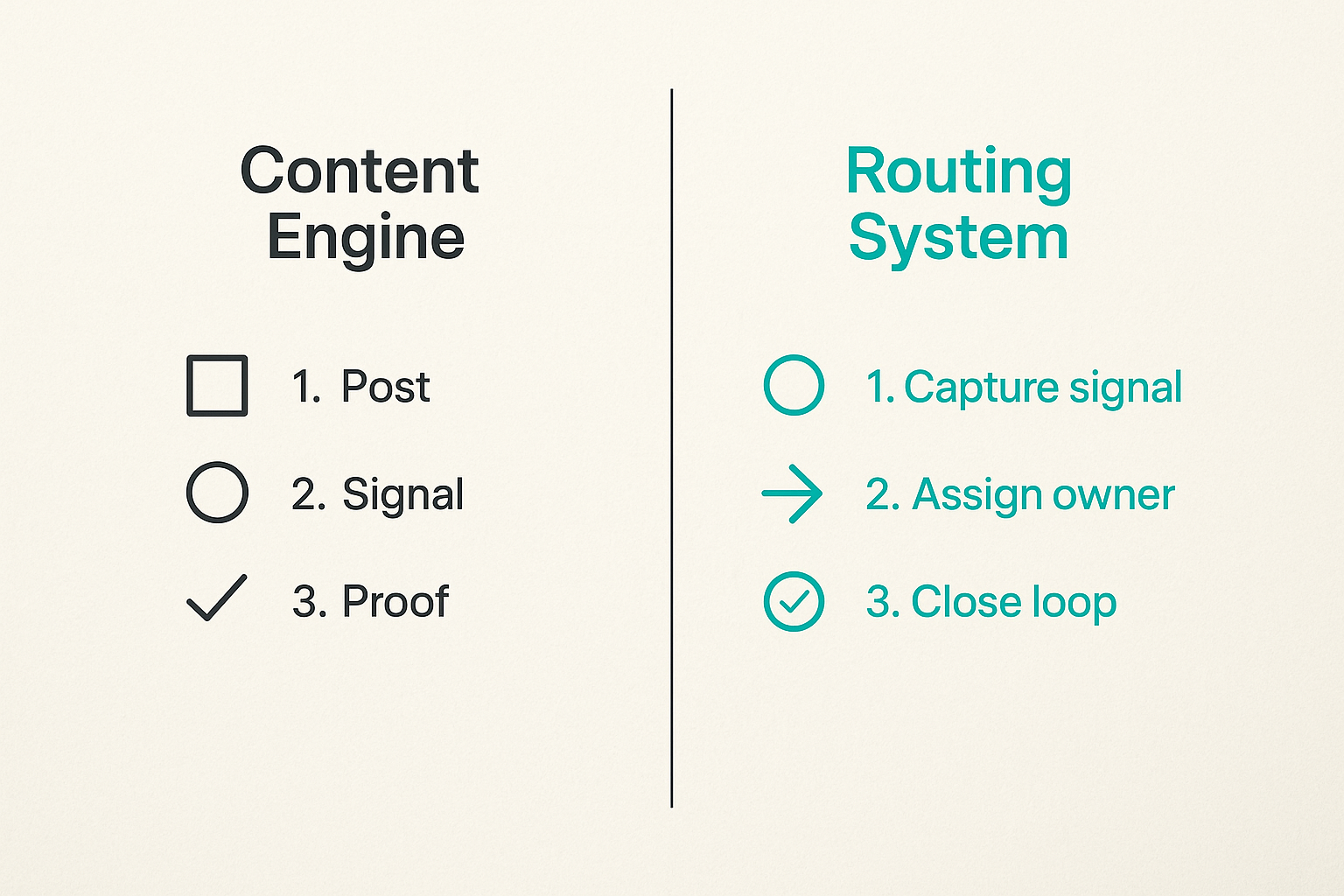
From posts to signals
A post is a container. A signal is the operational meaning inside it.
A local update might include several signals at once:
- Need: three volunteers for Saturday setup
- Offer: a cafe can host ten people after hours
- Risk: the usual meeting space is unavailable next month
- Match: a new member has skills another project requested
- Proof: a previous ask was resolved
- Drift: a recurring project has no clear owner
AI can help extract and format these signals, but only if the workflow asks for them. If the prompt says summarize this meeting, you get a summary. If the prompt says identify asks, offers, owners, deadlines, unresolved issues, and publishable updates, you get something closer to an operating artifact.
That changes the conversation. The content team is no longer just producing updates. It is maintaining a routing layer for the community.
From audience to local graph
Most publishing tools think in audiences. Local networks think in relationships. That distinction matters.
An audience model asks: who should receive this message?
A local graph model asks:
- Who is affected by this update?
- Who can help?
- Who needs to know but should not be asked to act?
- Who has context from the last time this happened?
- Who should not be overloaded again?
AI publishing community building works better when the underlying data model reflects the graph. Tags like volunteer, venue, food, childcare, transport, safety, permits, introductions, and follow-up are more useful than broad audience labels.
The system does not need to be complex at first. A spreadsheet can start it. The important part is that publishing decisions are tied to routing decisions.
From calendar to operating rhythm
A content calendar answers when something will be published. A community operating rhythm answers what the network needs to know, do, and resolve this week.
The difference shows up in meetings. A content calendar creates questions like: What should we post on Tuesday? An operating rhythm creates questions like: Which asks are still open? Which offers need matching? Which people need a follow-up? Which resolved items should be acknowledged publicly?
AI is useful here because it can turn messy inputs into repeatable queues. But the queue should be built around community state, not arbitrary posting frequency.
Practical rule: If your AI publishing workflow starts with topics instead of community state, it will drift toward content marketing instead of coordination.
The publishing-to-community architecture
Capture asks and offers
The smallest useful unit in local coordination is usually an ask or an offer.
An ask has a requester, context, deadline, scope, sensitivity, and owner. An offer has a person or organization, capacity, constraints, timing, and preferred contact path. Publishing should not strip those details away.
A practical intake format can be simple:
- Signal type: ask, offer, update, risk, match, proof
- Source: meeting, chat, form, call, event, field note
- People involved: names or roles
- Location: neighborhood, venue, online, private
- Deadline: exact date or urgency level
- Sensitivity: public, members-only, private, needs consent
- Next owner: person responsible for follow-up
- Publishable version: yes, no, needs review
This gives AI enough structure to help without guessing. It also gives humans a checklist for what must be confirmed before anything is published.
Normalize context before publishing
What breaks in practice is not always bad writing. It is inconsistent context.
One organizer writes long notes. Another sends voice memos. A volunteer drops a key detail in a group chat. A local partner mentions a constraint during an event. If AI only sees one channel, it will produce incomplete outputs with confidence.
Before publishing, normalize the context. That means turning different inputs into the same operational shape. For example:
- Raw note: Sam said the pantry might need drivers again.
- Normalized signal: Ask likely, food distribution, transport, owner needed, deadline unknown, verify with Sam before publishing.
- Publishable version after review: The pantry is checking driver availability for next month. If you can help with occasional local deliveries, reply and we will connect you with the coordinator.
The middle layer is where the value is. It prevents the AI from jumping from vague input to public output.
Route responses to owners
Publishing creates replies. Replies create work. If nobody owns that work, the system fails quietly.
Every published item with an ask should have a response path:
- Reply in a form
- Message a named coordinator
- React with a specific tag
- Attend a matching call
- Claim a task in a shared board
More importantly, every response path needs an owner. AI can draft the post, summarize replies, and create a list of potential matches. It should not be the accountable party.
A reliable routing model includes:
- Published ask or offer
- Defined response channel
- Human owner
- Follow-up deadline
- Status update
- Closure note
Close the loop publicly and privately
Communities build trust when people see that participation leads somewhere. They lose trust when asks disappear into the void.
Loop closure has two layers. Public closure says the network worked. Private closure respects details that should not be exposed.
Public example: Thanks to everyone who replied about delivery help. We have enough drivers for this month and will reopen the ask if the schedule changes.
Private example: Send the coordinator a matched list, confirm availability, remove people who cannot help this round, and note who should be asked later.
AI can draft both, but the distinction matters. One is a community update. The other is operational handling.
Design the content system around trust
Separate facts from interpretation
Local trust is fragile because people know each other. If an AI-written update misstates a conflict, exaggerates participation, or implies support that was not given, the damage is not abstract.
Separate facts from interpretation in the workflow:
- Fact: Fifteen people attended the repair cafe.
- Fact: Two people offered tools for future events.
- Interpretation: There is growing interest in repair programming.
- Unknown: Whether there is enough organizer capacity for a monthly schedule.
This makes review easier. A human can quickly approve facts, edit interpretation, and flag unknowns.
Practical rule: In local community publishing, confidence is not a writing style. Confidence comes from verified context and named ownership.
Keep local accountability visible
AI-generated content can feel ownerless. That is a problem for community building.
People need to know who to contact, who made the decision, who is coordinating, and who can correct an error. Even if AI drafts the language, the published artifact should have a human accountable for it.
Use visible accountability patterns:
- Posted by the housing working group
- Contact Maya for volunteer matching
- Corrections go to the neighborhood desk before Friday
- This summary was reviewed by the event lead
- Sensitive details were removed before publication
The point is not to perform transparency. The point is to make correction and participation possible.
Use AI for drafts not authority
AI is strong at reformatting, summarizing, translating tone, creating variants, and extracting structured fields. It is weak at knowing local history, reading power dynamics, and deciding what should remain private.
The mistake teams make is giving AI authority because it writes fluently. Fluency is not judgment.
Use AI for:
- First drafts
- Meeting note cleanup
- Ask and offer extraction
- Multilingual versions after human review
- Recap formatting
- Status summaries
- Duplicate detection
Do not use AI as the final authority on:
- Safety-sensitive posts
- Conflict summaries
- Resource allocation decisions
- Public naming of individuals
- Claims about consent
- Sensitive personal circumstances
Workflow for turning local activity into publishable signals
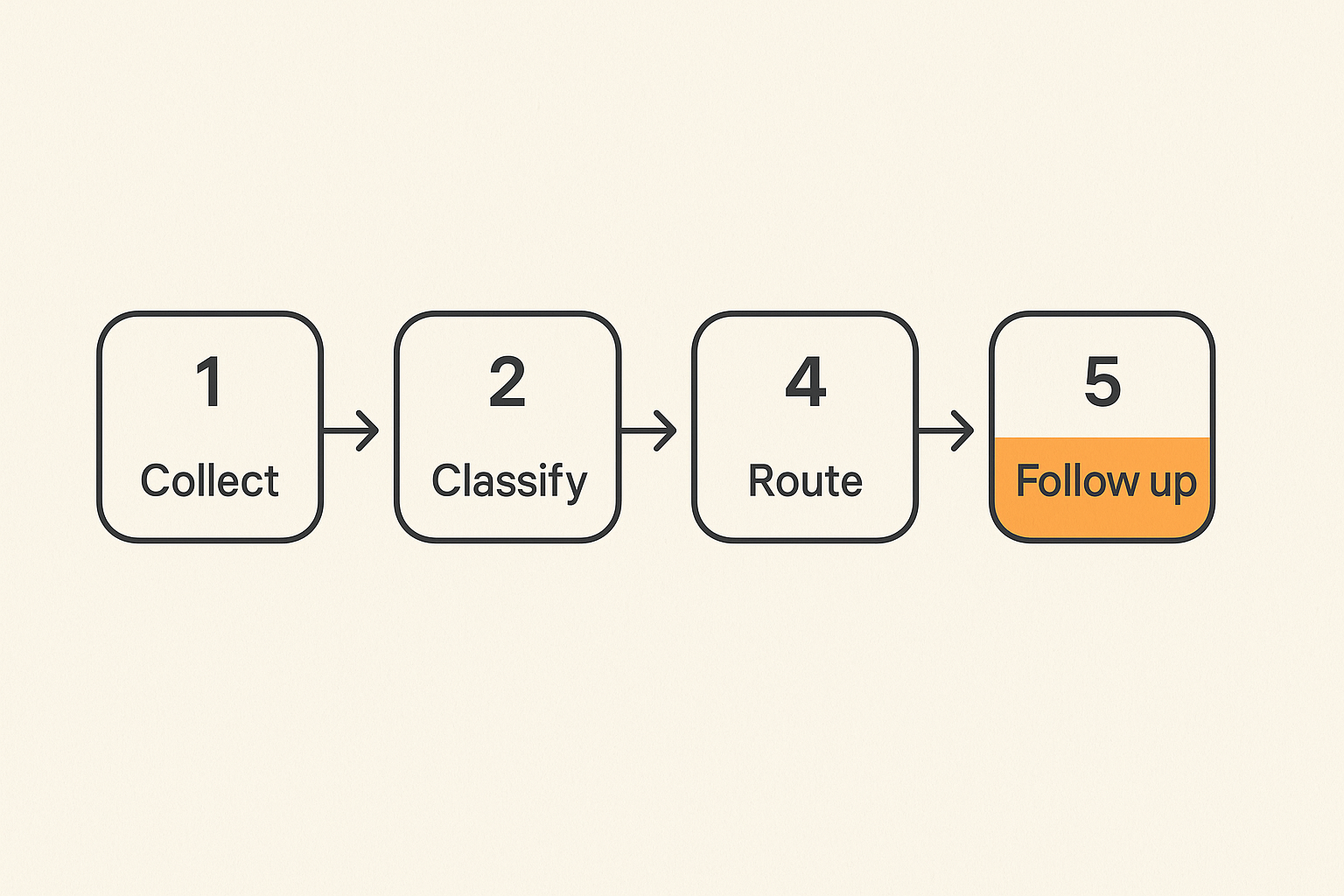
Step 1 collect field notes
Start with the places where community information already appears. Do not force everyone into a new tool on day one.
Common sources include:
- Event notes
- Organizer debriefs
- Group chats
- Intake forms
- Email replies
- Voice notes
- Partner calls
- Public comments
Create a lightweight capture habit. After every meeting or event, someone records what changed. Not everything that was said. What changed.
A useful field note template:
- What happened?
- What was asked?
- What was offered?
- Who needs follow-up?
- What should be public?
- What should stay private?
- What is unresolved?
This is the raw material for AI publishing community building. Without field notes, the AI will either hallucinate structure or repackage thin information.
Step 2 classify the signal
Once notes are captured, classify them before drafting. This step is where many teams gain the most leverage.
Use a small taxonomy:
- Ask: someone needs help, information, space, funding, introductions, labor, or attention
- Offer: someone can provide something useful
- Update: status changed and people should know
- Risk: something may break or create harm
- Match: two or more parties should be connected
- Proof: an ask was resolved or a contribution mattered
- Decision: a choice was made and needs context
The classification determines the publishing path. An ask needs routing. An offer needs matching. A risk needs review. Proof needs acknowledgement. A decision needs accountability.
Step 3 generate drafts with constraints
Now AI can help. Give it structured input and constraints, not a vague command.
A practical prompt pattern:
You are drafting a local community update.
Use only the verified facts below.
Extract asks, offers, owners, deadlines, and privacy flags.
Draft one public version under 140 words.
Draft one members-only version with operational details.
List anything that needs human verification before publishing.
Do not invent names, numbers, locations, or commitments.
The constraint list matters more than the model choice. It tells the system what not to do.
Review the output against the original note. If the draft adds certainty, removes a caveat, or turns a tentative offer into a commitment, send it back.
Step 4 publish route and follow up
Publishing is not the finish line. It is the trigger.
A numbered implementation sequence helps keep the workflow grounded:
- Capture the raw signal from a trusted source.
- Classify the signal as ask, offer, update, risk, match, proof, or decision.
- Confirm privacy level and consent requirements.
- Generate a draft with explicit constraints.
- Assign a human owner before publishing.
- Publish to the right channel for the right audience.
- Collect responses in one place.
- Route responses to the owner.
- Send follow-up messages.
- Mark the signal as open, matched, resolved, deferred, or closed.
This sequence is not glamorous. It is the difference between a busy feed and a working local network.
What works and what fails in AI publishing community building
What works
What works is boring in the best way: structured inputs, human review, clear ownership, and repeatable follow-up.
Good AI publishing community building usually has these traits:
- One place where signals are captured
- A small taxonomy of community states
- Clear privacy levels
- Drafts generated from verified notes
- Human owners assigned before publication
- Replies routed to a known workflow
- Closure messages when asks are resolved
- Periodic review of unresolved items
The AI reduces friction. It does not replace the community operator. It helps the operator spend less time rewriting updates and more time making sure the right people connect.
What fails
What fails is using AI as a content hose.
Symptoms include:
- Posts sound polished but generic
- Local names and constraints disappear
- Every update has the same tone
- Members are asked for help without follow-up
- Sensitive information is summarized too broadly
- Offers are acknowledged but not matched
- Organizers cannot tell which posts produced action
- People stop trusting announcements because they feel synthetic
The problem is not that AI was used. The problem is that it was inserted at the wrong layer. Drafting was automated before intake, routing, consent, and ownership were defined.
Comparison table for operators
| Operating choice | What works | What fails |
|---|---|---|
| Input | Structured field notes with source and context | Random screenshots and partial chat excerpts |
| AI role | Extract, draft, format, summarize | Decide, promise, interpret conflict, assign blame |
| Publishing trigger | A real state change in the network | Need to fill the calendar |
| Routing | Owner and response path set before posting | Replies scattered across inboxes and chats |
| Trust model | Human accountability visible | Voice sounds institutional and ownerless |
| Follow-up | Status tracked until closed | Ask disappears after initial post |
| Metrics | Matches, closures, response time | Likes, impressions, raw post count |
This table is intentionally operational. If a workflow cannot answer who owns the next step, it is not ready to scale.
Automation boundaries and human review
Automate formatting not judgment
Automation is useful when the decision has already been made and the system is reducing manual effort.
Safe automation examples:
- Convert notes into recap format
- Generate draft headlines
- Create short and long versions
- Translate a reviewed update
- Tag obvious signal types
- Prepare weekly digest sections
- Remind owners about open items
Risky automation examples:
- Publish without review
- Decide who gets scarce resources
- Summarize interpersonal conflict as fact
- Name vulnerable people without consent
- Infer intent from partial messages
- Promote one group repeatedly because they generate more content
The boundary is judgment. If the action affects trust, safety, reputation, access, or fairness, keep a human in the loop.
Review for harm and ambiguity
A review step should not only check grammar. It should check operational risk.
Use a short review checklist:
- Are all names, places, dates, and numbers verified?
- Does the post imply a commitment someone did not make?
- Are private details removed or permissioned?
- Is the response path clear?
- Is the owner named or internally assigned?
- Could this create pressure on someone vulnerable?
- Is there a closure plan?
Many teams skip this because it feels slow. In practice, it is faster than repairing trust after a bad post.
Create escalation paths
Not every item belongs in the normal publishing queue. Some signals need escalation.
Escalate when the item involves:
- Safety concerns
- Minors or vulnerable residents
- Legal or permitting issues
- Public accusations
- Resource scarcity
- Conflict between groups
- Medical, housing, immigration, or financial sensitivity
Escalation does not mean silence. It means the item needs a different workflow. AI can still help prepare a private briefing, but it should not decide what becomes public.
Metrics that matter for local network operators
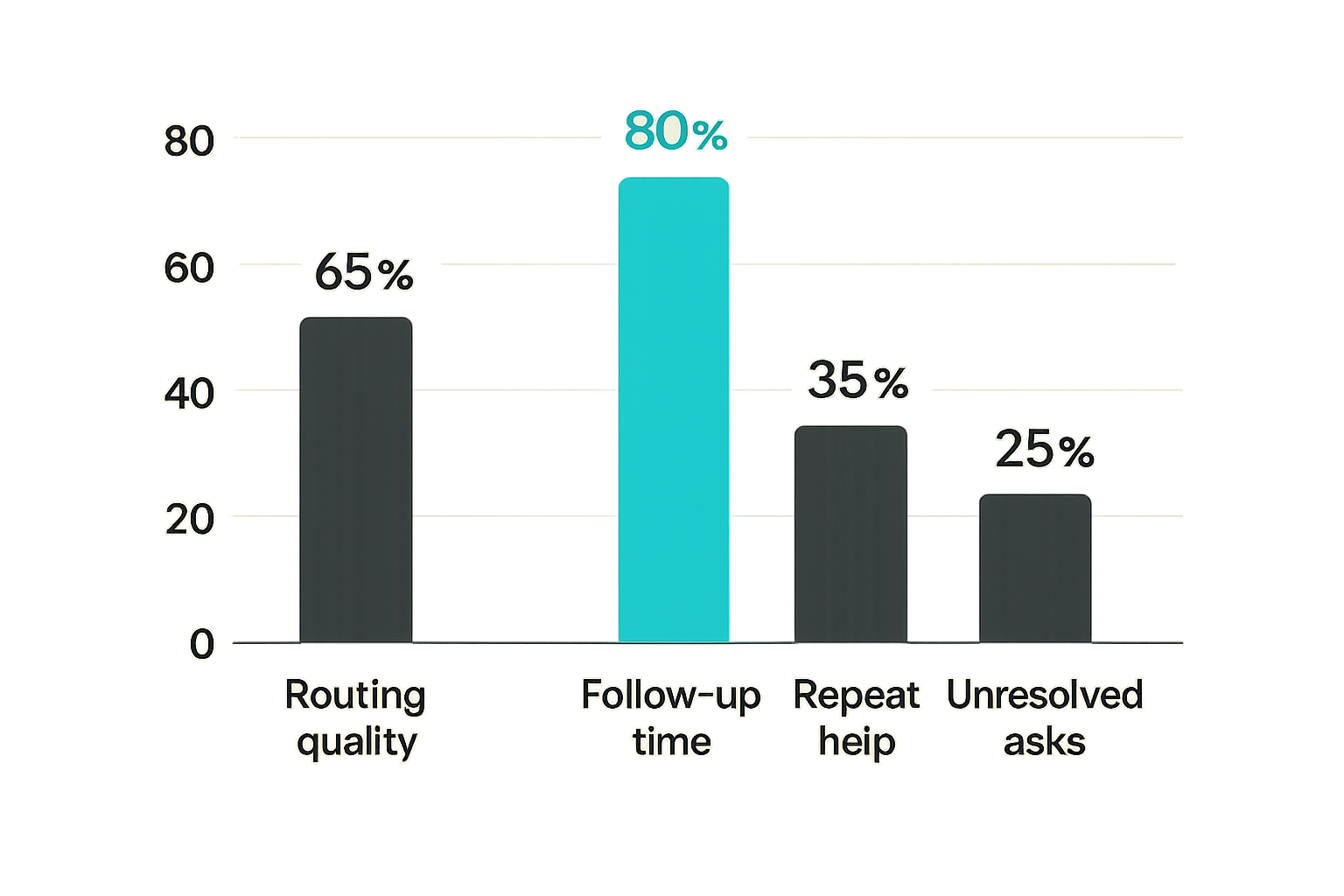
Measure routing quality
If publishing is part of coordination infrastructure, measure routing quality before reach.
Useful questions:
- Did the ask reach people who could actually help?
- Did offers get matched to relevant needs?
- Did the owner receive responses in a usable format?
- Were duplicate replies reduced?
- Did the post create action or just attention?
A small network can measure this manually. After each published ask, mark whether it was routed well, partially routed, or poorly routed. Add a note explaining why.
Over time, patterns appear. Maybe transport asks work well by text but not email. Maybe venue offers need direct coordinator review. Maybe volunteer requests perform better when the commitment is small and specific.
Measure follow-up latency
Follow-up latency is the time between a response and the next meaningful action.
For local networks, this is often more important than response count. Ten people replying is not useful if nobody gets contacted for a week. Two replies handled quickly can be enough to solve the need.
Track simple states:
- Published
- Response received
- Owner notified
- Match made
- Follow-up sent
- Resolved
- Closed or deferred
The goal is not to create bureaucracy. The goal is to see where the workflow stalls.
Watch for participation distortion
AI publishing can unintentionally amplify the people and groups that already produce clean inputs. The quiet participant, the overloaded caregiver, the informal connector, and the person who contributes offline can disappear from the visible story.
Watch for distortion:
- Are the same members featured repeatedly?
- Are offline contributions captured?
- Are non-native speakers underrepresented because their notes need more review?
- Are urgent needs crowding out long-term relationship work?
- Are organizers publishing what is easy to summarize instead of what matters?
This is where community judgment matters. AI will optimize for available data. Operators have to notice what the data misses.
Failure modes when teams implement AI badly
The synthetic town square problem
A synthetic town square looks active but feels hollow. Posts are frequent. Tone is upbeat. Summaries are clean. Nobody is sure who is speaking.
Members can sense this. Local communities are not anonymous markets. People know when a message lacks situated knowledge. They know when a recap smooths over the hard part. They know when every update sounds like the same machine wrote it.
The fix is not to ban AI. The fix is to preserve local texture and human accountability. Keep named owners. Include concrete details. Let some posts be short. Do not sand every update into the same brand voice.
The stale directory problem
Another failure mode is treating AI publishing as a way to maintain a public directory while the real network changes privately.
Someone offered space six months ago. A volunteer moved. A shop changed hours. A group paused meetings. AI keeps reusing old context because nobody marked it stale.
Local coordination needs expiration dates. Offers should have review dates. Recurring asks should have owners. Member skills should be confirmed before being routed.
A stale directory is worse than no directory because it creates false confidence.
The invisible labor problem
AI can hide the labor that makes community work function. A clean digest might summarize outcomes without acknowledging the calls, rides, translations, setup, conflict handling, and follow-up that made those outcomes possible.
That is bad for morale and bad for accuracy. If invisible labor stays invisible, the network will overuse the same people and underinvest in the work that actually keeps it alive.
Build recognition into the publishing system. Not performative praise every time. Just accurate accounting of what happened and who contributed, with consent.
Implementation checklist for the next 30 days
Week 1 map signals and owners
Do not start by buying tools or writing prompts. Start by mapping your current coordination flow.
Ask:
- Where do asks appear today?
- Where do offers appear today?
- Who usually notices them?
- Who routes them?
- Where do they get lost?
- What information is usually missing?
- Which items should never be public by default?
Then define owners. Not every owner needs to do every task. But every signal type needs a place to land.
Week 2 build the publishing queue
Create a queue with the minimum fields needed to move from signal to publication to follow-up.
Recommended fields:
- Date captured
- Signal type
- Source
- Summary
- Privacy level
- Owner
- Draft status
- Publish channel
- Response path
- Current state
- Follow-up date
- Closure note
Start with one recurring format, such as a weekly community routing note. Include open asks, useful offers, resolved items, and upcoming deadlines. Keep it practical.
Week 3 test routing and follow-up
Pick three real signals. Run the full workflow manually before automating more.
For each signal:
- Capture the raw note.
- Classify it.
- Draft with AI using constraints.
- Review for facts, consent, and clarity.
- Publish to the right channel.
- Route replies to the owner.
- Follow up.
- Close or defer.
This test will expose the real gaps. Usually they are not prompt problems. They are ownership, privacy, or response handling problems.
Week 4 review what changed
At the end of 30 days, review outcomes rather than output.
Look at:
- Number of asks published
- Number of asks matched or resolved
- Average follow-up time
- Offers captured and reused
- Items deferred because of missing context
- Corrections needed after publication
- People or groups overrepresented in updates
- Operator time saved or shifted
The goal is not perfect automation. The goal is a more reliable coordination loop.
Practical rule: Scale the workflow only after you can prove that a published signal leads to a routed response, a human owner, and a closed loop.
Where d0rz.com fits
Product fit for local coordination
For d0rz.com readers, the useful frame is simple: AI publishing should strengthen the local network, not become a parallel media operation.
A practical local coordination system needs to handle asks, offers, trust, routing, and follow-up. Publishing is one surface area of that system. AI can help operators turn messy participation into clear updates, but the platform still needs to remember who is involved, what was promised, what is open, and what happened next.
That is where d0rz.com fits best: not as a place to make more noise, but as infrastructure for practical local networks. The value is in making participation legible and actionable. Who needs help. Who can help. Who should be connected. What still needs an owner. What has been resolved.
If you are building a neighborhood network, a mutual aid circle, a local professional group, or a community of independent operators, treat AI-assisted publishing as one workflow inside the larger coordination stack. Let it reduce drafting burden. Do not let it replace local judgment.
The closing test for ai publishing community building is operational: did the post help the network coordinate better than it did before?
Try d0rz.com
d0rz.com helps local community operators turn asks, offers, trust, routing, and follow-up into practical coordination infrastructure. Try d0rz.com.