

SaaS community organizing sounds like a tooling decision until the first real coordination problem hits.
A neighbor needs a ride to a clinic. A mutual aid group has three volunteers, two stale spreadsheets, and one unanswered message thread. A local organizer knows someone can help, but the path from ask to offer to confirmed action is scattered across chat, email, memory, and goodwill.
Teams think the problem is choosing the right community platform. The real problem is designing a reliable operating workflow for local trust, routing, and follow-up.
That changes the conversation. In 2026, the practical question is not whether communities should use software. Most already do. The question is whether the software makes coordination more dependable or just gives the network another place to lose context.
This guest post is from the team at saasrow.com, where we spend a lot of time looking at how software and productivity systems behave once real people, exceptions, and messy handoffs enter the picture.
Table of contents
- Why saas community organizing is an operations problem
- Map the community workflow before choosing SaaS
- Design the participation model
- Build trust and routing into the system
- Where SaaS helps and where it creates drag
- The operating workflow for asks offers and follow-up
- Data design permissions and governance
- Automations that help without removing judgment
- Measure reliability not vanity activity
- Product fit for d0rz.com and local operators
- Put the system to work
Why saas community organizing is an operations problem
SaaS community organizing is usually sold as engagement software. Post updates, manage members, send announcements, create groups, maybe collect dues. That is useful, but it is not the core job for most local networks.
The core job is coordination under uncertainty.
Who needs something? Who can help? Who is trusted for that kind of help? What information is safe to share? Has anyone accepted the request? Did the action happen? Who follows up when it does not?
If those questions live in one person's head, the community is not operating as a network. It is operating as a heroic organizer with a phone.
The local network has more states than chat shows
A chat thread makes every item look similar. A request for childcare, a tool-lending offer, a safety concern, a cleanup shift, and a landlord issue all become messages in a stream.
But operationally, each item has a state. New. Needs triage. Needs verification. Routed. Accepted. Waiting. Completed. Failed. Escalated. Closed.
What breaks in practice is state blindness. People think something is handled because someone reacted to a message. Then the request sits unresolved.
Practical rule: If a community action can affect someone's safety, money, housing, health, or access, it needs a state, an owner, and a follow-up path.
The organizer's job shifts from broadcasting to routing
Traditional community tools treat the organizer as a broadcaster. The organizer posts, members respond, and participation is measured by activity.
Local coordination is different. The organizer is a router. They convert messy input into the next responsible action.
That means the SaaS layer should support intake, context, assignment, reminders, and closure. If it only supports posts and comments, it may increase visibility while reducing reliability.
A useful way to think about it is this: the community platform is not the town square. It is the dispatch desk, memory layer, and accountability log behind the town square.
Map the community workflow before choosing SaaS
The mistake teams make is starting with feature lists. Member directory. Groups. Events. Messaging. Forms. Payments. Nice to have, but not enough.
Start with the workflow. Then decide which SaaS features matter.
Start with asks offers and commitments
Most local networks move three kinds of information:
- Asks: I need a ride, translation, volunteers, advice, supplies, introductions, space, or support.
- Offers: I can drive, lend tools, translate, host, mentor, donate, teach, or show up.
- Commitments: I will do this specific thing by this specific time, with this level of responsibility.
The third category is where many systems fail. They collect asks and offers but do not turn them into commitments.
For saas community organizing, the commitment object matters. It should capture who accepted, what they accepted, when it is due, what context they need, and how completion will be confirmed.
Draw the handoffs that already exist
Before changing tools, map the current flow on paper:
- Where does a request arrive?
- Who sees it first?
- Who decides whether it is valid, urgent, private, or unsafe?
- How is it matched to a person or group?
- How does the helper accept or decline?
- Who checks whether it happened?
- Where does the record live afterward?
This does not need to be complex. In fact, the first version should be boring. If the workflow cannot be explained in five minutes, it will not survive a busy week.
Define what done means
Done is not the same for every request.
For a ride request, done may mean the person reached the destination and returned safely. For a tool loan, done may mean the tool was returned. For a local campaign task, done may mean a resident was contacted and the outcome recorded.
Define closure criteria by category. Otherwise operators will close items because a message was sent, not because the need was resolved.
Practical rule: A request is not complete when it is acknowledged. It is complete when the expected outcome is confirmed or deliberately closed with a reason.
Design the participation model
SaaS community organizing works when participation has clear lanes. It fails when everyone is treated as either an admin or a passive member.
Local networks have different levels of responsibility. Software should reflect that without becoming bureaucratic.
Make contribution lightweight but not vague
People are more likely to help when they understand the shape of the contribution.
Instead of asking members to help more, define contribution types:
- One-time help: a single delivery, ride, call, cleanup shift, or introduction.
- Recurring help: weekly check-ins, standing office hours, regular transport, ongoing mentorship.
- Specialist help: legal navigation, translation, repair skills, grant writing, facilitation.
- Operator help: triage, verification, routing, escalation, and follow-up.
Each contribution type should have availability, boundaries, and contact preferences. The point is not to extract more labor from people. The point is to avoid asking the wrong person in the wrong way at the wrong time.
Separate members helpers and operators
A member belongs to the network. A helper has opted into specific types of support. An operator can see, route, and manage coordination records.
Those roles should not be blurred.
If every helper can see every sensitive ask, trust drops. If only one organizer can route requests, the system bottlenecks. If members cannot update their own availability, the directory decays.
A simple role model might look like this:
| Role | Can do | Should not do |
|---|---|---|
| Member | Submit asks, make offers, join local updates | See private requests by default |
| Helper | Accept routed tasks, manage availability, report completion | Browse sensitive cases without assignment |
| Operator | Triage, route, follow up, close records | Make policy alone without governance |
| Steward | Review patterns, resolve disputes, maintain trust rules | Micromanage every request |
This table is not a constitution. It is a starting point. The important part is making responsibility visible.
Build trust and routing into the system
Trust is the difference between a directory and a functioning local network. You can have a thousand names and still be unable to route one sensitive request well.
Trust is operational context not a badge
Many platforms reduce trust to verification badges, reputation points, or member status. That is too thin for local coordination.
Trust is contextual. Someone may be trusted to deliver groceries but not to mediate a housing conflict. Someone may be excellent for public event logistics but unavailable for one-on-one support. Someone may be trusted by one neighborhood group and unknown to another.
Your SaaS setup should let operators capture practical context:
- What kinds of help the person is trusted for.
- Who can vouch for them.
- What boundaries or limitations apply.
- Whether any prior issues require caution.
- When the trust context was last reviewed.
Do not turn this into gossip storage. Keep it minimal, factual, and governed.
Routing needs rules plus local judgment
Routing cannot be fully automated because local context matters. But it also cannot be fully improvised because memory fails.
Use routing rules for obvious matches:
- Location radius.
- Skill or offer category.
- Availability window.
- Language.
- Accessibility needs.
- Sensitivity level.
Then require operator judgment for anything high-risk, ambiguous, or relationally delicate.
Practical rule: Automate the shortlist, not the final trust decision.
That one design choice prevents a lot of harm. It gives operators speed without pretending the software understands social context better than the people doing the work.
Protect sensitive asks by default
Local networks often handle information that should not be casually visible: immigration status, housing instability, health needs, family conflict, safety concerns, debt, employment problems, or interpersonal disputes.
The default should be limited exposure. Operators should only share the minimum needed to route the request.
For example, a helper may need to know that a ride is time-sensitive and requires wheelchair access. They may not need the full medical background. A translator may need language and appointment details, but not unrelated household information.
The mistake teams make is using a community-wide channel for everything because it feels transparent. Transparency is good for governance. It is not the same as broadcasting private needs.
Where SaaS helps and where it creates drag
SaaS is useful when it gives the network shared memory, predictable handoffs, and cleaner operations. It creates drag when it forces local relationships into generic engagement mechanics.
What works
Good SaaS community organizing infrastructure usually does a few things well:
- Captures asks and offers in structured form.
- Preserves context across handoffs.
- Shows item status without requiring another meeting.
- Supports assignment and accountability.
- Sends reminders before things fail.
- Keeps sensitive information behind appropriate permissions.
- Gives operators a way to review what is stuck.
The best systems reduce the number of places an organizer has to check. They do not require every resident, volunteer, or partner to learn a complex dashboard before they can participate.
What fails
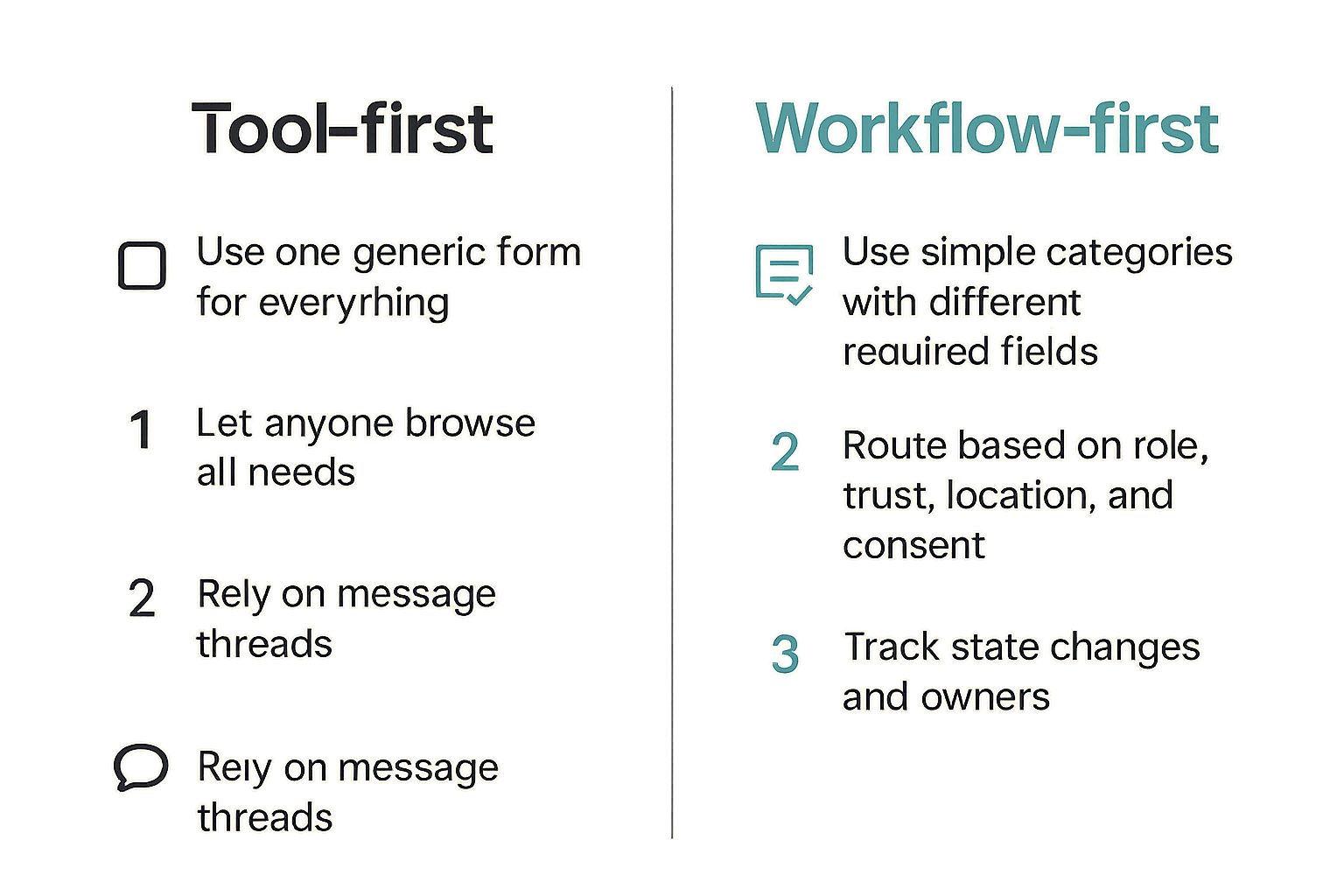
Bad implementations usually have the same pattern: tool-first optimism.
| Decision area | SaaS-first mistake | Workflow-first alternative |
|---|---|---|
| Intake | Use one generic form for everything | Use simple categories with different required fields |
| Matching | Let anyone browse all needs | Route based on role, trust, location, and consent |
| Updates | Rely on message threads | Track state changes and owners |
| Follow-up | Assume acceptance means completion | Require confirmation or closure reason |
| Privacy | Make activity visible by default | Share only what each role needs |
| Metrics | Count posts and members | Track resolved requests and stale handoffs |
What breaks in practice is not the absence of software. It is the mismatch between how the software wants people to behave and how local coordination actually works.
If the platform demands too much data entry, operators will work around it. If the platform hides too much context, helpers will ask for it in side channels. If the platform has no closure step, everyone will drift back to memory.
The operating workflow for asks offers and follow-up
The practical question is: what should happen every time an ask enters the network?
Not in theory. Not when the founder is online. Every time.
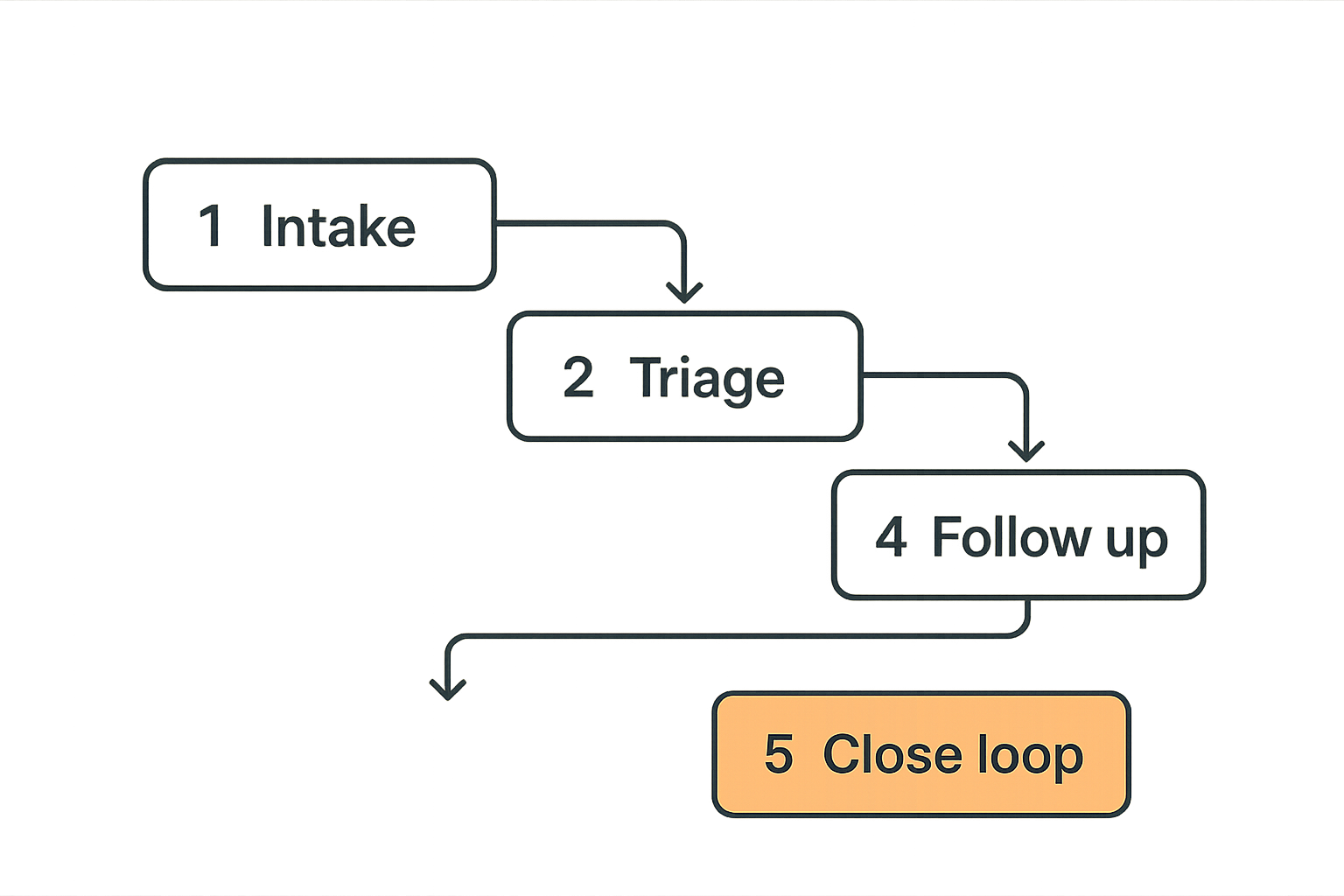
A simple seven-step coordination loop
Here is a baseline workflow local operators can adapt:
- Intake the ask or offer through the lowest-friction channel that still captures required fields.
- Triage for urgency, sensitivity, category, location, and completeness.
- Verify enough context to avoid obvious mistakes or unsafe routing.
- Match to a short list of helpers, groups, or partner organizations.
- Assign the commitment to one responsible person or team.
- Follow up before the due time, not only after it fails.
- Close the loop with confirmed completion, partial completion, escalation, or documented decline.
This is the operating core of saas community organizing. Everything else is support structure.
The follow-up layer is the system
Most community software focuses on intake because intake is visible. Follow-up is less glamorous and more important.
A request without follow-up creates social debt. The person asking feels ignored. The helper may assume someone else handled it. The organizer may not know it failed until trust is already damaged.
Follow-up should answer:
- Who owns the next check?
- When should it happen?
- What outcome is expected?
- What happens if there is no response?
- When should the item escalate?
A lightweight follow-up queue can outperform a large community platform with no operational discipline.
Escalation keeps trust intact
Escalation is not drama. It is a normal path for work that gets stuck.
Common escalation triggers include:
- No helper accepts within the defined window.
- A helper accepts but does not confirm progress.
- The requester reports a mismatch or discomfort.
- The request turns out to be more urgent than expected.
- The issue requires a partner organization or professional support.
Escalation should be visible to operators, not dumped into public channels. The goal is to protect trust, not shame people for missing a message.
Data design permissions and governance
The database behind a local network is not neutral. It shapes what organizers see, what they ignore, and what risks they create.
SaaS community organizing needs data discipline because community data is relational, sensitive, and often collected from people who are not thinking like software users.
Use the smallest useful profile
Do not build a massive member profile because the platform allows custom fields.
Start with the smallest useful profile:
- Name or preferred identifier.
- Neighborhood or relevant service area.
- Contact method and consent.
- Languages.
- Offer categories.
- Availability pattern.
- Role or permission level.
- Notes required for safe coordination.
Avoid collecting data just in case. In local networks, unnecessary data becomes an obligation. You have to protect it, update it, explain it, and eventually delete it.
Permissions should match real responsibility
Permissions should be designed around work, not status.
A volunteer coordinating food deliveries may need access to delivery logistics but not unrelated health notes. A neighborhood captain may need to see requests in their area but not the full network archive. A steward may need aggregate patterns without personal details.
This is where generic SaaS often struggles. It gives broad admin roles and broad member roles, with little in between. Operators then either over-share or centralize too much work in one account.
If your platform allows custom roles, use them. If it does not, compensate with process: separate forms, separate queues, redacted summaries, and operator review before sharing.
Governance is how you avoid platform capture
Platform capture happens when the tool quietly becomes the authority. The software decides what counts, who is visible, what gets prioritized, and which work disappears.
Local networks should keep governance outside the vendor relationship:
- Who can create or close categories?
- Who can export records?
- Who reviews sensitive access?
- What gets deleted and when?
- How are disputes handled?
- What happens if the tool changes pricing or shuts down?
This does not need a 40-page policy. It does need explicit decisions.
Practical rule: If the community cannot explain who owns the data, who can access it, and how records are retired, the SaaS layer is not ready for sensitive coordination.
Automations that help without removing judgment
Automation is useful when it protects operators from forgetting. It is risky when it pretends to understand local relationships.
The right automation reduces administrative load while keeping humans in control of trust decisions.
Automate reminders not relationships
Good automation examples:
- Remind an operator when a new urgent ask has not been triaged.
- Notify a helper that a commitment is due tomorrow.
- Flag requests stuck in waiting state.
- Prompt a requester for confirmation after a task should have happened.
- Surface helpers whose availability has not been updated recently.
Bad automation examples:
- Auto-assign sensitive requests to the nearest available person.
- Broadcast private needs to everyone in a category.
- Close requests automatically because a deadline passed.
- Rank members publicly by activity without context.
Automation should make the work easier to see, not remove the judgment that makes the network safe.
Use templates for clarity not scripts for everything
Templates help operators communicate consistently. They are especially useful for intake confirmations, helper requests, follow-up messages, and closure notes.
A good helper request template might include:
- What is needed.
- Where or when it is needed.
- What information is intentionally withheld for privacy.
- What accepting means.
- How to decline quickly.
- Who to contact if something changes.
The template should reduce ambiguity, not make people sound like a ticketing system. Local tone matters. If messages feel extractive or robotic, people will move back to informal channels.
Measure reliability not vanity activity
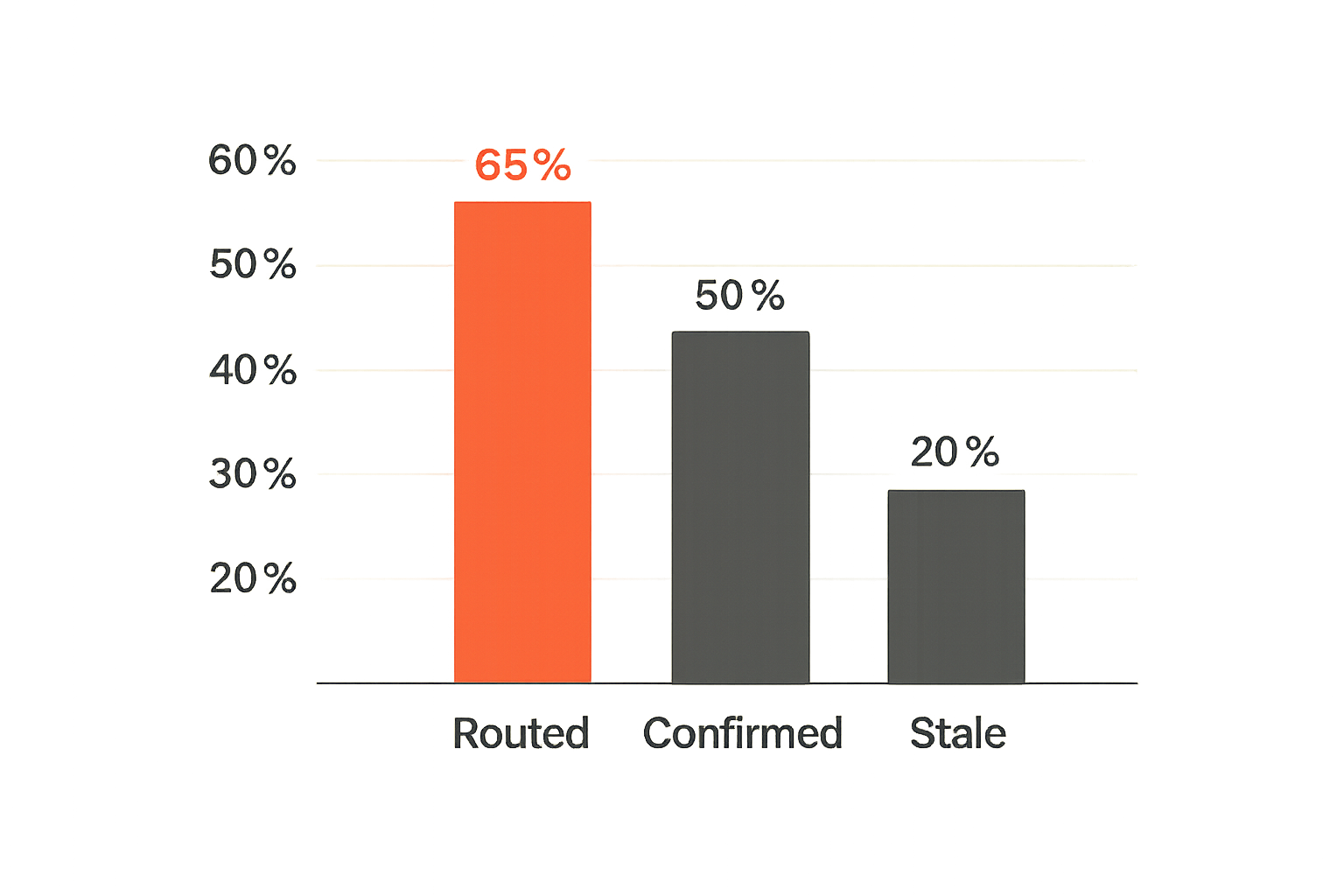
Community dashboards often count the easiest things: members, posts, reactions, event RSVPs, messages sent. Those numbers can be useful, but they do not prove coordination is working.
For local networks, reliability matters more than activity.
Track the health of the coordination loop
Useful operating metrics include:
- Number of new asks by category.
- Percentage triaged within the expected window.
- Percentage routed to a responsible person.
- Acceptance rate by helper category.
- Completion confirmation rate.
- Stale requests by age.
- Escalations by reason.
- Repeat asks that indicate a systemic gap.
Do not turn this into surveillance. Use metrics to improve the system, not to pressure volunteers into constant availability.
A small community with high closure discipline may be healthier than a large group with thousands of messages and no follow-through.
Use metrics to find bottlenecks
Metrics are useful when they tell you where the workflow is breaking.
If many asks are submitted but few are triaged, the intake queue lacks ownership. If triaged asks are not routed, the helper directory may be stale. If helpers accept but completion is low, commitments may be unclear or follow-up may be weak. If escalations cluster around one category, the network may need a partner, not more volunteers.
That changes the conversation from why are people not engaging to where is the system failing them.
The goal is not to optimize the community like a sales funnel. The goal is to make local coordination visible enough that operators can repair it.
Product fit for d0rz.com and local operators
A local network does not need every SaaS feature under the sun. It needs enough structure to move from participation to dependable coordination.
That is the product-fit lens for d0rz.com: asks, offers, trust, routing, and follow-up are not side features. They are the operating model.
When a local network needs purpose-built infrastructure
You probably need purpose-built coordination infrastructure when:
- Requests are arriving through too many channels.
- One or two organizers are the only people who know what is happening.
- Sensitive needs are being handled in public or semi-public threads.
- Volunteers say yes but tasks still fall through.
- You cannot tell which requests are stuck.
- Trust decisions depend on memory rather than shared context.
- New organizers cannot step in without weeks of shadowing.
At that point, the issue is no longer engagement. It is operational continuity.
A general community platform may still be useful for announcements and discussion. But the coordination layer needs different primitives: request state, offer matching, role-aware visibility, owner assignment, and closure.
How to evaluate fit without overbuilding
Do not migrate your whole community on day one. Pick one coordination lane and test the workflow.
Good pilots include:
- Ride coordination.
- Tool lending.
- Volunteer shifts.
- Local business referrals.
- Mutual aid requests.
- Neighborhood cleanup operations.
- Skill-share matching.
For each pilot, define the category, required fields, routing rules, operator roles, follow-up timing, and closure criteria. Then run it long enough to see failure modes.
The question is not whether the tool looks impressive in a demo. The question is whether it makes the operator's week calmer and the community's promises more reliable.
Put the system to work
SaaS community organizing is not a replacement for local relationships. It is the coordination infrastructure that helps those relationships carry more weight without burning out the people holding the network together.
The mistake teams make is treating software as the community. The useful approach is treating software as the workflow memory: what came in, who owns it, what context matters, what happens next, and whether the loop closed.
What to decide this week
If you are operating a local network, make five decisions before you add another platform or channel:
- What are the top three categories of asks and offers you need to coordinate?
- What states will each request move through?
- Who is allowed to see, route, accept, and close each type of item?
- What follow-up timing prevents silent failure?
- What metrics show reliability rather than noise?
Write those down. Then evaluate software against them.
SaaS community organizing works when the tool serves the operating model. It fails when the operating model is whatever the tool happens to make easy.
Try d0rz.com
d0rz.com helps local operators turn asks, offers, trust, routing, and follow-up into practical coordination infrastructure. If your saas community organizing needs fewer lost threads and more reliable local action, Try d0rz.com.