
Most local networks have plenty of goodwill and still lose the thread.
Someone asks for help. Three people reply with partial ideas. Nobody owns the handoff. A week later, the original need is stale, the helper feels ignored, and the organizer has another invisible coordination debt.
Teams think the problem is participation. The real problem is language that does not route work.
That is why words for community matter in 2026. Not as branding, tone, or nice vocabulary. Words are the control surface for how a local network understands asks, offers, trust, urgency, capacity, responsibility, and follow-up. If the words are vague, the workflow is vague. If the workflow is vague, the community depends on heroic organizers and private backchannels.
The practical question is not: what are warm words for community? The practical question is: which words make a local network easier to operate without turning it into a bureaucracy?
Table of contents
- Why words for community are operational infrastructure
- The vocabulary map: asks, offers, trust, routing, follow-up
- Words for community start with request design
- Offers need capacity language, not just generosity
- Trust words decide what can be routed
- Routing language turns conversation into coordination
- Follow-up words protect the network from decay
- Build a working vocabulary in seven steps
- Common failure modes in community vocabulary
- Make words for community operational in d0rz.com
Why words for community are operational infrastructure
Most community vocabulary is optimized for belonging. That is fine until someone needs a ride, a form fixed, a bilingual helper, a tenant referral, a local contractor, a food pickup, or a trusted introduction.
Then the vocabulary has to do work.
A useful way to think about it is this: every important word in a local network should reduce uncertainty for someone. If it does not help a person decide what to ask, what to offer, who can help, what is safe to share, or what happens next, it is probably decoration.
Labels shape routing
Words like member, neighbor, volunteer, provider, organizer, lead, request, referral, offer, claim, complete, and blocked are not cosmetic. They are routing labels.
If someone says, I need help with my website, the network needs to know whether that is:
- a paid local service request
- a volunteer skill-share request
- a referral request
- a troubleshooting request
- a training request
- an urgent business continuity issue
Those are different workflows. They need different people, expectations, and follow-up.
The mistake teams make is using one warm umbrella word for everything. Community becomes the word for audience, marketplace, mutual aid group, directory, chat room, referral network, and help desk. That changes the conversation in the wrong direction because no one knows what operational promise the word carries.
Language creates service boundaries
Good boundaries reduce social friction. People are more likely to participate when they know what they are saying yes to.
Compare these two phrases:
- Can anyone help Maria with business stuff?
- Maria needs a 30-minute review of a broken website contact form by Friday. Paid or barter is okay. Remote help is fine.
The second phrase makes it easier to route, accept, decline, price, schedule, and complete. It is less emotionally polished, but it is more useful.
Practical rule: If a community word cannot change what someone does next, it is not an operating word. It is atmosphere.
Why this matters now
Local networks are being asked to do more. People are using neighborhood chats, freelancer circles, creator communities, mutual aid lists, and local directories to solve problems that used to move through institutions or personal contacts.
That pressure exposes weak vocabulary. A community can survive vague language when the stakes are low. It cannot scale reliable coordination on phrases like support each other, connect people, or share resources unless those words map to specific workflows.
Related reading from our network: teams building editor-native agent workflows face the same operational problem of turning loose intent into controlled actions, as described in Vim Tools in 2026.
The vocabulary map: asks, offers, trust, routing, follow-up
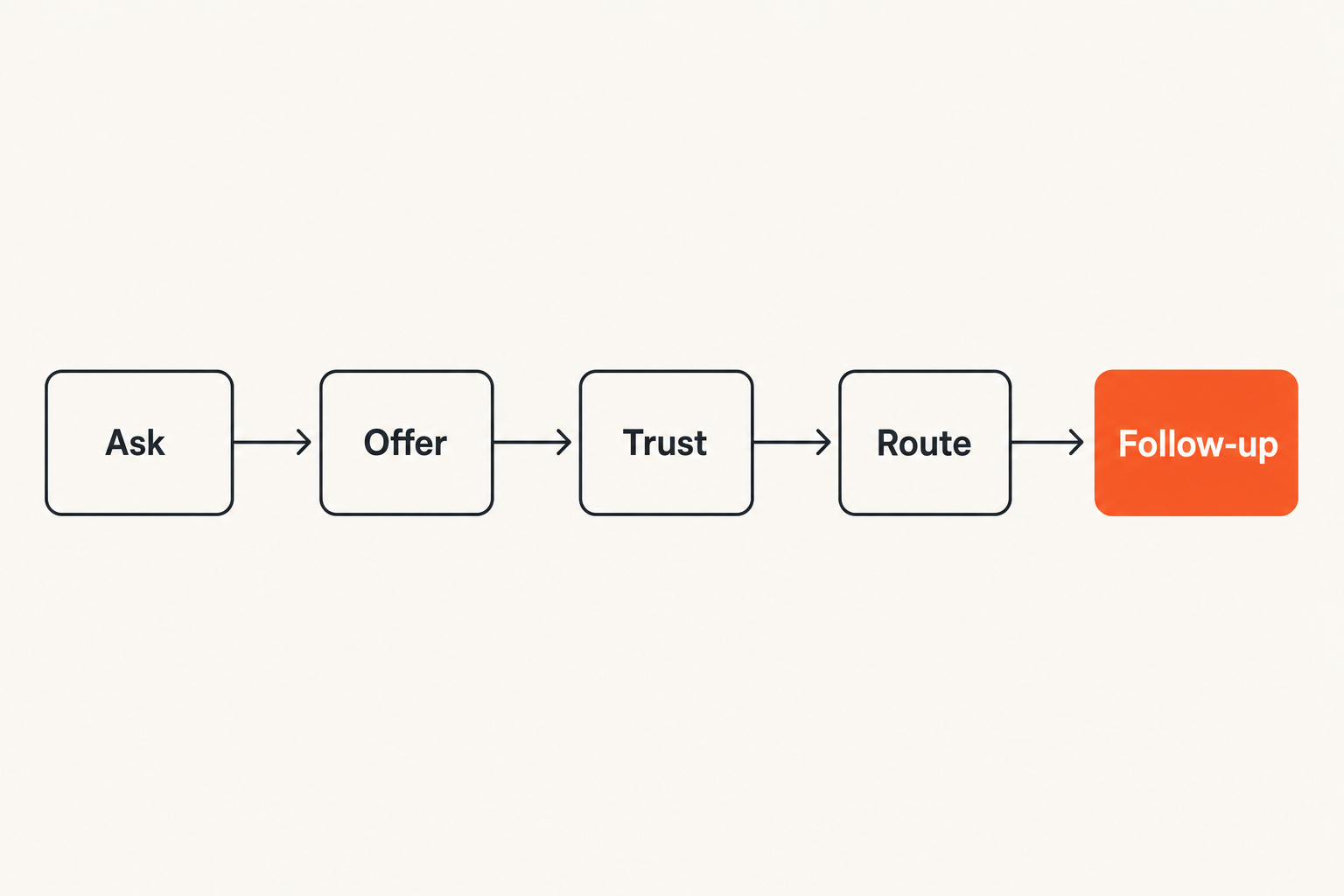
A local network does not need a massive taxonomy. It needs a small set of words that repeat everywhere.
For most practical communities, the core vocabulary is:
- ask
- offer
- trust
- route
- owner
- status
- follow-up
- outcome
These are boring words. That is the point. They are easy to teach and hard to misread.
A deeper version of this operating model is useful when you are designing the full local network architecture, especially if you are connecting community participation to actual coordination infrastructure like community building d0rz local network architecture.
Ask
An ask is a specific request from a person, household, organization, or business.
It should answer:
- What is needed?
- Where does it apply?
- When is it needed?
- What constraints matter?
- What kind of response is acceptable?
- Who owns the next step?
The word ask is stronger than need because it invites action. Need can be emotional or structural. Ask is operational.
That does not mean every ask must be transactional. A ride, a translation favor, a recommendation, and a paid workflow automation project can all be asks. The difference is the ask makes the request routeable.
Offer
An offer is available capacity.
That capacity might be paid, free, barter-based, limited, recurring, remote, local, one-time, or conditional. The key is that an offer describes what someone can actually do, not just what they care about.
A weak offer says: I love helping small businesses.
A strong offer says: I can spend two hours this week debugging one website form or payment link for a local business.
That second offer can be matched. It can also expire. Expiration is not a bug. It protects the provider and prevents stale promises.
Trust
Trust is not a feeling in the operator sense. It is a decision about what can be routed through whom under which conditions.
A person may be trusted to translate a public flyer but not handle private medical paperwork. Someone may be trusted for porch pickup but not childcare. A freelancer may be trusted for a paid website fix but not for access to customer data.
Trust language should be specific enough to protect people without making participation feel like compliance theater.
Follow-up
Follow-up is the part most communities underbuild.
The network celebrates the introduction and forgets the outcome. Then organizers cannot tell what worked, what stalled, who overpromised, who needs support, and which repeated needs deserve a standing offer.
Follow-up words include:
- claimed
- scheduled
- completed
- no response
- blocked
- referred
- expired
- reopened
These are not cold words. They are maintenance words. They keep the network honest.
Words for community start with request design
The phrase words for community often gets treated like a naming exercise. In practice, request design is where the vocabulary either helps or fails.
If asks are vague, every downstream step becomes human middleware.
Bad asks create hidden work
A bad ask is not morally bad. It is under-specified.
Examples:
- Need help ASAP.
- Looking for someone good with tech.
- Any recommendations?
- We should support local families.
- Can someone talk to my cousin?
These messages may be emotionally valid. They are not yet operational.
What breaks in practice is that organizers become translators. They DM the requester, clarify urgency, infer location, check whether payment is possible, filter unsafe responses, and then privately nudge helpers. The public network sees activity. The operator sees load.
Practical rule: If an organizer must privately clarify every request, the community has an intake problem, not an engagement problem.
A useful ask template
A practical ask should be short enough for normal people and structured enough for routing.
Use this pattern:
- I need: the concrete task or outcome.
- Location or channel: where it happens, including remote if relevant.
- Timing: deadline, window, or urgency.
- Constraints: budget, language, access, safety, tools, transport, eligibility.
- Response type: volunteer, paid, referral, trade, advice, introduction.
- Next owner: who should contact whom.
Example:
I need someone to translate a one-page school letter from English to Spanish before Thursday. Milpitas library meetup preferred, but a phone call works. Volunteer or low-cost help is okay. Please reply if you can do it or know someone reliable.
That ask is not perfect, but it routes.
For a live example of how broad local requests can be collected, the public customer asks on d0rz show why free-form input needs operational language around it.
Intake without bureaucracy
Do not turn every community interaction into a form.
The practical question is: which fields matter enough to standardize, and which should remain conversational?
Standardize:
- location or service area
- timing
- category of help
- paid, volunteer, referral, or barter
- privacy level
- current status
Keep conversational:
- personal background
- context
- preferences
- local nuance
- relationship history
This balance matters. Over-structured intake blocks participation. Under-structured intake pushes work onto organizers.
Offers need capacity language, not just generosity
Offers are often written as identity statements. I am a helper. I support neighbors. I do tech. I know people. These statements create goodwill but not matching.
Capacity language is different. It says what can be used by the network.
Describe what is actually available
An offer should include:
- skill or asset
- geography or remote availability
- time window
- limits
- cost or exchange model
- contact preference
- conditions for acceptance
A strong offer might say:
I can review one broken website form, payment link, or simple automation issue for a Bay Area small business this week. Remote only. I can diagnose the issue and suggest next steps, but I am not taking on long builds.
That is useful because it defines the edge of the offer. It tells the network when to use it and when not to.
A local network can contain very different kinds of offers, from software help to in-person language support. For example, a practical English-Spanish translation offer uses simple service language that makes the help easier to route.
Separate willingness from capacity
Many community failures come from confusing willingness with capacity.
Willingness: I would love to help.
Capacity: I can help two people this month with resume editing, 45 minutes each, evenings only.
Both are good. Only one is routeable.
Operators should normalize capacity limits. A person who says no clearly is more useful than a person who says yes vaguely and disappears.
Practical rule: A healthy network makes limited offers safe. Unlimited generosity is usually a future failure mode.
Prevent offer drift
Offer drift happens when the network keeps expanding what someone is assumed to provide.
A person offers translation help. Soon they are asked to interpret legal documents, handle medical calls, rewrite resumes, and mediate family issues. A web developer offers a form fix. Soon they are asked to rebuild a site, manage hosting, and troubleshoot payments.
Prevent drift with boundary words:
- available for
- not available for
- can refer
- paid only
- one-time
- remote only
- public information only
- no sensitive data
These phrases protect the offer and the relationship.
Trust words decide what can be routed
Trust is where community language gets uncomfortable. Many teams avoid it because they do not want to rank people or create exclusion.
The mistake teams make is pretending trust does not exist. It still exists, but it moves into private DMs, hidden preferences, organizer memory, and informal cliques.
That changes the conversation. The practical question is not whether trust should exist. The practical question is whether the network has fair, visible, lightweight language for trust decisions.
Trust is contextual
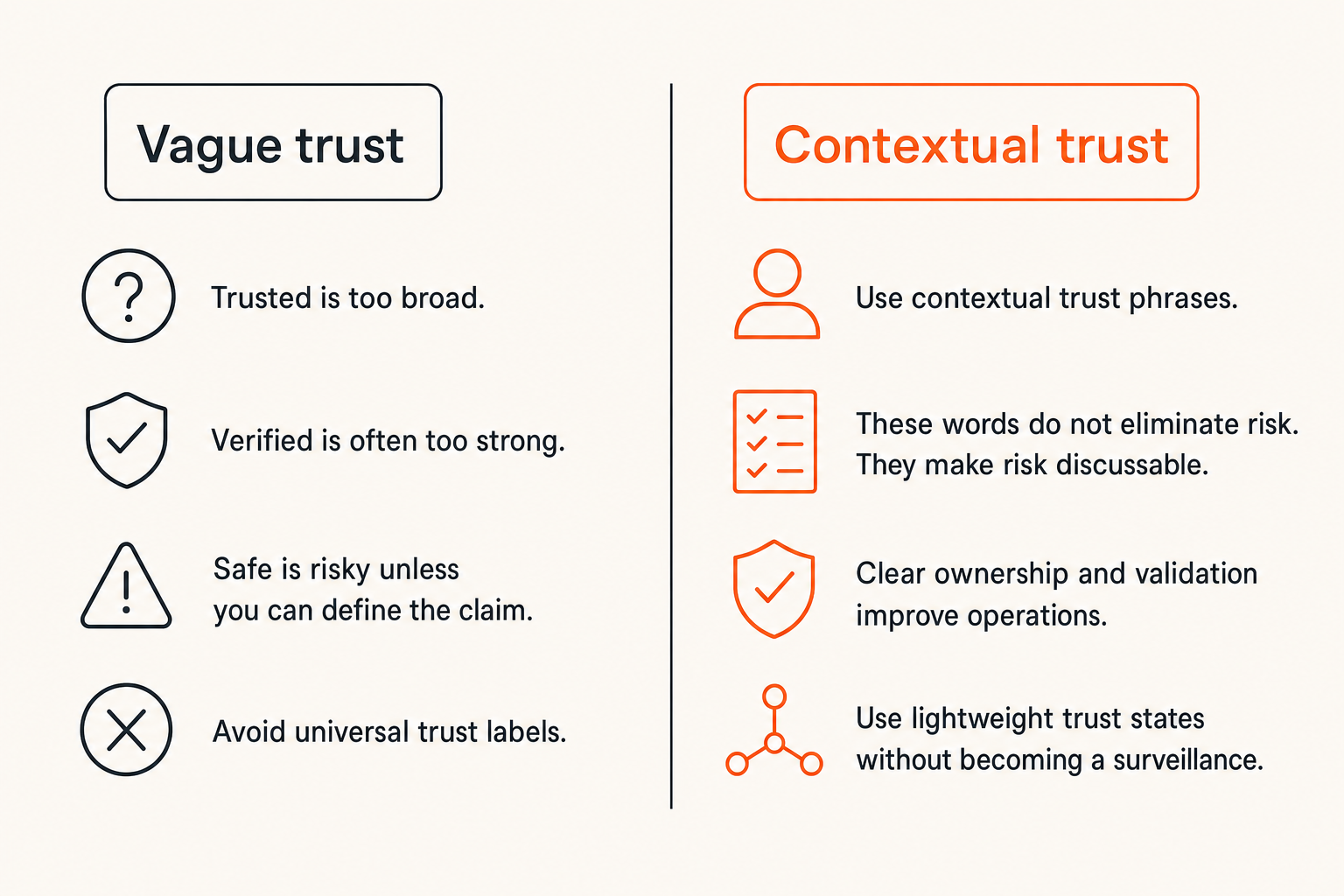
Avoid universal trust labels.
Trusted is too broad. Verified is often too strong. Safe is risky unless you can define the claim.
Use contextual trust phrases:
- known to organizer
- completed prior local task
- identity confirmed for pickup
- recommended by two members
- paid provider with public offer
- background check required for this category
- private information not needed
These words do not eliminate risk. They make risk discussable.
Security teams face a similar issue: vague confidence creates poor response decisions, while clear ownership and validation improve operations. Related reading from our network: Security Public Storage looks at ownership, detection, and response in a different domain with the same bias toward explicit workflow.
Use lightweight trust states
A local network can use simple trust states without becoming a surveillance system.
For example:
- new: no prior network history
- known: recognized by an organizer or existing member
- completed: has completed at least one routed ask or offer
- reviewed: has feedback from a completed interaction
- restricted: can participate, but not in sensitive categories
- paused: temporarily not receiving routed work
Keep the language operational. Do not make it moral.
A restricted state does not mean bad person. It may mean no childcare routing, no private data, no home entry, or no money handling until more context exists.
Do not fake safety with friendliness
Friendly language can hide unsafe workflows.
Phrases like we are all neighbors or this is a trusted community are not controls. They may be true socially and still insufficient operationally.
For higher-risk categories, add concrete words:
- public meetup only
- two-person handoff
- no cash in advance
- no private documents
- parent or guardian present
- written confirmation required
- organizer review before routing
What works is not paranoia. What works is matching the risk level to the routing rule.
Routing language turns conversation into coordination
Routing is the moment a community stops being a chat stream and becomes infrastructure.
A request without routing is just a signal. An offer without routing is just inventory. Routing connects the two with ownership.
From broadcast to assignment
Broadcast language says: Can anyone help?
Routing language says: This ask is open, this person is a fit, this helper has claimed it, this organizer is watching the handoff, and this is the next deadline.
You do not need heavy project management for every local interaction. You do need enough routing language to avoid duplicate work and silent failure.
Useful routing words:
- open
- needs match
- suggested match
- claimed
- assigned
- declined
- referred
- waiting on requester
- waiting on helper
- escalated
- completed
The shift from open to claimed is especially important. Until someone claims ownership, the network is only hoping.
A comparison table for routing terms
| Weak phrase | Operational replacement | Why it works |
|---|---|---|
| Can anyone help? | Open ask, needs match | Shows the request is not owned yet |
| I might know someone | Suggested match | Separates possibility from commitment |
| I can probably do it | Claimed pending details | Creates an owner but preserves uncertainty |
| Let me check | Waiting on helper | Makes delay visible |
| Did this happen? | Follow-up due | Turns memory into workflow |
| All set | Completed with outcome | Captures closure, not just mood |
The operational replacement does not need to be spoken robotically. The point is that the system behind the conversation understands the state.
What breaks when routing is implicit
When routing is implicit, several things break:
- multiple helpers contact the same person
- no helper contacts the person because everyone assumes someone else did
- organizers lose track of urgent asks
- providers are overused because they are visible
- quieter members never get routed to appropriate opportunities
- requesters do not know whether to wait, repost, or move on
What fails is not the kindness of the group. What fails is the handoff model.
Related reading from our network: payment systems have the same state problem in a different package, where checkout, webhooks, reconciliation, and settlement must agree; SS-31 peptide payments is adjacent reading for operators who like seeing workflow boundaries made explicit.
Follow-up words protect the network from decay
A community can look active while its coordination layer quietly rots.
The signs are familiar: repeated asks, ghosted helpers, stale offers, unclosed referrals, private complaints, and organizers saying they think something got handled.
Follow-up language is how the network remembers.
Close the loop visibly
A loop is not closed when two people are introduced. It is closed when the network knows what happened enough to improve future routing.
Possible closure notes:
- completed: ride provided Monday morning
- referred: requester connected to local accountant
- expired: no longer needed after deadline
- unresolved: no available match
- blocked: waiting on documents
- reopened: first match fell through
These notes should be short. The goal is not to publish private details. The goal is to prevent the network from forgetting its own work.
Track outcomes, not vibes
Do not ask only: did it feel good?
Ask:
- Was the ask resolved?
- Was the match appropriate?
- Was the timing acceptable?
- Did either side need support?
- Should this become a recurring offer?
- Should this category have more safeguards?
This creates a learning loop.
A useful way to think about follow-up is maintenance. You are not judging people. You are maintaining the reliability of the network.
Use status words consistently
Status words are only useful if they mean the same thing each time.
Define a small set:
- open: no committed helper yet
- claimed: someone has agreed to pursue it
- scheduled: time or next step is set
- waiting: blocked by requester or helper response
- completed: outcome reached
- expired: no longer relevant
- cancelled: requester withdrew
- escalated: organizer intervention needed
Do not add twenty statuses because a tool allows it. More statuses often mean less discipline.
Build a working vocabulary in seven steps
You do not need a brand workshop. You need an operating pass over the words your community already uses.
The practical question is: which words should become shared infrastructure?
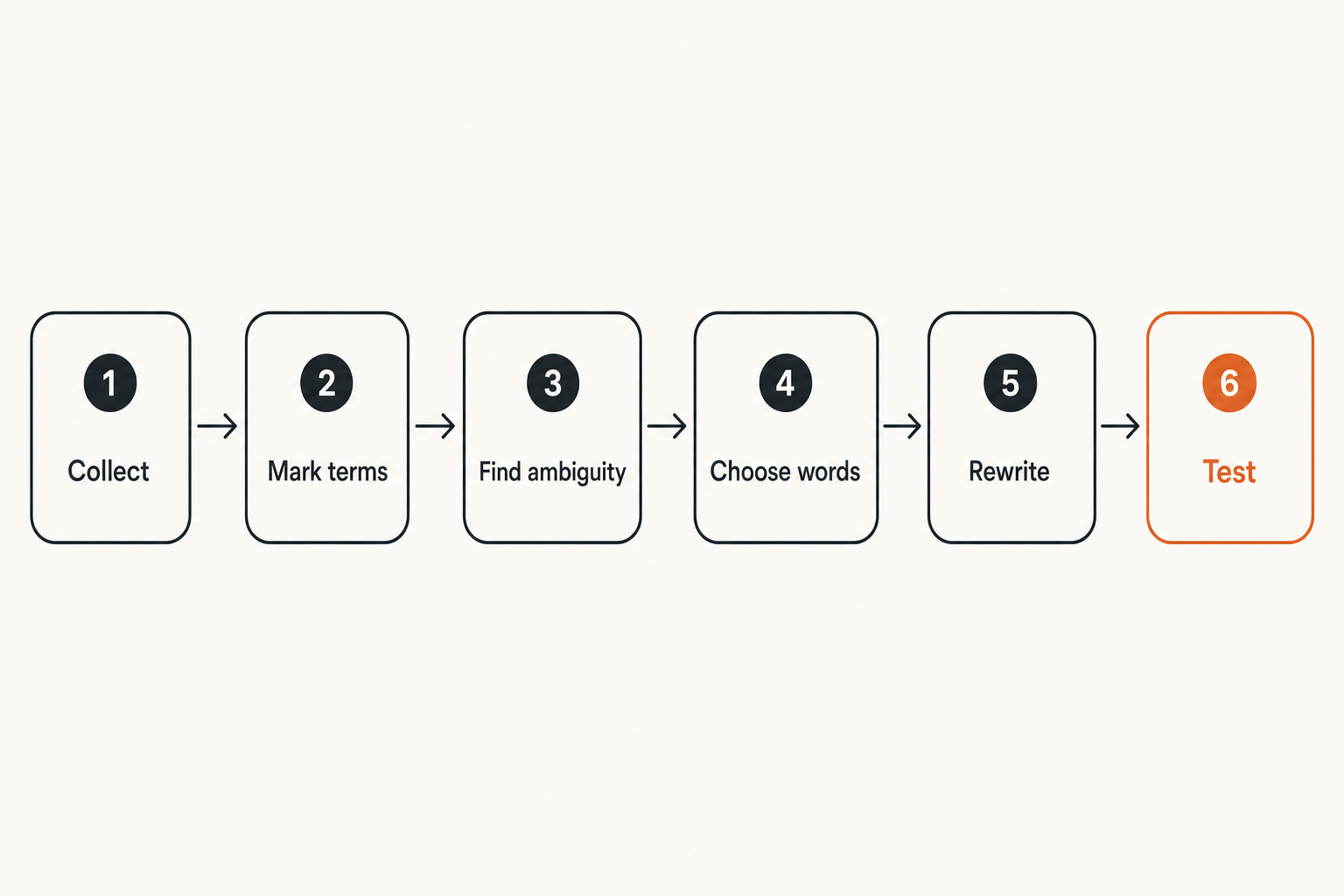
The implementation sequence
Use this sequence with a local group, freelancer network, neighborhood service circle, mutual aid effort, or small business referral community.
- Collect real messages from the last 30 to 90 days. Use asks, offers, referrals, introductions, unresolved threads, and completed help.
- Mark the recurring nouns and verbs. Look for help, need, offer, recommend, available, urgent, done, follow up, intro, paid, free, local, remote.
- Identify where ambiguity created work. Find threads where someone had to clarify timing, location, budget, safety, or ownership.
- Choose the minimum shared vocabulary. Start with ask, offer, claimed, waiting, completed, expired, referral, and restricted.
- Rewrite five real examples. Do not write policy first. Translate messy messages into routeable language.
- Test with two non-organizers. Ask them what they would do next after reading each rewritten ask or offer.
- Publish the vocabulary where work happens. Put it in forms, post templates, community guidelines, moderator scripts, and status labels.
That is enough to start. The vocabulary will improve through use.
Where to start if the network is messy
Start with the highest-volume failure.
If people ask vague questions, standardize asks first.
If helpers burn out, standardize offer capacity first.
If referrals feel unsafe, standardize trust and routing words first.
If organizers cannot remember outcomes, standardize follow-up first.
Do not attempt to fix everything at once. Language changes stick when they remove pain immediately.
How to test whether the words work
A vocabulary works when it changes behavior.
Test it with simple questions:
- Can a newcomer make a better ask without an organizer DM?
- Can a helper decline without guilt?
- Can an organizer see which asks are unowned?
- Can the network distinguish advice from a committed match?
- Can completed work be found later?
- Can sensitive categories be routed with extra care?
If the answer is no, the words are not operational yet.
Practical rule: The test of community language is not whether people like the words. It is whether the words reduce coordination loss.
Common failure modes in community vocabulary
Vocabulary projects usually fail in predictable ways. They become too soft, too platform-specific, or too detached from ownership.
Too many soft words
Soft words are not bad. Welcome, belonging, care, neighbor, support, and connection all matter.
They fail when they are asked to carry workflow meaning they cannot carry.
For example, support can mean emotional encouragement, cash help, technical assistance, event attendance, childcare, a referral, advocacy, or a ride. If the network never distinguishes those meanings, support becomes a fog machine.
Use soft words for culture. Use operating words for coordination.
Too many platform words
Another failure mode is letting the tool define the community.
Channels, posts, comments, likes, DMs, groups, forms, tickets, and tags are platform words. They describe containers. They do not necessarily describe the work.
A person does not need a ticket. They need their broken appointment form fixed before customers give up. A provider does not need engagement. They need a clear offer that does not expand beyond capacity.
Platform language is useful internally, but community-facing language should describe real-world actions.
Too little ownership language
The most expensive missing word is owner.
Not owner as in hierarchy. Owner as in who is responsible for the next step.
Without ownership language, every request has a diffusion problem. People observe, react, sympathize, and suggest. Nobody drives.
Use plain phrases:
- requester owns details
- helper owns next contact
- organizer owns routing
- provider owns estimate
- referrer owns introduction
- nobody owns this yet
The last phrase is powerful. Nobody owns this yet is honest, and honest status is better than performative activity.
Make words for community operational in d0rz.com
Words for community should eventually show up in the places people actually ask, offer, match, and follow up.
A guide sitting in a document is better than nothing. But the vocabulary becomes useful when it shapes the live network: how asks are posted, how offers are described, how trust is represented, how routing happens, and how outcomes are remembered.
Product fit: asks, offers, and local routing
d0rz.com is built around a simple premise: local coordination works better when asks and offers can be expressed clearly enough to route.
That does not mean every interaction becomes transactional. It means the network has a place to capture needs, available help, and the context required to make useful matches.
For example, a local organizer may see repeated requests for small business automation. A public ask like looking for small business automation projects in Winston Salem is not just a post. It is a signal of capacity, interest, geography, and possible routing.
This is where the vocabulary matters. If an ask is clear, it can be routed. If an offer has boundaries, it can be used without burning out the provider. If follow-up is captured, the network gets smarter instead of noisier.
What works
What works is deliberately plain:
- use ask when someone needs something specific
- use offer when someone has usable capacity
- mark claimed when a real person owns the next step
- mark waiting when the work is blocked
- mark completed only when an outcome exists
- mark expired when the timing has passed
- describe trust in context, not as a universal badge
- keep human context visible without making private data public
What fails is treating community as a mood and then wondering why coordination is unreliable.
The closing point is simple: words for community are not decoration. They are the operating vocabulary for whether your local network can turn participation into useful, trusted, follow-through action.
Try d0rz.com
d0rz.com is for people building practical local networks where asks, offers, trust, routing, and follow-up matter. Try d0rz.com.