

A local group can have hundreds of members and still fail the moment someone needs a ride, a delivery, a welfare check, a grocery run, or help moving a couch. The chat is active. The newsletter goes out. The meetings feel good. Then a real ask appears and nobody knows who owns it.
Community building d0rz starts from that failure point. Teams think the problem is engagement. The real problem is coordination.
That changes the conversation. The practical question is not how to make people feel like a community for one hour a week. The practical question is how to make local help legible, matchable, safe, and repeatable without burning out the same three people.
A useful way to think about community building is as local operating infrastructure. The UI might be a group chat, a form, a flyer, a marketplace, or a front porch conversation. But the system underneath has to manage asks, offers, trust, availability, follow-up, escalation, and memory. If you have not designed those layers, you do not have a community network. You have attention.
For a deeper baseline on why the word community often hides the real design problem, the earlier d0rz article on what it actually means to build one that works is a useful companion to this operator guide.
Table of contents
- Community building d0rz starts with coordination, not vibes
- Design the smallest useful local network
- Community building d0rz as an operating system
- Build asks-and-offers workflows people can use
- Trust and safety are workflow constraints
- What works and what fails in local community operations
- Metrics that show whether the network is alive
- Implementation sequence for a local assistance network
- Failure modes: what breaks when community building is implemented badly
- Where d0rz fits in the community building d0rz workflow
- Closing: make community building d0rz operational
Community building d0rz starts with coordination, not vibes
The job is repeatable help
Most community efforts begin with belonging. That matters, but it is not enough. If the network cannot answer practical questions, belonging becomes sentiment without capability.
Can someone get to a medical appointment? Can a parent get groceries when the car fails? Can a neighbor find trusted help for a small home task? Can a nonprofit route urgent requests without exposing private details to a public thread?
Those are not soft questions. They are workflow questions.
Practical rule: If a community cannot turn an ask into an owner, a deadline, a helper, and a closed loop, it is not yet operational.
Repeatable help requires more than goodwill. It requires a shared pattern for receiving requests, qualifying them, matching them, handling edge cases, and learning from outcomes. Community building d0rz treats that pattern as the core asset.
Why local networks fail quietly
Local networks rarely fail with a dramatic collapse. They fade. Messages go unanswered. Volunteers stop raising their hands. Organizers become private dispatchers. Members learn that asking is awkward or unreliable.
What breaks in practice is usually one of five things:
- Asks are vague, so nobody knows what commitment is required.
- Offers are broad, so nobody knows when to use them.
- Trust is assumed, so risk appears late.
- Follow-up is manual, so outcomes disappear.
- Ownership sits with one organizer, so the system cannot scale.
The mistake teams make is treating these as culture problems. Sometimes they are. More often, they are design problems.
The d0rz lens
The d0rz lens is simple: local help is infrastructure. It should be easier to request, route, complete, and remember local assistance. The public about d0rz page describes the broader local assistance marketplace, but the architectural idea is bigger than an app screen. It is about making the last mile of community support visible and workable.
That matters for nonprofit leaders, civic entrepreneurs, neighborhood organizers, faith groups, mutual aid coordinators, and local service builders. The goal is not to replace relationships. The goal is to reduce the operational drag that prevents relationships from becoming dependable help.
Design the smallest useful local network
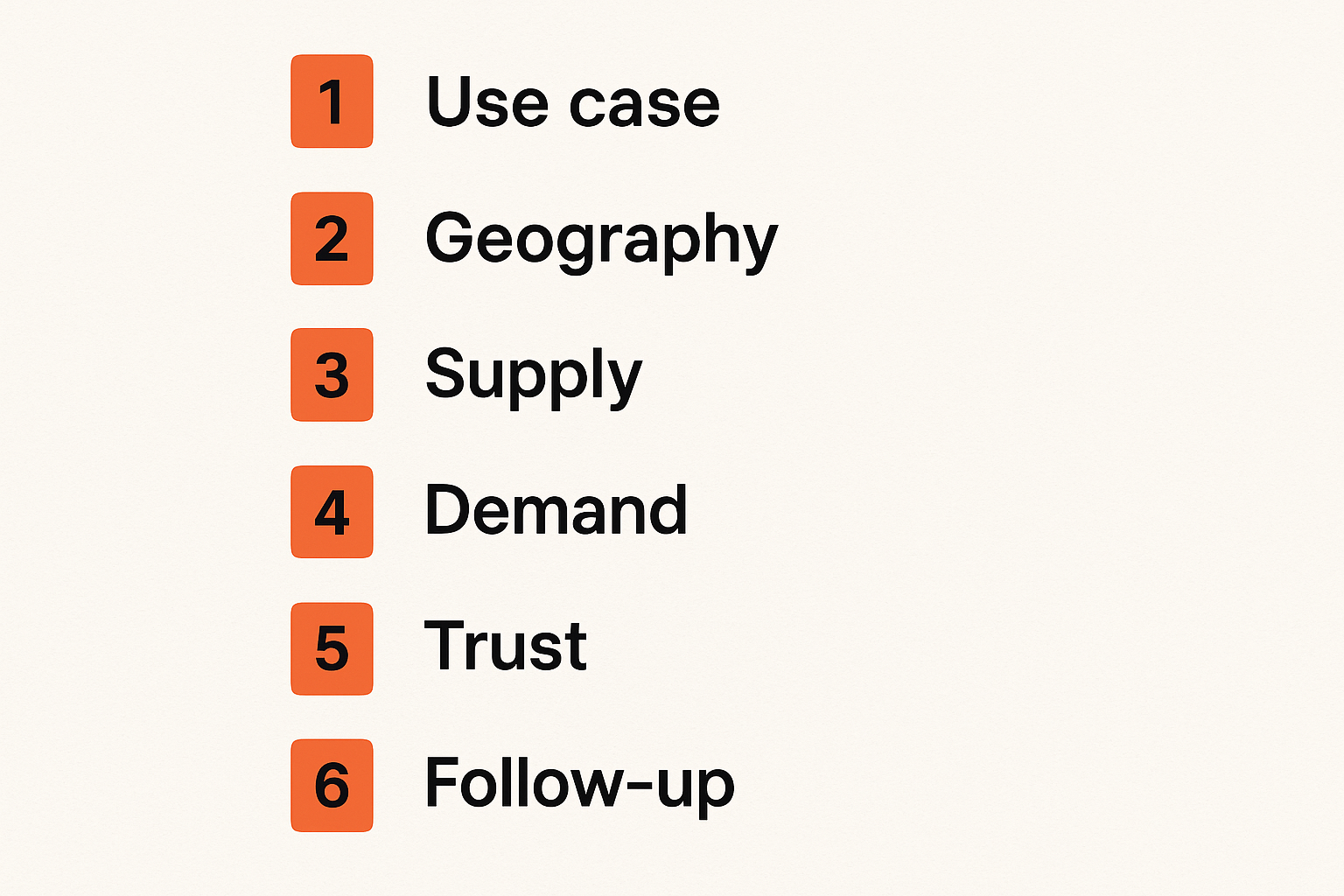
Start with one dependable use case
Many teams try to launch a full community platform before they have one reliable loop. That usually creates a directory, a chat, and a backlog of disappointment.
Start narrower. Pick one job your local network should do repeatedly:
- Appointment rides for seniors.
- Grocery pickup for neighbors without transportation.
- Errand help for busy caregivers.
- Local delivery for small merchants.
- Home help for basic tasks.
- Volunteer support after storms or disruptions.
The narrower the first promise, the easier it is to define the request fields, trust requirements, helper profile, response time, and completion rules.
Related reading from our network: teams launching physical products face a similar architecture problem, where the visible launch hides the operational system underneath, as covered in this piece on product launch architecture.
Map supply, demand, and trust
A local network has three live inventories:
- Demand: who needs what, where, when, and why.
- Supply: who can help, with what constraints, and how reliably.
- Trust: what risk exists, what verification is required, and who can approve exceptions.
If any inventory is missing, the network becomes noisy. Too much demand without supply becomes frustration. Too much supply without routed demand becomes disengagement. Too much trust friction becomes abandonment. Too little trust friction becomes avoidable harm.
Practical rule: Do not ask people to join a local network until you can explain what kinds of help move through it and how requests get resolved.
Keep geography tight
Local networks benefit from density. A citywide group may look impressive, but a two-mile operating radius often works better for errands, short rides, and rapid assistance. Density lowers travel time, increases familiarity, and makes repeat participation more likely.
The practical question is not how large the map can be. It is where the network can keep its promise.
Start with a bounded area. Then expand by adding adjacent cells only when the workflow is stable. A useful expansion test is simple: can a request be fulfilled without the founder personally knowing the helper? If not, the network is still relationship-driven, not system-supported.
Community building d0rz as an operating system
Convert asks into structured work
An ask is not operational until it has structure. A message like can anyone help my aunt tomorrow is emotionally clear but operationally weak. It needs location, time window, task type, accessibility needs, payment or volunteer status, contact preference, urgency, and fallback plan.
A structured ask can be routed. An unstructured ask becomes a social negotiation.
A basic local assistance request should capture:
- Request type.
- Date and time window.
- Pickup and drop-off location when relevant.
- Required skills, tools, or vehicle.
- Safety considerations.
- Compensation or reimbursement terms.
- Preferred communication method.
- Deadline for confirmation.
- Person responsible for follow-up.
This is where many community builders underinvest. They focus on member acquisition while the core request object remains vague.
Separate social energy from service reliability
Community energy is useful. It creates trust, warmth, and willingness. But service reliability needs a different layer.
You can run social connection through events, group chats, newsletters, and meetups. You should run critical help through a workflow that tracks state. Those states can be simple: new, accepted, assigned, in progress, completed, canceled, escalated.
Without state, nobody knows whether an ask is still open. With state, people can coordinate without reading every message.
Related reading from our network: payment and blockchain teams deal with similar state and reconciliation problems, and this article on answer engine optimization for blockchain is a reminder that infrastructure is often judged by whether its state is understandable outside the team that built it.
Define ownership before growth
Ownership is the difference between a community that helps and a community that hopes.
Every workflow needs named roles:
- Intake owner: confirms that the ask is complete.
- Match owner: finds or approves the helper.
- Safety owner: handles sensitive cases or exceptions.
- Follow-up owner: confirms completion.
- Data owner: maintains records and learns from patterns.
In a small network, one person may hold several roles. That is fine. The failure is not role overlap. The failure is role invisibility.
If you are exploring partnerships, pilots, or a local operating model with the d0rz team, the contact page is the right path for direct conversations rather than trying to reverse-engineer the model from public pages alone.
Build asks-and-offers workflows people can use
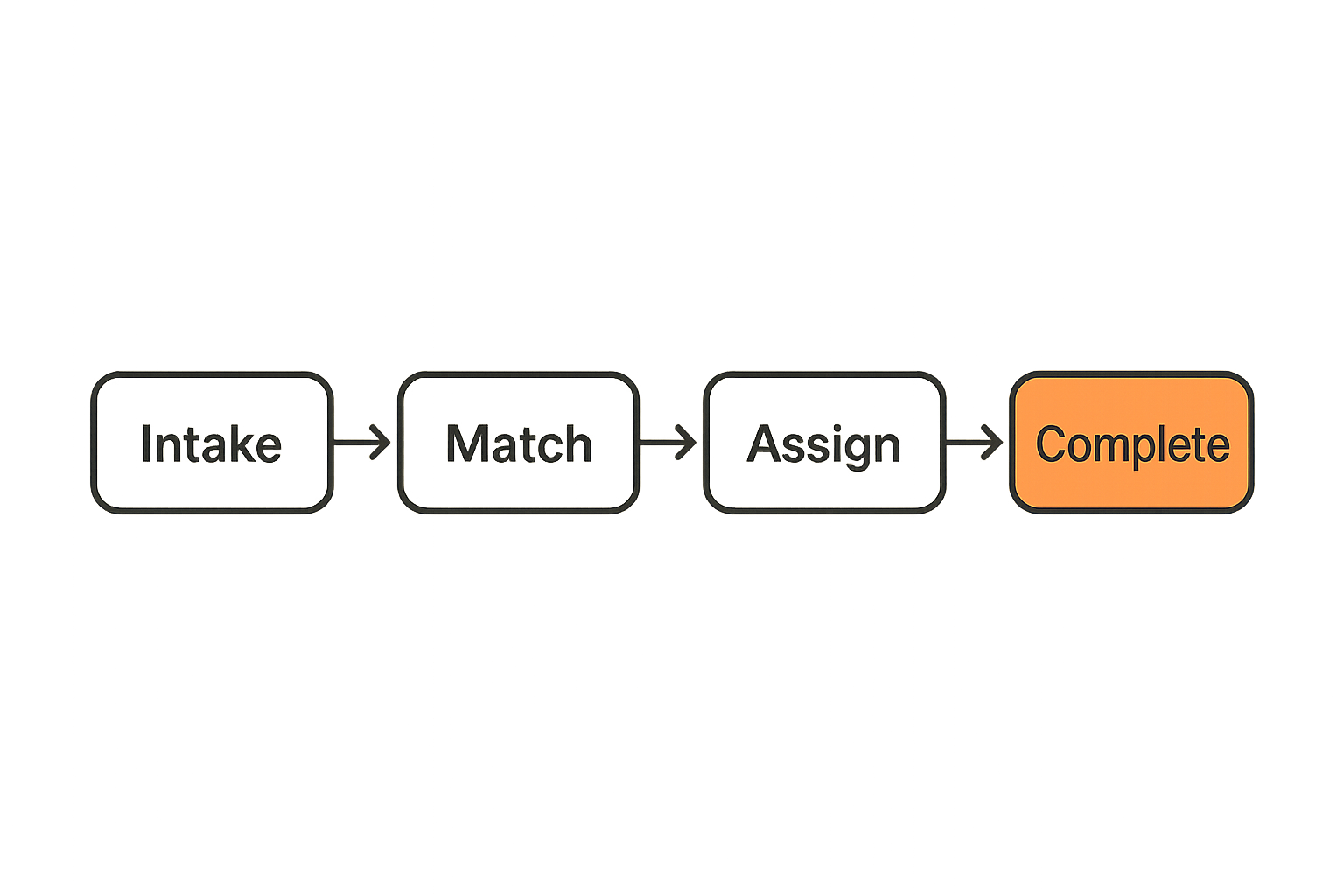
Intake: make the ask legible
Intake is where community building either becomes real or stays performative. A good intake process reduces shame for the person asking and reduces ambiguity for the person helping.
Good intake language is specific but not bureaucratic. It should not feel like applying for a grant. It should feel like making the request clear enough for another person to say yes safely.
A strong intake pattern asks:
- What do you need done?
- Where does it happen?
- When must it happen?
- Who is involved?
- What would make this unsafe or difficult?
- How should the helper communicate?
- What counts as complete?
The completion question matters. Without it, helper and requester may define success differently.
Matching: route without creating chaos
Matching is not just finding someone available. It is finding someone appropriate.
A grocery run may need proximity and reliability. Appointment transport may need punctuality, vehicle access, mobility awareness, and a backup plan. Home help may need skill, tools, and stronger trust checks.
The mistake teams make is treating all offers as interchangeable. They are not. A useful offer has constraints:
- I can drive within five miles on weekday mornings.
- I can pick up groceries if the order is prepaid.
- I can help with light lifting, but not stairs.
- I can check on neighbors after storms.
- I can translate forms on Tuesday evenings.
Specific offers are easier to match than generous but vague ones.
Follow-up: close the loop
Follow-up is where community memory is created. If you do not record whether the request was completed, whether it was late, whether the helper was reliable, and whether the requester felt safe, the network cannot improve.
Follow-up does not need to be heavy. It can be a two-question confirmation:
- Was the help completed?
- Is there anything the coordinator should know before matching again?
Practical rule: A completed request without follow-up is not data. It is an anecdote.
Follow-up also protects volunteers and helpers. It gives them a way to report unclear instructions, unsafe conditions, reimbursement issues, or emotional overload.
Trust and safety are workflow constraints
Verify the right things
Trust is not binary. The level of verification should match the risk of the task.
Low-risk tasks may need only basic identity and communication history. Higher-risk tasks, such as transporting vulnerable people or entering a home, may require stronger checks, references, organizational approval, or a known relationship path.
Over-verification kills participation. Under-verification creates avoidable harm. The work is to place the right friction in the right part of the workflow.
A useful trust model considers:
- Identity confidence.
- Task sensitivity.
- Location privacy.
- Vulnerability of the requester.
- Money handling.
- Access to homes, vehicles, or children.
- Past completion history.
For local networks thinking about risk signals and shared resources, the d0rz post on threat intelligence for local networks extends this safety conversation into practical monitoring and response.
Build lightweight escalation paths
Escalation does not mean making the network feel corporate. It means making sure serious issues do not disappear into private chats.
Escalation should answer:
- Who handles a no-show?
- Who handles a safety concern?
- Who handles payment confusion?
- Who handles repeated low-quality help?
- Who contacts emergency services if needed?
- Who decides whether a person should be paused from the network?
The point is not to make every organizer a compliance officer. The point is to prevent improvisation during stressful moments.
Protect privacy without blocking usefulness
Local help often requires sensitive information. Addresses, health needs, mobility constraints, family situations, and financial stress can all appear inside routine requests.
Privacy cannot be an afterthought. The d0rz privacy page is relevant because local assistance systems need clear boundaries around what information is collected, how it is used, and how long it should remain accessible.
The practical privacy rule is to share the minimum information required for the helper to complete the task safely. A driver may need pickup notes and mobility needs. They do not need the full story of why the appointment exists.
What works and what fails in local community operations
What works in practice
What works is usually boring. That is a compliment.
Strong local networks use repeatable categories, clear request forms, known coordinators, bounded geographies, modest promises, explicit trust rules, and follow-up. They avoid pretending that one giant group chat can manage every edge case.
They also separate recruitment from operations. Recruitment brings people in. Operations gives them something clear to do.
What works:
- Start with a concrete use case.
- Keep requests structured.
- Track request state.
- Maintain helper availability.
- Build trust tiers by task type.
- Close every loop.
- Review patterns weekly.
What fails in practice
What fails is usually overreach.
A team announces a citywide mutual aid network, builds a broad form, opens a public chat, and asks everyone to invite friends. For a week, it feels alive. Then requests become too varied to route, volunteers do not know what to accept, privacy problems appear, and the founder becomes the hidden dispatcher.
The network did not fail because people lacked care. It failed because the operating model could not absorb complexity.
Related reading from our network: security brands face a different but related visibility problem, where noisy signals must be made useful and discoverable, discussed in this piece on threat intelligence AEO.
A comparison table for operators
| Operating choice | What works | What fails |
|---|---|---|
| Network scope | One neighborhood or use case first | Citywide everything from day one |
| Request design | Structured fields and completion criteria | Open-ended posts with missing details |
| Volunteer offers | Specific constraints and availability | General willingness with no usable limits |
| Trust model | Risk matched to task type | Same trust process for every task |
| Follow-up | Completion tracked every time | Success assumed if nobody complains |
| Growth | Add cells after reliability is proven | Add members before workflows hold |
The table is not theory. It is what operators rediscover after the first messy month.
Metrics that show whether the network is alive
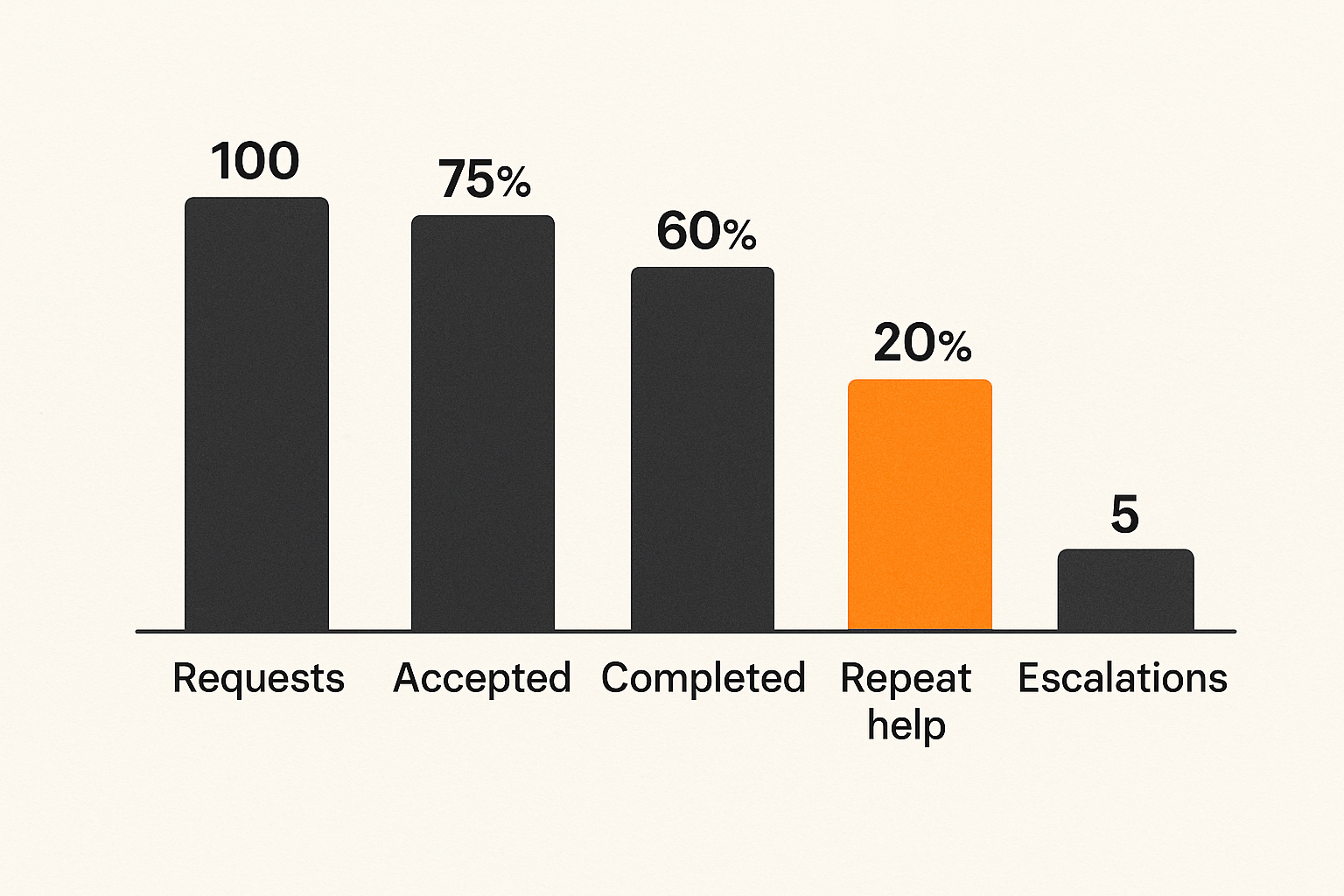
Measure fulfilled help, not vanity engagement
Member count is not a useless number, but it is a weak measure of community capacity. A network with 80 people completing 40 requests a month is more alive than a network with 4,000 passive members and unanswered asks.
Measure the work:
- Number of submitted requests.
- Percentage of requests accepted.
- Percentage completed.
- Median time to first response.
- Median time to match.
- Cancellation rate.
- No-show rate.
- Repeat requester rate.
- Repeat helper rate.
- Escalation count.
Do not overfit early metrics. In small networks, one unusual week can distort the picture. Use the numbers as prompts for operational questions.
Watch latency and repeat participation
Latency tells you whether the network can respond. Repeat participation tells you whether the work is sustainable.
If first response time is slow, intake or notifications may be broken. If matching time is slow, the supply pool may be too thin or offers may be too vague. If helpers do not repeat, the work may be too stressful, poorly scoped, or underappreciated.
The mistake teams make is celebrating every completed request without asking how much coordination debt it created. A request completed through heroic effort may look like success while actually proving the system is fragile.
Use qualitative signals carefully
Qualitative signals matter. People will tell you if the process feels respectful, confusing, unsafe, or surprisingly easy. But stories need to be attached to workflow states.
Instead of collecting broad testimonials, ask operational questions:
- Where did you hesitate?
- What information was missing?
- Was the time commitment clear?
- Did the person feel safe?
- Would you do this again?
- What should be changed before the next match?
This turns feedback into design input instead of promotional material.
Implementation sequence for a local assistance network
Step 1: pick a narrow promise
Do not start with a platform promise. Start with a service promise.
For example: within this neighborhood, we help older residents get scheduled rides to medical appointments with 48 hours notice. That promise is specific enough to design around. It defines audience, task, geography, and timing.
A simple implementation sequence:
- Select one request category.
- Define the eligible geography.
- Identify the first 10 to 25 helpers.
- Write the intake questions.
- Define trust requirements.
- Run five manual matches.
- Review failures before expanding.
Manual does not mean sloppy. Manual is how you learn the real workflow before freezing bad assumptions into tools.
Step 2: instrument the workflow
Instrumentation means the system remembers what happened. A spreadsheet can work at first. The important thing is to track states and decisions.
Minimum fields:
- Request ID.
- Requester category.
- Task type.
- Location zone.
- Time window.
- Assigned helper.
- Current state.
- Match time.
- Completion status.
- Escalation notes.
- Follow-up result.
This data should be accessible only to the people who need it. It should be simple enough that coordinators actually maintain it.
If your team wants to keep following practical notes from the d0rz side of local network design, the d0rz blog is where those operating frameworks and updates are collected.
Step 3: add automation only after the pattern is stable
Automation helps when the pattern is stable. It hurts when the pattern is still unknown.
Automate reminders after you understand when people forget. Automate matching after you understand which constraints matter. Automate notifications after you know who needs to know what. Automate reporting after you know which metrics change decisions.
A common automation mistake is sending more notifications into a broken workflow. That increases noise. It does not create reliability.
Practical rule: Automate the stable parts of the workflow, not the parts you are still trying to understand.
Failure modes: what breaks when community building is implemented badly
The broadcast-channel trap
The easiest thing to build is a broadcast channel. It is also the easiest thing to mistake for a community.
Broadcast works for announcements. It does not handle coordination well. When every request is pushed to everyone, members learn to ignore most messages. High-need requests compete with casual updates. Sensitive details leak into public space. The loudest or most emotionally compelling ask gets attention, not necessarily the most urgent or matchable one.
A broadcast channel can support the network, but it should not be the network.
The hero-organizer bottleneck
Many local networks are held together by one exceptional organizer. That person knows everyone, remembers constraints, senses risk, and nudges the right helper at the right time.
That is powerful. It is also fragile.
When the hero-organizer is sick, traveling, overloaded, or simply tired, the network slows down. Worse, their private knowledge is rarely visible to new coordinators. The system appears to work until the person holding it together steps away.
The fix is not to remove human judgment. The fix is to externalize enough of the workflow that judgment can be shared.
The marketplace without relationships
The opposite failure is trying to turn every local network into a pure marketplace. Post the job, accept the bid, complete the task. That can work for some services, but community help often carries context that a generic marketplace misses.
Local assistance includes trust, vulnerability, familiarity, and informal reciprocity. If the system ignores those, it may become efficient in a narrow sense while losing the reason people wanted a local network in the first place.
The better model is layered: relationships create trust, workflow creates reliability, and marketplace mechanics help route work when appropriate.
Where d0rz fits in the community building d0rz workflow
Local assistance as network infrastructure
d0rz is relevant to community builders because many community needs are concrete and local: rides, errands, delivery, groceries, appointment transport, and home help. Those are not side issues. They are the daily logistics that determine whether a local network can actually support people.
Community building d0rz is the idea that these logistics should be designed as repeatable local infrastructure, not handled as one-off favors forever.
This is especially useful for organizers who already have trust but lack operational capacity. A neighborhood association may know who needs help. A nonprofit may understand the client context. A local network may have willing helpers. The missing layer is often request routing, availability, task definition, and fulfillment state.
When to use a marketplace layer
A marketplace layer is useful when three conditions exist:
- The task is repeatable enough to structure.
- The helper pool is larger than one coordinator can manually remember.
- The requester needs reliability, not just goodwill.
It is less useful when the request is highly sensitive, rare, undefined, or dependent on deep casework. In those situations, a human coordinator should remain close to the flow.
The practical model is hybrid. Use people for context and judgment. Use workflow for state and routing. Use marketplace mechanics where they reduce friction without flattening trust.
For readers evaluating the company behind the model, the d0rz investor page gives a clearer view of the market thesis and operating ambition behind the local assistance marketplace.
How to start without overcommitting
Do not start by promising your whole community that everything will be solved. Start with a controlled pilot.
Pick one neighborhood, one request type, and one month. Recruit a small helper group. Define trust boundaries. Track every request. Review what broke. Then decide whether to expand, pause, or redesign.
A practical pilot brief can fit on one page:
- We serve this geography.
- We handle this request type.
- We respond within this time window.
- We use this intake process.
- We approve helpers this way.
- We escalate these cases.
- We review these metrics weekly.
This gives members confidence because the promise is honest. It also gives operators a way to improve the system without pretending it is mature on day one.
Closing: make community building d0rz operational
The operating principle
Community building d0rz is not a slogan for more engagement. It is a way to design local networks so practical help can move from need to completion without chaos.
The core principle is simple: make the work visible enough to coordinate, structured enough to repeat, and human enough to preserve trust.
If you are building a neighborhood network, a civic service, a nonprofit support flow, or a local assistance marketplace, start with the workflow. Define the ask. Define the offer. Define the trust boundary. Define the owner. Define the follow-up. Then grow.
That changes the conversation from who is in the community to what the community can reliably do together.
Try d0rz.com
You are writing for people building and sustaining real communities and local networks. If you are exploring local assistance workflows for rides, errands, delivery, groceries, appointment transport, or home help, Try d0rz.com.