
Most local communities do not fail because people refuse to participate. They fail because participation has nowhere operational to go.
A neighbor asks for help. A freelancer offers a skill. A small business needs a referral. Someone replies in a group chat, three people react, one person says they know somebody, and then the thread disappears under event photos and announcements.
Teams think the problem is choosing the best platform for local community building. The real problem is designing the workflow that turns local intent into matched, trusted, followed-up action.
That changes the conversation. You are not shopping for a prettier feed. You are deciding how your local network will capture asks, expose offers, route opportunities, record trust, close loops, and keep useful context alive after the first message.
Table of contents
- Why the best platform for local community building is not a platform hunt
- What a local community platform actually has to coordinate
- The architecture checklist for local community building
- Platform comparison: social group, directory, marketplace, or network system
- Workflow: from first ask to resolved local outcome
- Trust and moderation are operating systems, not vibes
- Metrics that matter for local community platforms
- Common failure modes when platform choice leads the strategy
- Implementation plan for 2026 local network operators
- Why d0rz.com can be the best platform for local community building workflows
Why the best platform for local community building is not a platform hunt
The phrase best platform for local community building sounds like a software comparison. In practice, it is an operations question.
If your local network is mostly announcements, almost any publishing tool will work. If the goal is reliable coordination, the platform has to do more than host content. It needs to make local demand visible, make local supply discoverable, and help people move from interest to action.
Teams think they need engagement
The mistake teams make is treating activity as proof of health. More posts. More comments. More reactions. More members.
Those numbers are not useless, but they are weak signals. A local network can look active while failing to help anyone get something done. A busy group chat can still lose the urgent request. A large directory can still produce no useful introductions. A newsletter can still be read by people who never act.
Engagement is easy to create when the cost of response is low. Coordination is harder because it requires commitment, context, and follow-through.
Practical rule: If a platform cannot tell you what happened after someone asked for help, it is not managing community outcomes. It is only managing attention.
The operating question is coordination
The practical question is not which platform has the most features. The practical question is which platform fits the coordination pattern you are trying to run.
For a neighborhood mutual aid network, that may mean routing urgent needs to nearby trusted helpers. For a freelance community, it may mean matching offers to real client demand. For a local business network, it may mean surfacing reliable providers, tracking referrals, and preventing repeated dead ends.
A useful way to think about it is this: your platform is the visible layer of a local operating system. Posts and profiles are only the interface. The underlying system is identity, inventory, routing, trust, status, and follow-up. We covered this broader local network architecture in Community Building d0rz: The Local Network Architecture That Actually Holds, and the same principle applies when choosing tooling.
If the tool does not support the operating model, the community team compensates manually. That usually means spreadsheets, memory, private DMs, and a few overloaded organizers holding the whole network together.
What a local community platform actually has to coordinate
A local community is not just a content audience. It is a living inventory of needs, capabilities, proximity, availability, trust, and timing.
Asks, offers, and local intent
Most platforms are optimized for posts. Local communities need structured intent.
An ask is not just a post. It has a requester, location, urgency, constraints, category, budget or no-budget context, and desired outcome. An offer is not just a profile. It has skills, service area, availability, boundaries, price range, and proof.
When asks and offers are treated as generic content, operators lose the fields needed to route them. That is why so many community managers end up manually scanning posts and tagging people from memory.
A stronger local community platform should help separate at least four things:
- Need: what someone is trying to solve.
- Capability: who can help and under what conditions.
- Context: where, when, and with what constraints.
- Status: whether the need is open, matched, resolved, or abandoned.
Trust, routing, and follow-up
The operating burden starts after someone posts.
Who should see the ask first? Who is allowed to respond? Does the requester need a vetted provider, a volunteer, or a referral? Should the system prioritize proximity, availability, reputation, category fit, or prior relationship?
Related reading from our network: teams thinking about coordination and accountability in payment communities face similar design tradeoffs in Community Building Crypto: The Payment Architecture Behind Communities That Last.
The point is not that every local network needs heavy infrastructure. The point is that trust and settlement-like closure exist even when no money changes hands. Someone made an ask. Someone responded. Someone followed through, or did not. The platform should help the operator see that lifecycle.
For a deeper operating lens on this, see Community Building d0rz: The Operating Model for Local Networks That Actually Work, which frames community building as a repeatable local network process rather than a branding exercise.
The architecture checklist for local community building
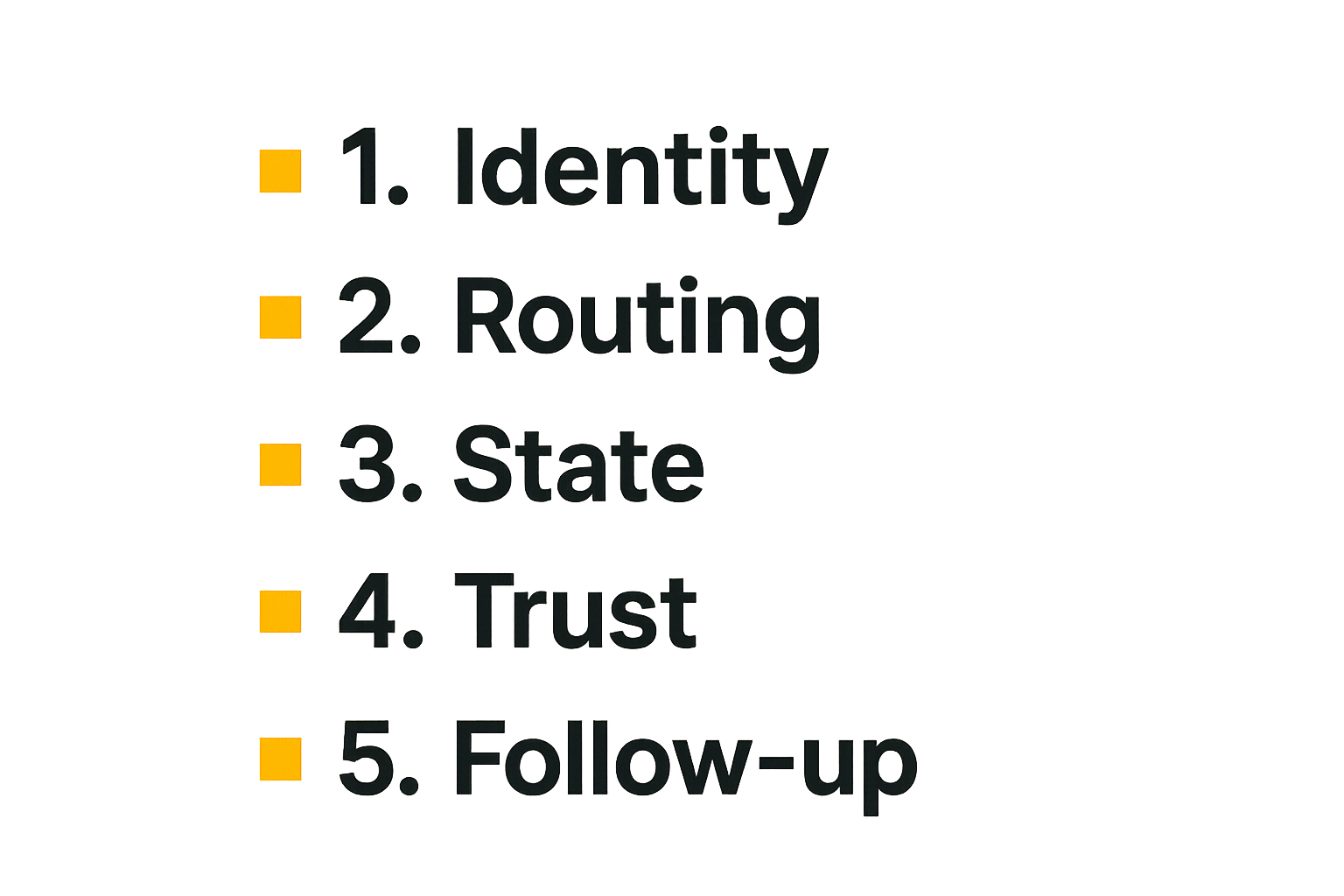
The best platform choice becomes clearer when you evaluate architecture instead of aesthetics. A clean UI is nice. It will not save a broken workflow.
Member identity and useful context
Local identity does not mean forcing everyone to expose personal information publicly. It means the system has enough context to support safe routing.
Useful identity context can include:
- Neighborhood, city, or service area.
- Role in the network, such as resident, organizer, business, provider, volunteer, or sponsor.
- Skills, needs, and recurring interests.
- Availability windows.
- Verification or relationship signals.
- Prior completed interactions.
The mistake teams make is collecting either too little or too much. Too little context creates noise. Too much friction kills participation before the first useful action.
Practical rule: Ask for the minimum context required to route the next useful action. Add fields only when they improve matching, safety, or follow-up.
Matching and routing logic
Routing is where local community tooling becomes operational.
A platform should help answer: who should receive this ask, and why? That routing can be manual at first. In fact, manual routing is often better during early network formation because organizers learn the real categories and edge cases.
But the platform should not make routing invisible. If every match happens in private DMs, the community has no memory. The operator cannot see patterns, repeated needs, supply gaps, or overloaded helpers.
Good routing logic considers:
- Category fit.
- Location fit.
- Timing and urgency.
- Trust level required.
- Cost or volunteer expectations.
- Prior relationship or completed work.
- Load balancing across helpers.
State, history, and accountability
What breaks in practice is state.
Someone posts an ask. Five people reply. Two people DM. One person starts helping. Another person also starts helping because they did not know the first one did. The requester gets overwhelmed, then stops responding. The organizer cannot tell whether the issue was solved.
A local platform needs simple state transitions:
- Draft or submitted.
- Open.
- Routed.
- Matched.
- In progress.
- Resolved.
- Reopened or abandoned.
This does not need to feel bureaucratic. But if the state does not exist anywhere, the community team becomes the state machine. That does not scale beyond a few heroic operators.
Platform comparison: social group, directory, marketplace, or network system
Different tools can work, but they fail in different places. The choice depends on what kind of local coordination you need.
Social groups and chat tools
Social groups are good for reach, lightweight updates, discussion, event energy, and casual belonging. They are weak at durable inventory and structured follow-up.
Chat tools are even faster. They are also even more perishable. Search is poor, state is informal, and new members cannot easily understand what is active, what is stale, and who can help.
Use social tools for broadcast and ambient presence. Do not rely on them as the system of record for local asks and offers.
Marketplaces and directories
Directories make supply visible. Marketplaces add transaction structure. Both can be useful, especially when the community has repeatable service categories.
The gap is that many local communities involve semi-structured coordination. Not every interaction is a clean purchase. Some are referrals. Some are favors. Some are volunteer help. Some are exploratory. Some need trust before price. Some need an organizer to route the right person quietly.
That is where a pure marketplace can feel too rigid and a pure directory can feel too passive.
Purpose-built local network systems
Purpose-built local network systems sit between social tools, directories, and marketplaces. They make asks and offers explicit, but they do not assume every interaction is the same transaction type.
| Platform type | Best for | What breaks | Operator workaround |
|---|---|---|---|
| Social group | Awareness, events, discussion | Requests disappear and status is unclear | Manual tagging and repeated reminders |
| Chat community | Fast informal coordination | No durable inventory or routing memory | Pinning posts and private spreadsheets |
| Directory | Provider discovery | Low follow-through and stale listings | Manual outreach and verification |
| Marketplace | Standardized transactions | Too rigid for referrals, favors, and mixed trust levels | Off-platform negotiation |
| Local network system | Asks, offers, routing, trust, follow-up | Requires clearer operating model | Define categories, roles, and state |
The best platform for local community building is usually the one that lets you keep the human flexibility while making the operational state visible.
Workflow: from first ask to resolved local outcome
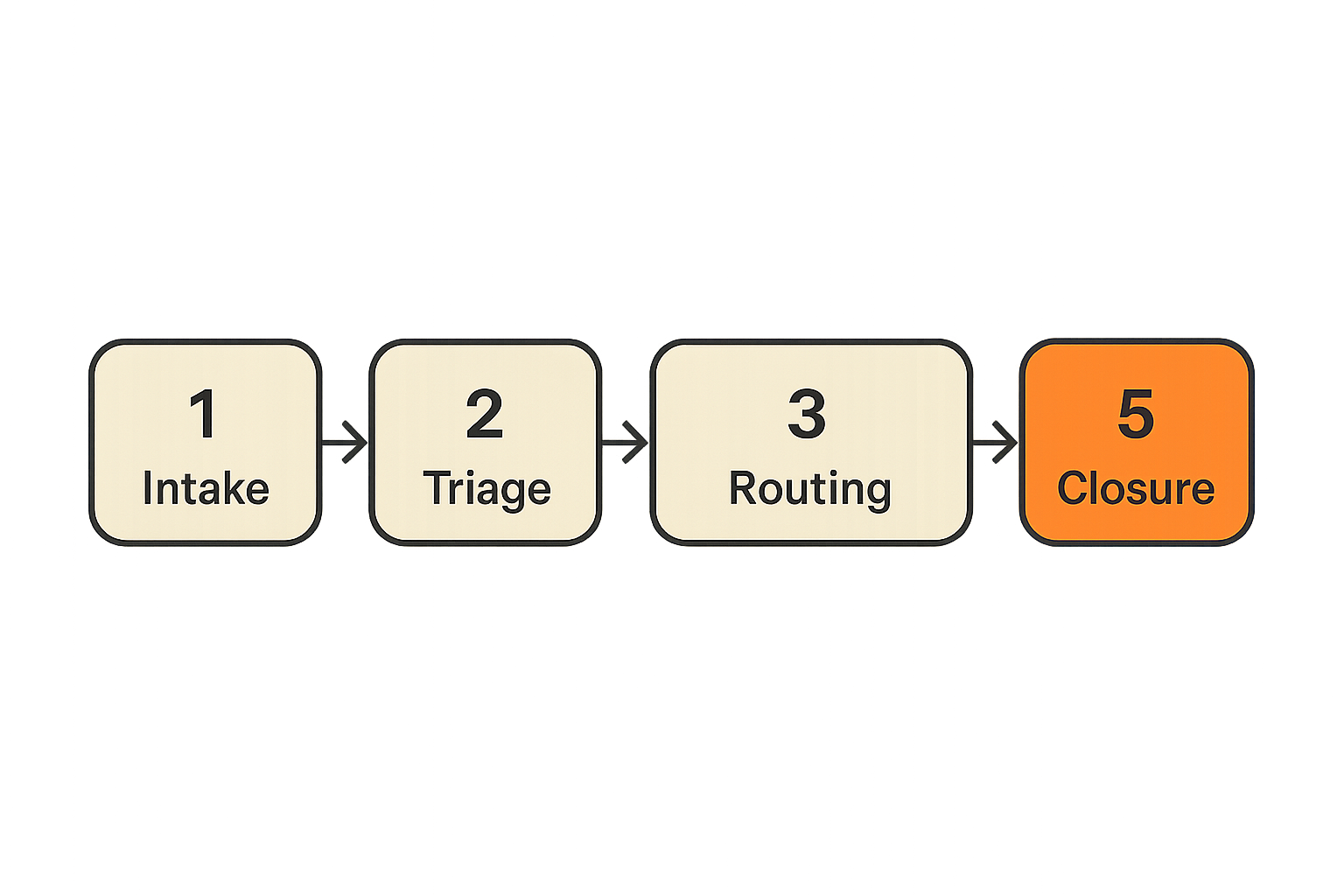
A platform decision becomes easier when you map the workflow. If a tool cannot support the path from request to outcome, it will create hidden labor for organizers.
Intake without chaos
Intake should make it easy for someone to say what they need without writing a perfect post. The form or posting flow should capture enough context for routing, but not require a full project brief.
A practical intake sequence:
- Capture the ask or offer in a structured format.
- Ask for location or service area at the right level of precision.
- Capture urgency and timing.
- Capture constraints, such as budget, accessibility, language, delivery, remote-only, or in-person.
- Let the person choose public visibility, limited visibility, or organizer-assisted routing when appropriate.
The goal is not to make the community feel like a ticketing system. The goal is to avoid forcing every participant to become a project manager.
Triage and routing
Triage is where the operator decides what happens next.
Some asks should be public. Some should be routed to a few trusted people. Some should be declined or clarified. Some should be merged with similar needs. Some should be escalated because they involve safety, money, or sensitive context.
A lightweight routing workflow might look like this:
- New ask enters the queue.
- Organizer or system labels category, location, urgency, and trust requirement.
- Matching offers or known helpers are suggested.
- Requester confirms whether they want introductions.
- Introduction happens inside a trackable thread or status record.
- Follow-up reminder triggers after a defined period.
Practical rule: Do not automate introductions until you understand which introductions create good outcomes and which create support problems.
Follow-up and closure
Follow-up is the difference between a feed and infrastructure.
A closed loop tells the network what worked. It also protects the requester from being ignored and protects helpers from being overused. Closure does not need to be heavy. A simple status update can be enough:
- Did someone respond?
- Was the introduction useful?
- Is the need still open?
- Was the work completed?
- Should this person or offer be recommended again?
If the platform does not capture this, the community loses its learning. Every ask starts from zero.
Trust and moderation are operating systems, not vibes
Trust is often discussed like culture. In local network operations, trust is also routing infrastructure.
Trust is operational data
Trust signals help decide who should be introduced to whom, under what conditions, and with what visibility.
Useful trust signals can be lightweight:
- A completed interaction.
- A verified local business or provider profile.
- A recommendation from a known member.
- A history of responsive follow-up.
- Clear boundaries and accurate availability.
- No unresolved complaints.
The key is to avoid pretending all members, asks, and offers require the same trust level. A casual recommendation for a coffee shop is different from sending someone into a home, handling money, driving a person, or helping with a vulnerable situation.
Related reading from our network: security teams face a similar escalation problem when trusted relationships become response infrastructure, as described in Community Building Incident Response: Turning Local Trust Into Faster SOC Workflows.
Moderation should protect routing
Moderation is not just removing spam or bad behavior. It protects the reliability of routing.
If low-quality offers flood the network, good asks stop receiving good responses. If requesters repeatedly ghost helpers, strong providers stop participating. If public threads become arguments, organizers move everything to private channels and the network loses visibility.
Moderation should define:
- What kinds of asks are allowed.
- What proof is required for certain offers.
- What happens when someone does not follow through.
- When organizers intervene.
- Which categories need higher trust.
- How disputes or complaints are handled.
The platform should make these decisions easier to apply. If every moderation decision is ad hoc, the rules will feel personal instead of operational.
Metrics that matter for local community platforms
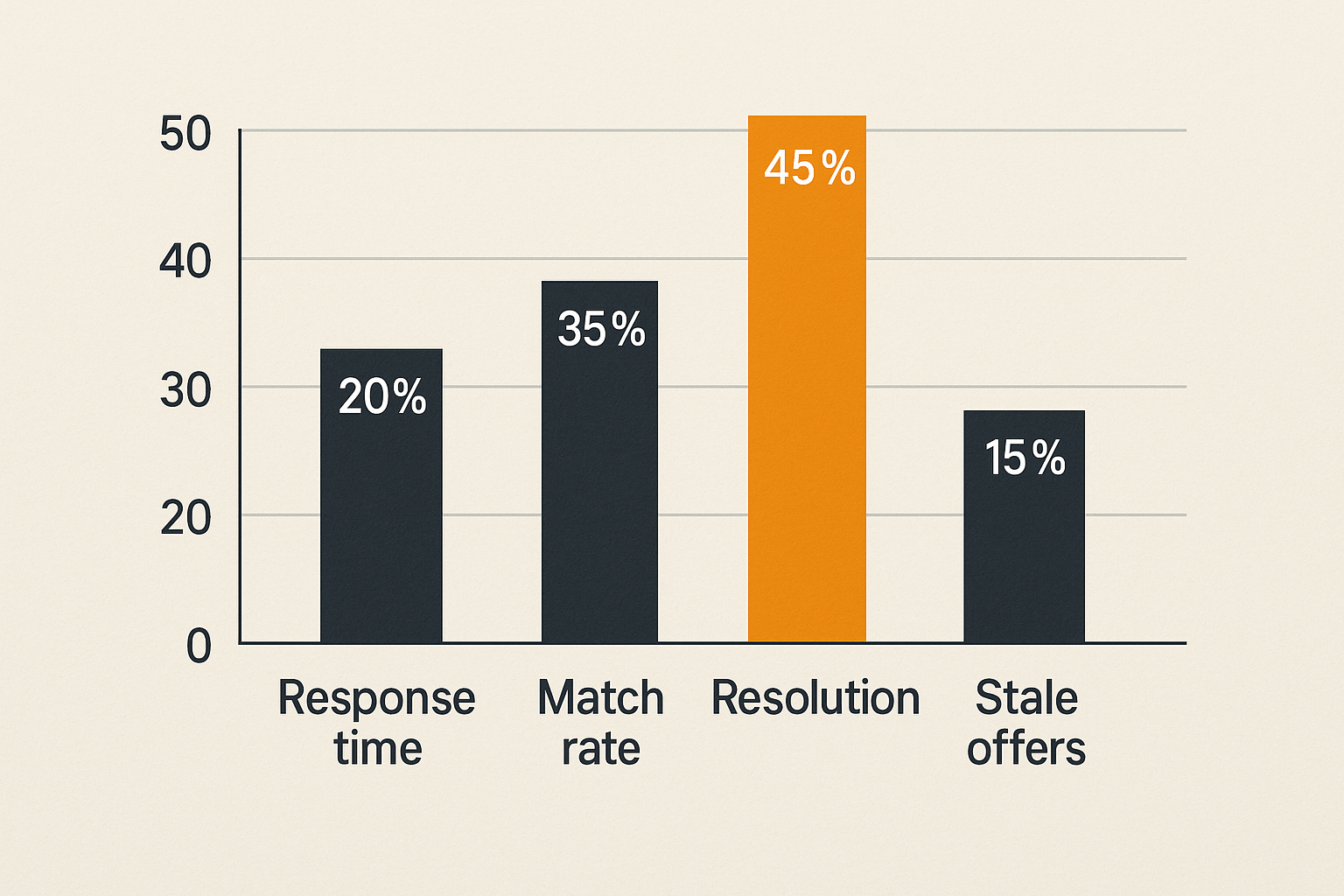
Many community dashboards optimize for the wrong thing. Page views, member count, and post volume are easy to measure. They do not prove that the local network is useful.
Measure resolved coordination
The strongest local community metric is resolved coordination: did a real local need meet a real local capability and produce a useful outcome?
Useful metrics include:
- Open asks by category and location.
- Time to first useful response.
- Match rate by category.
- Resolution rate.
- Reopen or abandonment rate.
- Repeat helper load.
- Stale offer percentage.
- Number of useful introductions made by organizers.
These metrics do not need to be perfect at the start. Even a basic monthly review can show whether the network is becoming more reliable or just louder.
Related reading from our network: visibility teams face a parallel issue when community signals need to become structured, answerable evidence, as discussed in Community Building AEO: Turning Real Community Signals Into Answer Engine Visibility.
Watch drop-off and stale inventory
What breaks in practice is inventory decay.
A provider says they are available, then gets busy. A volunteer offers help, then moves. A business changes hours. A neighborhood group changes leadership. The directory still looks full, but the routing quality collapses.
Track stale inventory aggressively:
- Offers with no recent confirmation.
- Members who have not responded to recent matches.
- Categories with many asks but few active helpers.
- Helpers receiving too many requests.
- Requests that remain open past the expected window.
Practical rule: A smaller network with current availability is more useful than a large directory full of dead profiles.
Common failure modes when platform choice leads the strategy
The mistake teams make is buying or adopting a tool before naming the local operating model.
What fails in practice
Common failure modes are predictable:
- Feed dependency: every request becomes a post, and the newest post wins.
- Organizer memory: routing depends on who the organizer remembers that day.
- Private DM sprawl: the useful work happens off-platform with no shared state.
- Stale directories: supply looks available but does not respond.
- Overbroad membership: everyone is invited, but no one knows what action is expected.
- No closure: the team cannot tell what was solved.
- Trust flattening: low-risk and high-risk interactions are treated the same.
- Tool fragmentation: events are in one place, asks in another, providers in a spreadsheet, and follow-up in someone’s inbox.
These failures are not signs that the community is weak. They are signs that the workflow is underdesigned.
What works instead
What works is boring and operational:
- Define the top three asks your network exists to handle.
- Define the top three offers or capabilities you can reliably route.
- Decide which interactions require trust or organizer review.
- Capture status for every meaningful ask.
- Review unresolved asks weekly.
- Prune stale offers monthly.
- Make follow-up a default part of the workflow.
A local platform should reduce hidden coordination debt. If the tool creates more manual reconciliation than it removes, it is not the right platform for your current stage.
Implementation plan for 2026 local network operators
Choosing the best platform for local community building in 2026 means accepting that local networks are becoming coordination infrastructure. People expect faster answers, clearer trust, and less wasted back-and-forth.
Start with one local workflow
Do not begin by modeling the entire community. Start with one workflow that already happens informally.
Examples:
- Local businesses needing website, payment, or form help.
- Parents looking for nearby childcare referrals.
- Freelancers seeking overflow projects.
- Neighbors needing errands, rides, or household help.
- New residents asking who to trust for basic services.
If you need a concrete example of a narrow, testable coordination loop, the public ask for one business workflow to automate is the kind of specific demand signal a local network can route, learn from, and repeat.
Build lightweight operating roles
Platforms do not eliminate roles. They clarify them.
At minimum, define:
- Requester: creates the ask and confirms outcome.
- Provider or helper: responds with capability and availability.
- Router: reviews, labels, and introduces when needed.
- Moderator: handles quality, safety, and rule enforcement.
- Steward: reviews metrics and improves the workflow.
In a small community, one person may hold several roles. That is fine. The important thing is to name the work. Unnamed work becomes burnout.
Automate only after patterns repeat
Automation is useful after the routing logic is understood. Before that, it hides bad assumptions.
Automate reminders before automating trust. Automate status updates before automating introductions. Automate stale-offer checks before automating recommendations.
A practical rollout plan:
- Run the workflow manually for 20 to 50 real asks or offers.
- Record categories, routing decisions, and outcomes.
- Identify repeated fields and repeated failure points.
- Add structured intake and status tracking.
- Add notification rules and reminder cadences.
- Add matching suggestions.
- Add stronger automation only where outcomes are consistently good.
This sequence keeps the community human while reducing the parts that make operators tired.
Why d0rz.com can be the best platform for local community building workflows
The best platform for local community building is the one that matches how your local network actually coordinates. For many operators, that means a system built around asks, offers, routing, and follow-up rather than generic engagement.
Product fit for practical local networks
d0rz.com is built for people building practical local networks where asks, offers, trust, routing, and follow-up matter.
That product fit is architectural. A local organizer does not just need a place to post announcements. They need to understand what people need, what people can offer, which matches are worth making, and what happened after the match.
This is useful for:
- Local service and provider networks.
- Mutual aid and neighborhood support systems.
- Freelance and small business referral groups.
- Community operators testing new local workflows.
- Organizers who need more structure than chat but less rigidity than a marketplace.
The platform should not replace the organizer’s judgment. It should make that judgment easier to apply, easier to review, and less dependent on memory.
Closing decision framework
Use this decision framework before you commit to any platform:
- Can it capture structured asks and offers?
- Can it preserve useful local context without creating excessive friction?
- Can it support routing based on category, location, timing, and trust?
- Can it show status from open to resolved?
- Can operators see stale inventory and unresolved needs?
- Can it handle both public discovery and organizer-assisted coordination?
- Can it grow from manual routing to selective automation?
If the answer is no, the platform may still be useful as a media channel. But it should not be your system of record.
The best platform for local community building is not the tool with the loudest feed. It is the operating layer that helps people move from ask to match to outcome with enough trust and memory to improve the next time.
Try d0rz.com
d0rz.com is for people building practical local networks where asks, offers, trust, routing, and follow-up matter. Try d0rz.com.