

Most local networks do not fail because nobody cares. They fail because nobody can tell what to do next.
A neighbor needs a ride. A volunteer can help, but only after 5 p.m. A nonprofit has food boxes, but no delivery coverage. A civic founder has a useful app, but every request still routes through one overloaded person in a group chat.
That is the real pain behind community building d0rz in 2026. Teams think the problem is awareness, branding, or getting more people into the room. The real problem is workflow architecture: how asks enter the system, how offers are discovered, how trust is established, how work is routed, and how the network keeps functioning when the founder is not online.
The practical question is not whether community matters. It does. The question is whether your community can reliably convert local intent into completed help without burning out the people who care most.
Table of contents
- Why community building d0rz is an operating system, not a campaign
- Start with the jobs your network must actually do
- Design the trust model before the growth model
- Build the asks-and-offers workflow
- Turn participation into repeatable operations
- Metrics that show whether community building d0rz is working
- What breaks when local networks are implemented badly
- Community building d0rz playbook for launch and scaling
- Governance, safety, and support are product features
- Where d0rz fits in the local network stack
- Closing: make the network reliable enough to matter
Why community building d0rz is an operating system, not a campaign
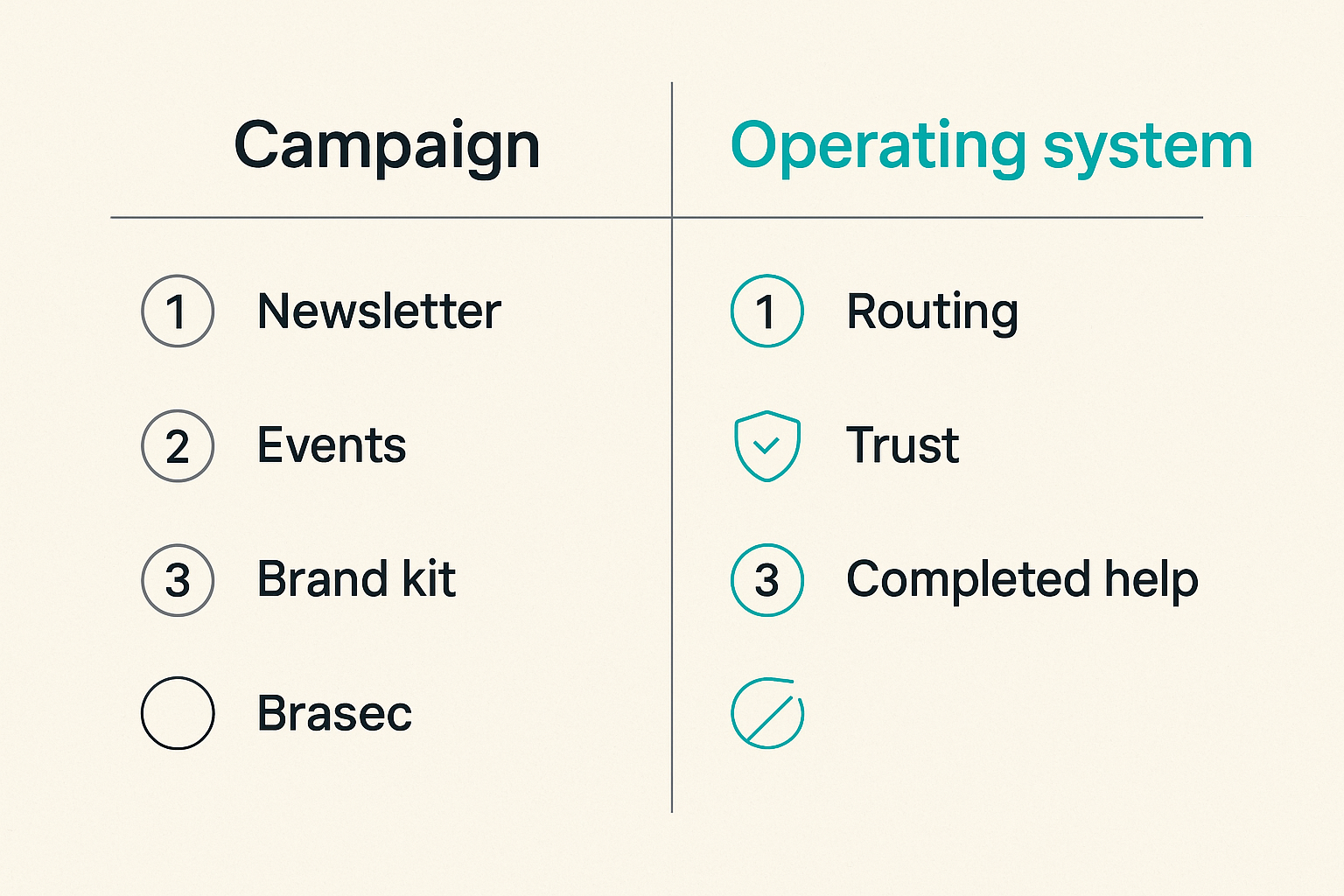
The visible layer is not the hard part
The mistake teams make is treating community as a communications function. They create a newsletter, a chat room, a calendar, a brand kit, and a few events. Those things can help, but they are not the operating system.
The operating system is what happens after someone raises their hand.
Can the network understand the ask? Can it identify who might help? Can it filter unsafe or unrealistic requests? Can it confirm completion? Can it learn from what happened? If not, the network becomes a broadcast channel with social language wrapped around it.
A useful way to think about it is this: community building d0rz is the discipline of designing reliable pathways between local needs and local capacity. The community is not just the audience. It is the supply, demand, trust layer, escalation path, and feedback loop.
That changes the conversation. Instead of asking how to get more members, ask what kind of work your current members can complete together.
The local constraint changes the architecture
Local networks are different from generic online communities. Geography creates real constraints: distance, time windows, transportation, safety, local norms, language, weather, disability access, and neighborhood-level trust.
A national forum can tolerate vague participation. A local help network cannot. If someone needs groceries delivered before dark, a thousand likes do not matter. One available person nearby matters.
This is why the architecture has to be operational. A local network needs routing, context, boundaries, and accountability. The more physical the request, the more the workflow matters.
Related reading from our network: security teams face a similar shift from loose communication to defined escalation in community building incident response, where trust only helps if it shortens the path to action.
Practical rule: Do not measure a local community by how many people can see a request. Measure it by how reliably the right person can act on it.
Start with the jobs your network must actually do
Map asks, offers, and urgency
Before choosing tools, define the job categories your network exists to handle. Most local networks are a mix of predictable and unpredictable needs.
Common ask categories include:
- Rides to appointments, work, school, or transit
- Grocery, pharmacy, and meal delivery
- Errands, document drop-offs, and small logistics tasks
- Home help, repairs, moving, setup, and cleanup
- Volunteer staffing for events or emergency response
- Local recommendations, referrals, and resource navigation
Each category has different operating requirements. A ride has timing, location, safety, and reliability requirements. A recommendation has context and quality requirements. A home help request may need skills, equipment, access boundaries, and dispute handling.
Do not flatten these into a single generic channel called help. That creates ambiguity and pushes all interpretation onto coordinators.
A better intake model captures:
- What is needed
- Where it is needed
- When it is needed
- Who is involved
- What constraints matter
- Whether payment, donation, or volunteering applies
- What completion looks like
This is not bureaucracy. It is how the system preserves human attention.
Decide what the network will not handle
Strong communities need boundaries. Many teams avoid this because they fear sounding exclusionary. In practice, unclear scope creates worse outcomes.
If your network is not designed for medical emergencies, legal advice, domestic violence intervention, childcare matching, or high-risk home access, say that clearly. Route those cases to qualified organizations where possible.
Boundaries protect members, organizers, and the long-term credibility of the network. They also make the rest of the workflow faster because people know what belongs.
The earlier d0rz essay on local network architecture covers this from a broader systems angle: a community that handles everything usually handles nothing reliably.
Practical rule: Scope is not a lack of ambition. Scope is how a local network earns the right to become dependable.
Design the trust model before the growth model
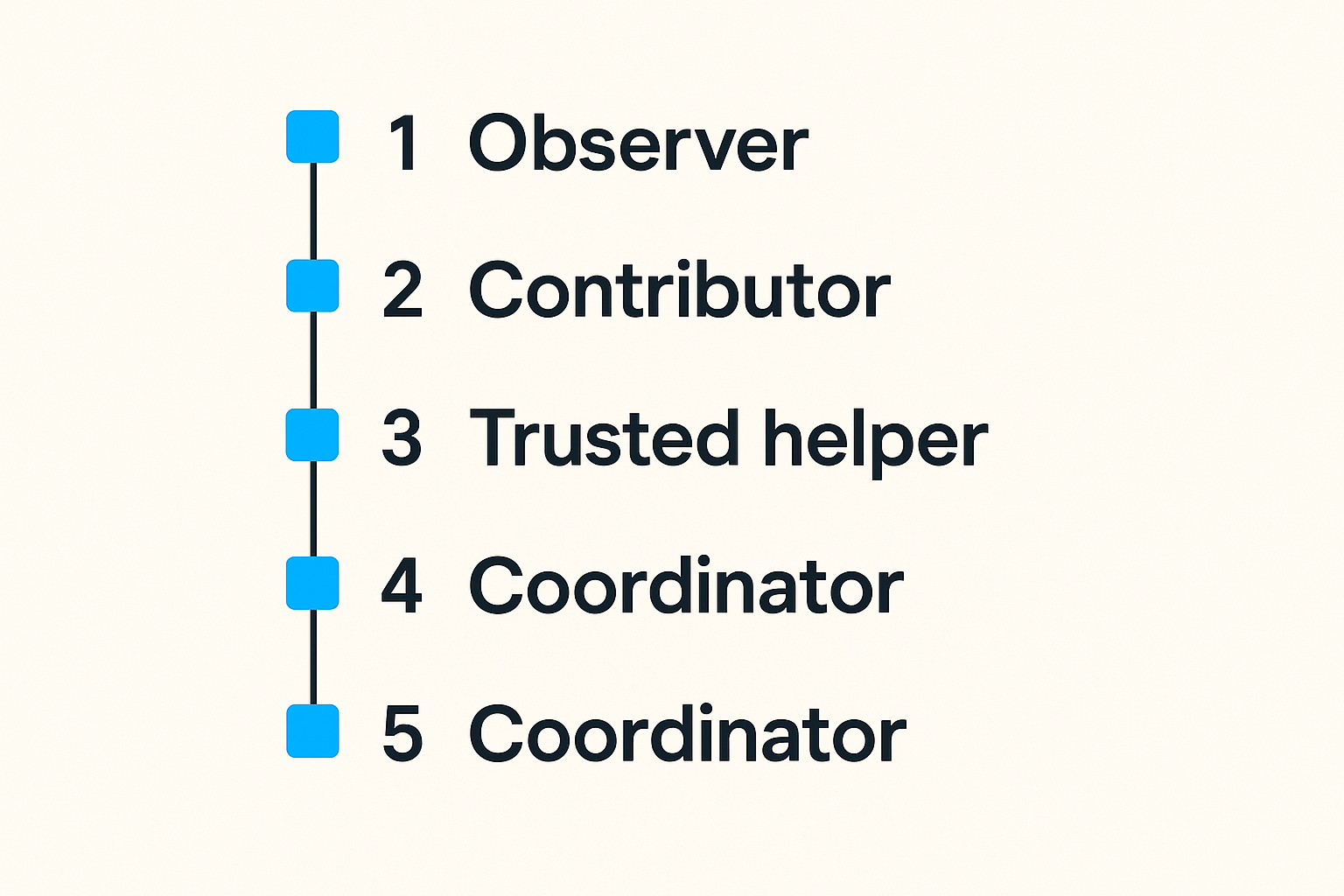
Use progressive permission instead of blanket access
Growth-first community thinking says get as many people in as possible, then figure out quality later. That works poorly for local assistance networks because members may interact offline, exchange money, enter homes, transport people, or handle sensitive needs.
Trust should be progressive. New participants can start with low-risk actions: answer questions, share resources, attend public events, join moderated group tasks, or complete small errands. Higher-risk actions require more verification, history, or organizer approval.
A practical permission ladder might look like this:
| Level | Member capability | Trust requirement | Example action |
|---|---|---|---|
| Observer | Can view public updates | Basic signup | See community announcements |
| Contributor | Can offer low-risk help | Profile and conduct rules | Share referrals or event support |
| Helper | Can accept structured tasks | Verified contact and history | Run errands or deliveries |
| Trusted helper | Can handle sensitive tasks | References, review, or admin approval | Appointment rides or home access |
| Coordinator | Can route and resolve work | Training and accountability | Assign helpers and manage disputes |
The details vary by community. The principle does not. Access should match risk.
Make reputation operational, not decorative
Reputation is often implemented as badges, points, or public praise. Those may motivate some members, but they do not solve the operational problem by themselves.
Operational reputation answers routing questions:
- Has this person completed similar tasks?
- Do they show up on time?
- Do they cancel early enough for reassignment?
- Are there safety concerns?
- Are they good with urgent requests or better with scheduled work?
- Do they prefer certain neighborhoods, languages, or task types?
This data does not have to be public. In many cases, it should not be. But the network needs a memory of reliability that improves matching.
What works is lightweight feedback tied to actual completion. What fails is performative status that tells everyone who is popular but tells coordinators nothing about who can handle the next task.
Related reading from our network: communities that add payments face similar trust and settlement problems, especially when money changes the risk profile; this is why community building crypto payment architecture frames payment as workflow, not just checkout.
Build the asks-and-offers workflow
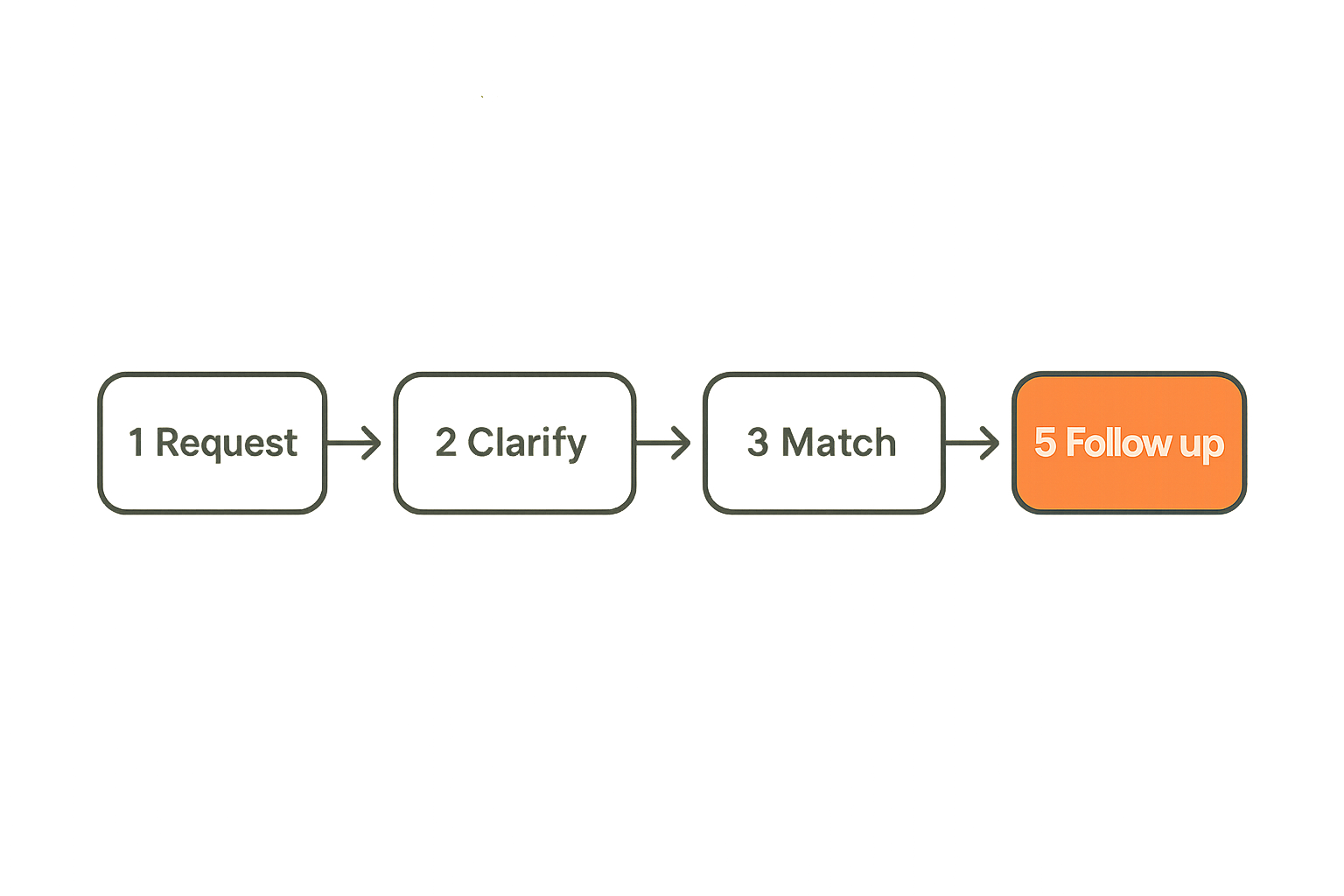
Intake needs structure
An asks-and-offers system is the core workflow for practical community building d0rz. The ask is the demand signal. The offer is the capacity signal. The workflow is everything that converts the two into a completed outcome.
A weak intake process looks like this:
- Someone posts a vague request in a chat
- Several people react but no one owns it
- A coordinator asks clarifying questions
- The request gets buried
- Someone follows up later, if they remember
What breaks in practice is not goodwill. It is state management. Nobody knows whether the request is new, assigned, blocked, completed, or abandoned.
A stronger intake process assigns state:
- New request received
- Request clarified
- Eligible helpers identified
- Helper accepted
- Task in progress
- Completion confirmed
- Feedback captured
- Follow-up needed, if any
That sequence gives the network memory. It also allows more than one person to help coordinate without stepping on each other.
Matching is a queue, not a vibe
Matching should not depend on who happens to read a message first. A local network should treat matching as a queue with rules.
Useful matching criteria include:
- Distance or neighborhood
- Time availability
- Task type and skill fit
- Trust level required
- Language or accessibility needs
- Vehicle, equipment, or capacity
- Cost, reimbursement, or volunteer status
- Member load and recent activity
This does not mean every community needs complex software on day one. A spreadsheet can be enough early on. But the mental model matters: matching is a system, not a popularity contest.
Practical rule: If the same three reliable people receive every request, you do not have a matching system. You have a burnout pipeline.
Turn participation into repeatable operations
Define roles before tools
Tools do not fix undefined ownership. Before adding a platform, assign roles.
Most local networks need some version of:
- Requester: the person or organization asking for help
- Helper: the person offering time, transport, delivery, errands, or home help
- Coordinator: the person monitoring the queue and resolving ambiguity
- Verifier: the person confirming identity, eligibility, or trust level where needed
- Support owner: the person handling problems, cancellations, complaints, or disputes
- Partner contact: the person managing nonprofits, civic groups, churches, schools, or local businesses
One person can hold multiple roles early. That is normal. The key is to name the role so it can later be transferred.
The mistake teams make is hiring or recruiting around personality instead of responsibility. They say Maria handles rides because Maria is great. That works until Maria is sick, traveling, overwhelmed, or no longer available.
A role can be documented. A personality cannot be scaled.
Write the handoff rules
Handoffs are where community workflows silently fail. A request moves from requester to coordinator to helper to support, and each transfer can drop context.
Write simple handoff rules:
- What information must be present before assignment?
- When does a helper need to confirm acceptance?
- When is a task reassigned?
- Who contacts the requester if timing changes?
- What happens if nobody accepts?
- Who marks completion?
- How are concerns escalated?
These rules can live in a shared document, an admin dashboard, a printed binder, or a simple checklist. The format matters less than consistency.
Related reading from our network: teams working on visibility face a parallel problem, because real community questions have to be captured and structured before they can produce durable discovery; see community building AEO for the answer-engine version of this workflow problem.
Metrics that show whether community building d0rz is working
Measure response, resolution, and retention
Vanity metrics hide operational problems. Member count is useful context, but it does not prove the network works.
For community building d0rz, focus on metrics that reflect actual coordination:
| Metric | What it tells you | Why it matters |
|---|---|---|
| Time to first response | Whether the network is awake | Long silence reduces trust |
| Time to assignment | Whether matching works | Delays expose routing gaps |
| Completion rate | Whether asks become outcomes | This is the core value signal |
| Cancellation rate | Whether commitments are reliable | High rates require support rules |
| Repeat helper rate | Whether contributors return | Low rates suggest friction or burnout |
| Requester return rate | Whether help was useful | Return usage signals trust |
| Coordinator touches per task | How much human routing is needed | Rising touches show coordination debt |
The point is not to build a dashboard for its own sake. The point is to see where the system is leaking attention.
Watch for hidden coordination debt
Coordination debt is the work created by unclear workflows. It accumulates quietly.
Signs include:
- Organizers answer the same questions repeatedly
- Requests require manual interpretation every time
- Members do not know where to post offers
- Helpers accept tasks but miss key details
- Nobody knows whether a task is complete
- Leaders keep private side lists to make the system work
- New volunteers need one-on-one explanation before doing anything useful
When coordination debt grows, the community feels busy but produces less. Meetings increase. Messages increase. Urgency increases. Actual outcomes stagnate.
That is the moment to simplify the operating model, not add another chat channel.
What breaks when local networks are implemented badly
The marketplace gets noisy
Every local network becomes a marketplace of some kind. Not always a paid marketplace, but always a market of attention, needs, capacity, trust, and time.
Noise enters when the system cannot distinguish between:
- Urgent and non-urgent asks
- High-trust and low-trust tasks
- Available and unavailable helpers
- Open and completed requests
- Volunteer work and paid work
- Public information and sensitive details
Once the marketplace gets noisy, serious participants disengage. Requesters stop trusting the channel. Helpers stop watching it. Coordinators compensate manually. The loudest or most familiar people get service first.
What works is categorization, status, and routing. What fails is a single undifferentiated stream of need.
The leaders become the router
The most common failure mode is founder routing. One or two trusted leaders know everyone, interpret every request, make every match, and smooth every conflict.
At first, this feels efficient. In reality, it is a bottleneck disguised as leadership.
Founder routing creates several risks:
- The network stops when the leader is unavailable
- Members do not learn how to act without permission
- Informal bias shapes who receives help
- Documentation never catches up
- Burnout becomes inevitable
- Scaling creates more messages, not more capacity
The fix is not to remove human judgment. The fix is to reserve human judgment for the cases that need it. Routine work should move through clear paths.
For safety planning, the earlier d0rz post on threat intelligence for local networks is useful because local trust systems need signals for misuse, not just enthusiasm for growth.
Community building d0rz playbook for launch and scaling
A practical 30-day sequence
A community does not need a perfect platform to start. It does need a disciplined launch sequence. Here is a practical version for local organizers, nonprofit leaders, and civic entrepreneurs.
- Define the first three service categories. Pick concrete categories such as rides, errands, and delivery instead of broad help.
- Write eligibility and boundary rules. State what the network handles, what it does not, and where unsafe requests go.
- Build the intake form or process. Capture who, what, where, when, constraints, payment or volunteer status, and completion criteria.
- Recruit the first helper cohort. Start with people who can actually complete tasks, not just people who like the idea.
- Assign coordinator coverage. Decide who watches the queue and when.
- Run ten controlled requests. Keep the volume small enough to learn from every handoff.
- Review every failed or delayed request. Treat failures as design data, not embarrassment.
- Add trust levels. Separate low-risk participation from higher-risk tasks.
- Publish the member workflow. Show people how to ask, offer, accept, complete, and escalate.
- Expand one category at a time. Add capacity only after the current workflow is stable.
This sequence is boring in the best way. It creates a system that can improve.
What to automate and what to keep human
Automation should remove repetitive coordination, not replace local judgment.
Automate:
- Intake prompts
- Status updates
- Reminder messages
- Availability collection
- Basic category routing
- Duplicate request detection
- Completion confirmation
- Simple reporting
Keep human:
- Sensitive request review
- Safety escalation
- Dispute handling
- Trust-level changes
- Partner relationship management
- Exception handling
- Community norms and boundary setting
The practical question is not whether automation is good or bad. The practical question is where automation reduces friction without hiding risk.
Governance, safety, and support are product features
Set boundaries that members can understand
Governance is often treated as a committee problem. In local networks, governance is also a product design problem.
Members need clear answers to basic questions:
- Who can request help?
- Who can offer help?
- Are services paid, volunteer, reimbursed, or mixed?
- What behavior gets someone removed?
- What information is private?
- What happens when a helper no-shows?
- What happens when a requester is unsafe or abusive?
- How does someone appeal a decision?
If these answers are vague, every edge case becomes political. If they are clear, coordinators can act consistently.
Good governance is not a long policy document nobody reads. It is a set of rules that show up at the moment of action.
Plan for disputes before they happen
Disputes are not a sign that the community failed. They are a sign that real work is happening among real people.
Plan for common dispute types:
- Task was not completed as expected
- Helper arrived late or did not arrive
- Requester changed the scope mid-task
- Payment or reimbursement was unclear
- Property was damaged
- A member felt unsafe
- Someone misused contact information
- A partner organization promised capacity it did not have
A simple support path should define intake, evidence, temporary restrictions, communication, decision authority, and closure. This protects everyone from improvising under pressure.
Practical rule: If a workflow can create harm, it needs a support path before it needs a growth campaign.
Where d0rz fits in the local network stack
The marketplace layer for real-world help
d0rz is best understood as part of the local network stack: the layer where real-world asks and offers become actionable work. The platform is built around local assistance such as rides, errands, delivery, groceries, appointment transport, and home help. The d0rz about page describes the broader marketplace direction and the practical categories it is designed to support.
For community organizers, the value is not just another place to post. The value is a more structured path from need to fulfillment. That matters when a nonprofit, neighborhood group, mutual aid circle, faith community, or civic entrepreneur wants to coordinate local help without forcing every request through private texts.
The UI is only the visible part. The deeper question is whether the network can preserve state: who asked, who accepted, what is happening, what completed, and what needs support.
When to use d0rz and when not to
Use d0rz when the work has a real-world local action attached to it: a person needs transport, an item needs delivery, an errand needs completion, or a household needs practical help.
Do not use d0rz as a substitute for emergency services, clinical care, legal intervention, or high-risk case management. Those require specialized systems and trained professionals.
This distinction matters. A strong local network does not pretend every need belongs in the same workflow. It routes practical assistance into practical systems and escalates specialized needs to specialized institutions.
That is the architectural fit: d0rz can support the marketplace and coordination layer, while organizers still own governance, local relationships, boundaries, and community norms.
Closing: make the network reliable enough to matter
The next practical step
Community building d0rz is not about making local life feel warmer in the abstract. It is about making help easier to request, easier to offer, easier to route, and easier to trust.
The teams that succeed will not be the ones with the biggest launch announcement. They will be the ones that define the work, build the intake, protect the trust layer, measure completion, and keep improving the handoffs.
Start small, but make the system real. Pick one local category. Define the ask. Recruit the first helpers. Run the workflow. Review every failure. Then expand.
That is how a local network becomes more than a crowd. It becomes infrastructure.
Try d0rz.com
d0rz.com is for people building and sustaining real communities and local networks. If you are designing practical local help workflows, Try d0rz.com.