
Community action breaks down when the room is full but nobody knows what happens next.
A neighborhood meeting gets 40 people. A group chat has 300 members. A spreadsheet has volunteers, local businesses, requests, offers, and half-finished introductions. For a week it feels alive. Then the same three people become the help desk, urgent needs get buried, and nobody can tell which promises turned into outcomes.
Teams think the problem is turnout. The real problem is operating design.
Community action is not a poster, a campaign, or a vibe. In practice, it is a local coordination system: asks come in, offers are understood, trust is assessed, matches are routed, follow-up happens, and the network learns. That changes the conversation. The practical question is not how do we get more people involved. The practical question is how do we make participation legible enough to route.
Table of contents
- Community action is an operating system, not an event
- Map the local network before you mobilize community action
- Design the intake layer for asks and offers
- Build routing rules that make community action reliable
- Trust is a workflow, not a slogan
- Run the community action workflow from signal to follow-up
- Measure the work without turning it into vanity reporting
- Common failure modes in community action programs
- What works and what fails in local coordination
- Where d0rz.com fits in the community action stack
Community action is an operating system, not an event
The unit of work is an ask, an offer, and a next step
A useful way to think about community action is as a queue of small coordination jobs. Someone needs something. Someone else can provide something. The network has to decide whether the match is appropriate, who should introduce whom, and what happens if nothing moves.
That is the work. Not the meeting. Not the social post. Not the inspirational recap.
The smallest useful unit is:
- an ask with context, urgency, location, constraints, and preferred contact path
- an offer with capability, availability, boundaries, and proof of relevance
- a next step owned by a person, not a vague group
When those three pieces are visible, community action becomes operational. You can route it. You can follow up. You can learn from it.
Why participation fails without routing
Participation is raw material. Routing is the system that turns it into help.
Many local networks collect interest better than they move work. They know who signed up, who liked the post, who came to the session, and who said they were willing to help. But when a real need appears, the organizer still has to search memory, texts, old emails, and private chat threads.
The mistake teams make is treating more engagement as more capacity. In practice, unstructured engagement often increases coordination load. Every vague volunteer adds another person to interpret, remind, and manage.
Practical rule: If a person cannot be routed to a real ask within two minutes of reviewing their offer, the offer is not operational yet.
What changes in 2026
In 2026, local organizers are dealing with a strange mix of abundance and fragility. There are more tools, more channels, more remote contributors, and more people willing to help in small ways. There is also more distrust, more burnout, and less patience for unclear processes.
The practical question is whether your network can absorb distributed participation without turning it into chaos. A small business owner may need a website form fixed. A bilingual neighbor may offer document translation. A freelancer may be available for scheduling automation. A local connector may know which nonprofit can handle a sensitive case.
That is not one community. It is a living routing graph.
Map the local network before you mobilize community action
Inventory people by capability, not popularity
Most community maps are too social and not operational enough. They list organizations, leaders, venues, and mailing lists. Those matter, but they do not answer the routing question: who can do what, under what conditions, and for whom?
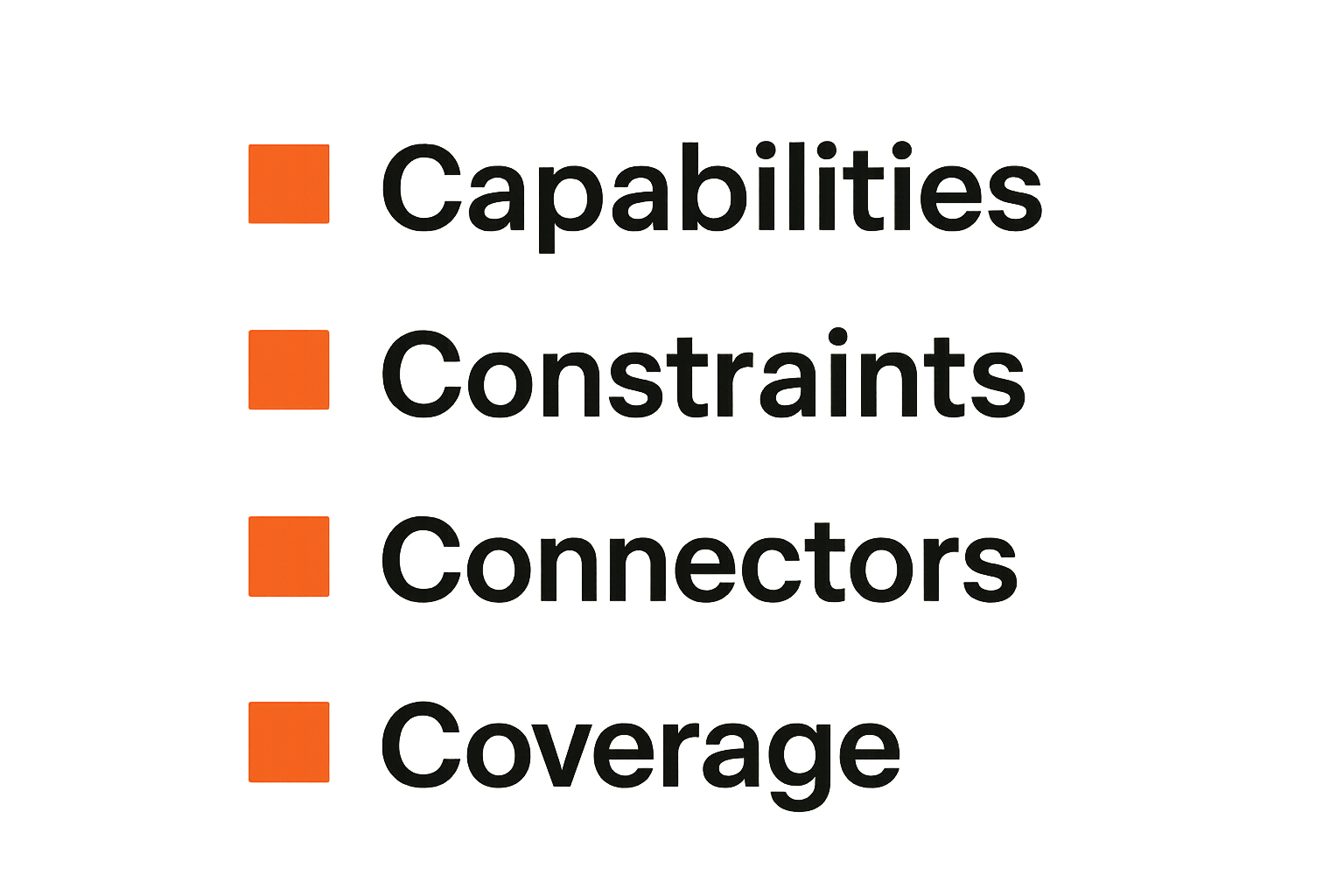
An operator-focused network map should include capabilities such as:
- transportation
- translation
- childcare
- technical help
- business workflow support
- public benefits navigation
- event setup
- food distribution
- conflict mediation
- emergency check-ins
This does not mean turning neighbors into database rows. It means respecting the difference between identity and capability. Someone can be trusted, generous, and beloved, but still not be the right person for a specific request.
If you are building the underlying model, the earlier d0rz piece on local network architecture is useful because it frames asks, offers, trust, and follow-up as infrastructure rather than community branding.
Separate public energy from private constraints
People often express willingness publicly and constraints privately. They may say yes in a meeting but later mention they cannot drive at night, cannot handle emotionally intense cases, only speak by text, or need reimbursement for materials.
Those constraints are not friction. They are routing data.
A strong community action system captures boundaries early:
- available days and times
- geographic range
- remote or in-person preference
- languages
- cost or reimbursement needs
- topics the person does not want routed to
- whether they can be contacted directly or through an intermediary
What breaks in practice is that organizers remember these constraints informally. That works until the network grows, the organizer gets sick, or a new coordinator joins.
Document trusted connectors
Every local network has connectors who are not necessarily the loudest leaders. They know who is reliable, which group is overloaded, which person prefers phone calls, and which request needs extra care.
Document them as routing assets.
A connector record does not need to be complex. It can answer:
- what community or geography they understand
- what types of requests they can advise on
- whether they can make introductions
- when they should not be contacted
- who backs them up
Related reading from our network: security teams face a similar routing problem when signals, validation, and response live in separate systems, as described in AI publishing threat detection as a SOC workflow. The domain is different, but the operating lesson is the same: signals without ownership become noise.
Design the intake layer for asks and offers
Ask forms should produce decisions
The intake layer is where community action either becomes useful or becomes a pile of stories.
A bad intake form asks, how can we help? That produces long narratives, missing constraints, and emotional load for whoever reads it.
A better intake form still leaves space for context, but it captures decision-ready fields:
- what is needed
- when it is needed
- where it applies
- whether it is urgent, important, or exploratory
- what has already been tried
- what kind of help is not wanted
- whether the ask can be shared publicly, semi-privately, or only with coordinators
The goal is not to make people fill out bureaucracy. The goal is to avoid making them repeat themselves five times.
Offer records need scope and limits
Offers are often written too broadly: I can help with tech, I can volunteer, I know marketing, I can mentor, I have a truck.
Those are starting points, not routable offers.
A useful offer has scope:
- I can debug one broken website form remotely
- I can translate short English and Spanish documents at the library
- I can drive groceries within three miles on Saturdays
- I can review a resume for one hour on Wednesdays
- I can make two introductions to local food providers each month
For example, a concrete public offer like same-day website form and workflow debugging is easier to route than a general statement like I do software. The scope tells the coordinator what kind of ask fits.
Keep lightweight consent attached
Consent is operational metadata. If someone submits an ask, the network needs to know who can see it. If someone offers help, the network needs to know whether they consent to direct contact, coordinator-mediated contact, or public display.
The mistake teams make is collecting details first and deciding privacy later. That creates cleanup work and trust risk.
Practical rule: Every ask and offer should carry a sharing level from the beginning: public, network-visible, coordinator-only, or private referral.
This is especially important for small towns, immigrant communities, business disputes, health-adjacent needs, financial stress, and anything involving family conflict. Community action depends on trust. Trust gets damaged when routing ignores consent.
Build routing rules that make community action reliable
Route by fit before urgency
Urgency matters, but fit comes first. A fast bad match creates more work than a slower good match.
Route by:
- capability fit
- trust fit
- geography or channel fit
- availability fit
- urgency
This order may feel counterintuitive. But if the person cannot help, should not receive the information, is outside the area, or is unavailable, urgency does not rescue the match.
A food delivery request and a legal-adjacent housing question may both be urgent. They should not move through the same path. One needs logistics capacity. The other may need a trusted referral and careful boundaries.
Use escalation paths for sensitive needs
Not every ask belongs in the general network. Some should be escalated to a smaller group, a trained provider, or an external organization.
Create simple escalation categories:
- safety risk
- legal risk
- health risk
- financial exploitation risk
- minor involved
- conflict between members
- identity-sensitive request
This does not require the community network to become a professional service provider. It requires knowing when not to improvise.
Related reading from our network: product teams launching SaaS products also need readiness gates and escalation paths, not just launch announcements. The workflow view in SaaS Product Launch: The Operator’s Workflow for Shipping Without Guesswork maps surprisingly well to local network rollouts.
Make ownership visible
The most dangerous status in community action is someone should handle this.
Every routed item needs an owner and a status. The owner is not always the helper. Sometimes the owner is the coordinator responsible for confirming that the helper accepted, the requester was contacted, and the loop closed.
Minimum useful statuses:
- new
- triaged
- matched
- waiting on requester
- waiting on helper
- escalated
- completed
- closed without match
The status is not for vanity reporting. It prevents invisible abandonment.
Trust is a workflow, not a slogan
Define trust levels without overbuilding bureaucracy
Trust in local networks is contextual. Someone may be trusted to bring chairs to an event but not to handle sensitive personal documents. Someone may be excellent with technical work but unreliable with urgent timelines. Someone may be trusted by one community and unknown to another.
Do not flatten trust into verified or unverified.
A useful lightweight model:
| Trust level | Meaning | Suitable routing |
|---|---|---|
| Public | Information can be viewed by anyone | public offers, general events |
| Network known | Known by at least one trusted connector | low-risk asks, introductions |
| Coordinator reviewed | Coordinator has checked scope and boundaries | moderate-risk matches |
| Specialist referral | Requires domain-specific care | legal, health, safety, sensitive cases |
The point is not to create a surveillance system. The point is to avoid pretending every introduction carries the same risk.
Protect people from ambiguous introductions
An introduction should say why it is happening, what is being asked, what is not being asked, and what the next step is.
Bad introduction:
Jane, meet Luis. Luis may be able to help.
Better introduction:
Jane, Luis offered to review one public website form this week. Your ask is about a broken appointment form on your business site. Luis has not agreed to ongoing support. If you both want to proceed, the next step is a 20-minute screen share by Friday.
That extra clarity prevents scope creep, resentment, and awkward silence.
Know when not to match
Some requests are too vague. Some offers are too broad. Some people are overloaded. Some situations need professional support. Some matches would create dependency or conflict.
A mature community action system can say not yet, not through this channel, or not with this helper.
Practical rule: A declined match is not a failure if it prevents harm, confusion, or hidden labor.
This matters because local organizers often feel moral pressure to connect everyone. But unreliable matching teaches the network that participation is risky.
Run the community action workflow from signal to follow-up
A practical seven-step operating sequence
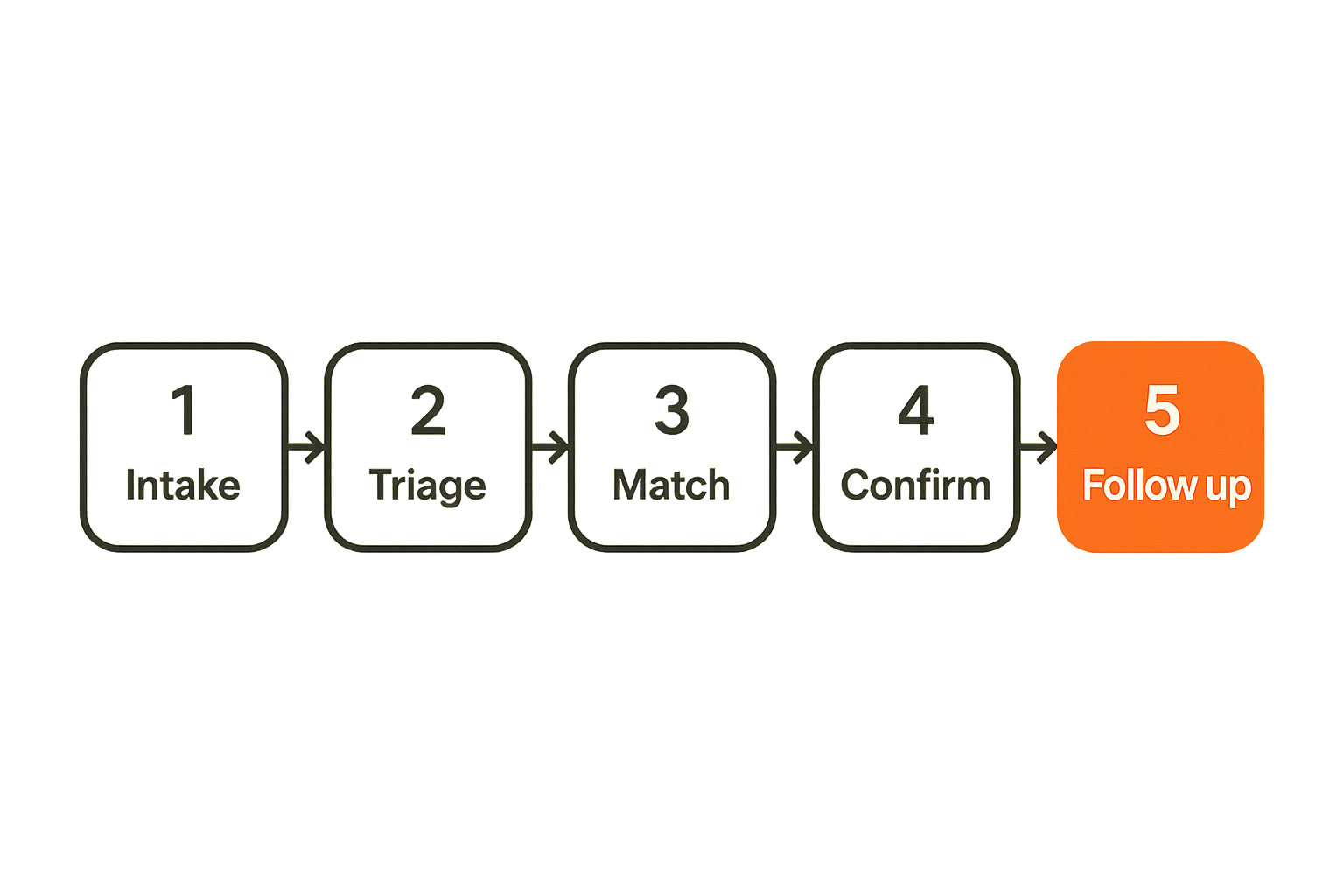
Here is a simple workflow that works for many local networks without requiring heavy software.
- Capture the signal. An ask, offer, referral, or update comes in through a form, message, phone call, event, or coordinator note.
- Normalize the record. Convert it into a consistent format with type, location, urgency, constraints, consent, and owner.
- Triage the risk. Decide whether it is general, sensitive, urgent, or outside the network scope.
- Search for fit. Look for offers, connectors, organizations, or prior matches that fit capability and trust requirements.
- Make the introduction. Include scope, next step, boundaries, and response expectation.
- Confirm movement. Check whether contact happened, help was accepted, or the item needs rerouting.
- Close the loop. Mark outcome, capture learning, thank participants, and update records.
This is not complicated. The hard part is doing it consistently when the group is busy.
What automation should and should not do
Automation can help with reminders, deduplication, form cleanup, status updates, tagging, and surfacing likely matches. It should not silently decide sensitive matches, expose private information, or replace local judgment.
Good automation:
- reminds a coordinator after two days of no update
- flags missing consent
- groups similar asks
- suggests possible offers based on scope
- creates a weekly unresolved-items report
Bad automation:
- auto-introduces strangers for sensitive asks
- publishes private requests by default
- optimizes for volume over fit
- hides who is accountable
If you are testing automation in a local network, start with a public, low-risk workflow. A live example is an ask like seeking one public business workflow to automate, where the scope is intentionally non-sensitive and easy to evaluate.
Where human judgment stays in the loop
Human judgment belongs at the points where context changes the meaning of the data.
A form may say website help. A coordinator may know the requester is a small business owner who has been burned by previous vendors and needs a careful introduction. A record may say translation. A connector may know the document is immigration-adjacent and should be handled with more care than a simple flyer.
The practical model is not human versus automation. It is automation for state, reminders, and structure; humans for trust, consent, and edge cases.
Measure the work without turning it into vanity reporting
Track throughput, not applause
Vanity metrics make community action look healthier than it is. Attendance, likes, signups, and chat activity may indicate interest, but they do not prove coordination.
Track operational metrics instead:
- new asks received
- offers made routable
- matches attempted
- matches accepted
- loops closed
- unresolved items by age
- escalations
- repeat requests from the same bottleneck
These numbers do not need to be public. They need to help operators see where work gets stuck.
Measure time-to-connection
Time-to-connection is the gap between a usable ask arriving and a meaningful next step being created. It is one of the cleanest indicators of network health.
Do not measure only time-to-resolution. Some asks take weeks. But a first meaningful connection should not drift indefinitely.
A simple target model:
| Request type | First review | First connection | Follow-up |
|---|---|---|---|
| Low-risk public ask | 24-48 hours | 2-5 days | 7 days |
| Time-sensitive logistics | same day | same day | 24 hours |
| Sensitive referral | same day | depends on pathway | 24-72 hours |
| Exploratory collaboration | 3-7 days | 1-2 weeks | 2 weeks |
The actual numbers depend on your capacity. The key is making expectations explicit.
Watch for coordinator overload
Coordinator overload is the silent failure mode. The network appears active because one person is constantly moving things behind the scenes. Then that person burns out, changes jobs, gets sick, or stops responding.
Signals of overload:
- one person owns more than half of open items
- people bypass the system and message the coordinator directly
- follow-up only happens when someone complains
- records are updated in batches after memory fades
- sensitive decisions are made under time pressure
Practical rule: If your community action system only works when one specific person is online, it is not a system yet.
Common failure modes in community action programs
The announcement trap
The announcement trap is believing that a public call creates coordination. It does not. It creates attention.
An announcement can start community action, but it cannot manage intake, fit, consent, routing, ownership, and follow-up. When groups skip the operating layer, they often see a burst of enthusiasm followed by confusion.
What breaks in practice is that people respond in different places: comments, direct messages, email, hallway conversations, and side chats. The organizer then becomes the integration layer.
The hero coordinator bottleneck
Every local network has at least one person who can make things happen by memory and relationships. That person is valuable. They are also a bottleneck if the system depends entirely on them.
The goal is not to remove human connectors. The goal is to support them with records, statuses, and backup paths.
A hero coordinator should be able to go offline for a week without every ask becoming invisible. If that is not true, the work is too centralized.
The unclosed-loop problem
Community action loses trust when people never hear what happened.
A requester asks for help and gets silence. A volunteer offers support and is never routed. A business owner meets a helper but nobody checks whether the problem was solved. A connector makes an introduction and never learns whether it was appropriate.
Closing the loop does not require a long report. It can be one of four outcomes:
- completed
- partially completed
- no match found
- referred elsewhere
The important part is that the network learns instead of forgetting.
What works and what fails in local coordination
What works in production
What works is usually boring.
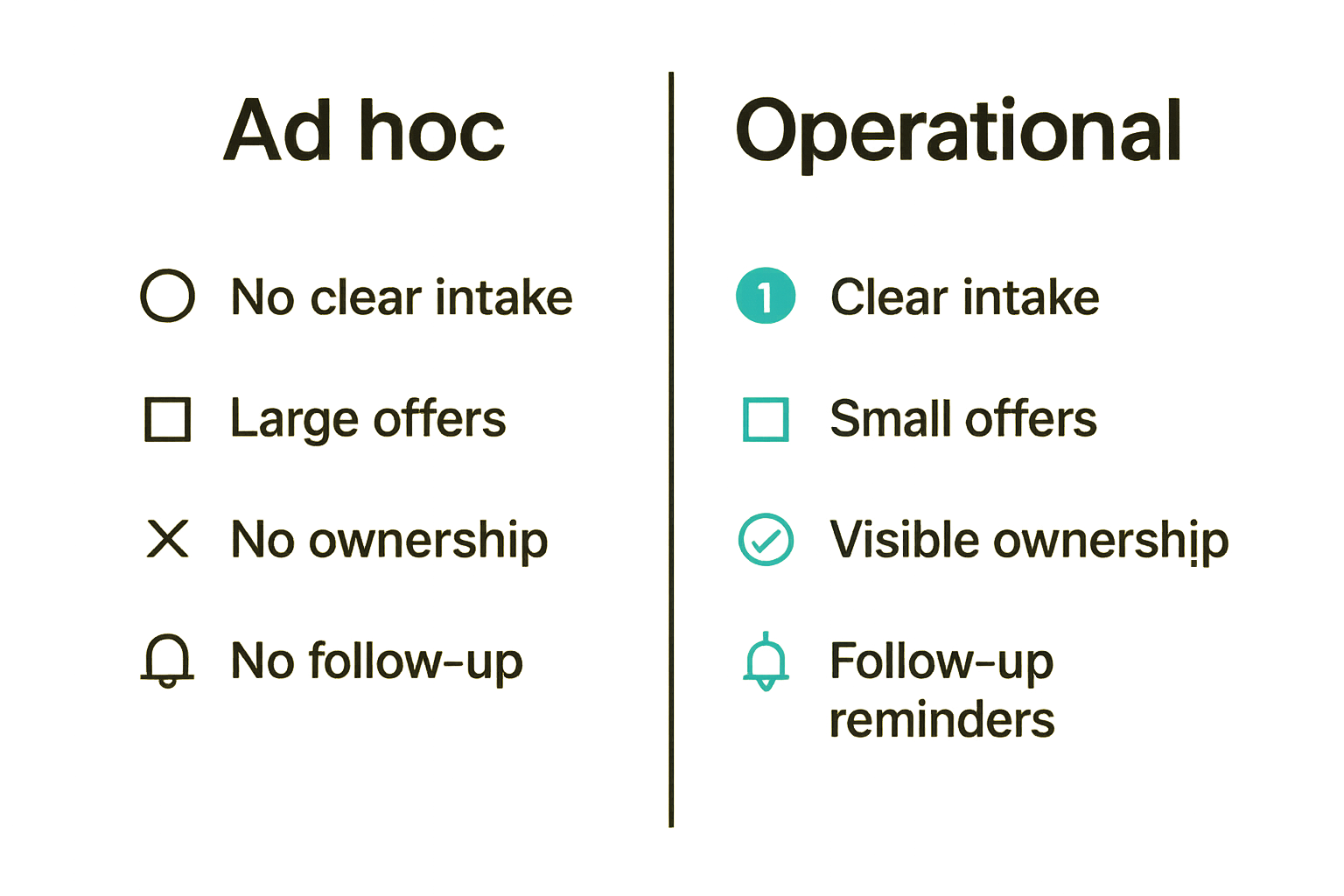
Clear intake. Small offers. Visible ownership. Consent defaults. Trusted connectors. Follow-up reminders. A weekly review of unresolved items. A willingness to say not yet. A habit of turning repeated requests into better routing rules.
The best local networks do not try to make every interaction public. They create enough shared structure that private coordination can happen responsibly.
They also make the network legible to newcomers. A new volunteer should be able to see what kinds of help are needed, what kinds of offers are useful, and how introductions happen. A new requester should understand what information is safe to share and what timeline to expect.
What fails after the first month
What fails is usually overreach.
A group launches a giant directory nobody maintains. A new app gets announced before workflows are defined. Every need is treated as urgent. Every helper is treated as interchangeable. Sensitive asks get mixed with public requests. Coordinators promise more than the network can deliver.
The mistake teams make is building for the launch moment instead of the maintenance reality.
If your community action program cannot be reviewed in a 30-minute weekly operations meeting, it is probably too vague. That meeting should answer: what came in, what moved, what is stuck, who owns it, and what did we learn?
A simple comparison table
| Area | What fails | What works |
|---|---|---|
| Intake | open-ended stories with missing constraints | structured asks with context and consent |
| Offers | broad willingness with no boundaries | scoped offers with availability and limits |
| Routing | whoever the organizer remembers | fit based on capability, trust, and geography |
| Trust | everyone treated the same | contextual trust levels and escalation paths |
| Follow-up | silence unless someone complains | reminders, statuses, and closed-loop outcomes |
| Automation | replacing judgment | supporting records, reminders, and triage |
| Reporting | likes, attendance, and vibes | throughput, time-to-connection, unresolved items |
Related reading from our network: payment teams deal with a different version of the same state problem. In SaaS Cryptocurrency Payments: The Architecture Merchants Actually Need, the UI is not the system; reconciliation, webhooks, custody, and settlement are. In community action, the event is not the system; routing, trust, and follow-up are.
Where d0rz.com fits in the community action stack
Use d0rz.com as a public routing surface
A practical community action stack needs a place where asks and offers can become visible without turning everything into a noisy group chat. That is where d0rz.com fits.
d0rz.com is not trying to replace every local relationship. It gives local networks a structured surface for practical asks and offers, so operators can see what exists, point people to specific opportunities, and reduce the amount of coordination trapped in private messages.
For example, the d0rz operating model described in Community Building d0rz: The Operating Model for Local Networks That Actually Work is useful if you are deciding how to separate public participation from the quieter work of matching, trust, and follow-up.
Start with one workflow, not a whole platform migration
Do not migrate your whole community at once. Pick one workflow with low privacy risk and clear value.
Good starting workflows:
- local business website or form help
- translation offers for non-sensitive documents
- volunteer setup for recurring events
- rides or delivery within a defined geography
- public collaboration requests between freelancers
- simple automation help for local providers
Run the workflow for 30 days. Review what came in, what got matched, what stalled, and what information was missing. Then adjust fields, routing rules, and expectations.
A useful way to think about d0rz.com is as coordination scaffolding. It helps local operators expose the right amount of information, route participation into useful paths, and keep community action from becoming invisible labor.
Try d0rz.com
d0rz.com is for people building practical local networks where asks, offers, trust, routing, and follow-up matter.
If you are turning community action into reliable coordination infrastructure, Try d0rz.com.