
Community action sounds simple until you have to operate it every week.
Someone needs help with a form. A local business needs a workflow fixed. A freelancer has capacity. A neighbor knows the right person. Three people say they can help, then nobody owns the handoff. Two weeks later the original ask is stale, the offer is buried, and the group chat has moved on.
Teams think the problem is participation. The real problem is coordination architecture.
Community action is not just people caring about a place. In 2026, the practical question is whether your local network can turn asks, offers, trust, routing, and follow-up into a system that survives outside one heroic organizer's memory. That changes the conversation. You stop asking how to get more engagement and start asking how work moves.
Table of contents
- Community action is a routing system, not an event
- The minimum architecture for community action
- Start with asks before programs
- Build an offer inventory people can actually use
- Design trust as a workflow
- The community action workflow from intake to follow-up
- Metrics that matter in community action
- Common failure modes and what breaks
- Tooling and automation choices
- How d0rz.com fits community action operations
- Closing checklist for reliable community action
Community action is a routing system, not an event
Community action fails quietly when it is managed as a sequence of moments: a meeting, a volunteer day, a public post, a fundraiser, a launch, a campaign. Those moments can matter. But they do not create durable local capacity by themselves.
The mistake teams make is treating activity as proof of capability. A room full of people can still have no reliable path from need to response. A busy chat can still lose the one message that mattered. A popular directory can still be useless if every record is stale.
A useful way to think about it is this: community action is a routing system. It receives signals from the real world, decides which signals are actionable, matches them to capacity, applies trust rules, tracks ownership, and confirms whether anything happened.
The visible activity is not the operating model
The visible parts of community action are easy to overvalue. Attendance. Comments. Signups. Shares. Photos. Public statements. These are not bad, but they are not the operating model.
The operating model is what happens after someone says: I need this. Can anyone help?
If the answer depends on the same three people remembering who knows whom, the network is fragile. If nobody can tell which asks are open, which offers are active, and which matches are stuck, the group is not coordinating. It is hoping.
Practical rule: If a new organizer cannot understand the current open asks and available offers in 15 minutes, the community action system lives in people's heads, not in the network.
Why 2026 makes coordination harder
Local networks are more fragmented than they used to be. People coordinate across text threads, private groups, public feeds, newsletters, spreadsheets, event platforms, and in-person relationships. Some participants are highly online. Others only answer phone calls. Some want public recognition. Others need discretion.
At the same time, local needs have become more operational. Small businesses need automation help, not just referrals. Freelancers need trustworthy project flow, not just exposure. Neighbors need language support, transport, forms, childcare, repairs, technical triage, and introductions.
This is why community action needs a workflow. Not because software solves trust. It does not. But because unmanaged trust networks decay into bottlenecks.
The minimum architecture for community action
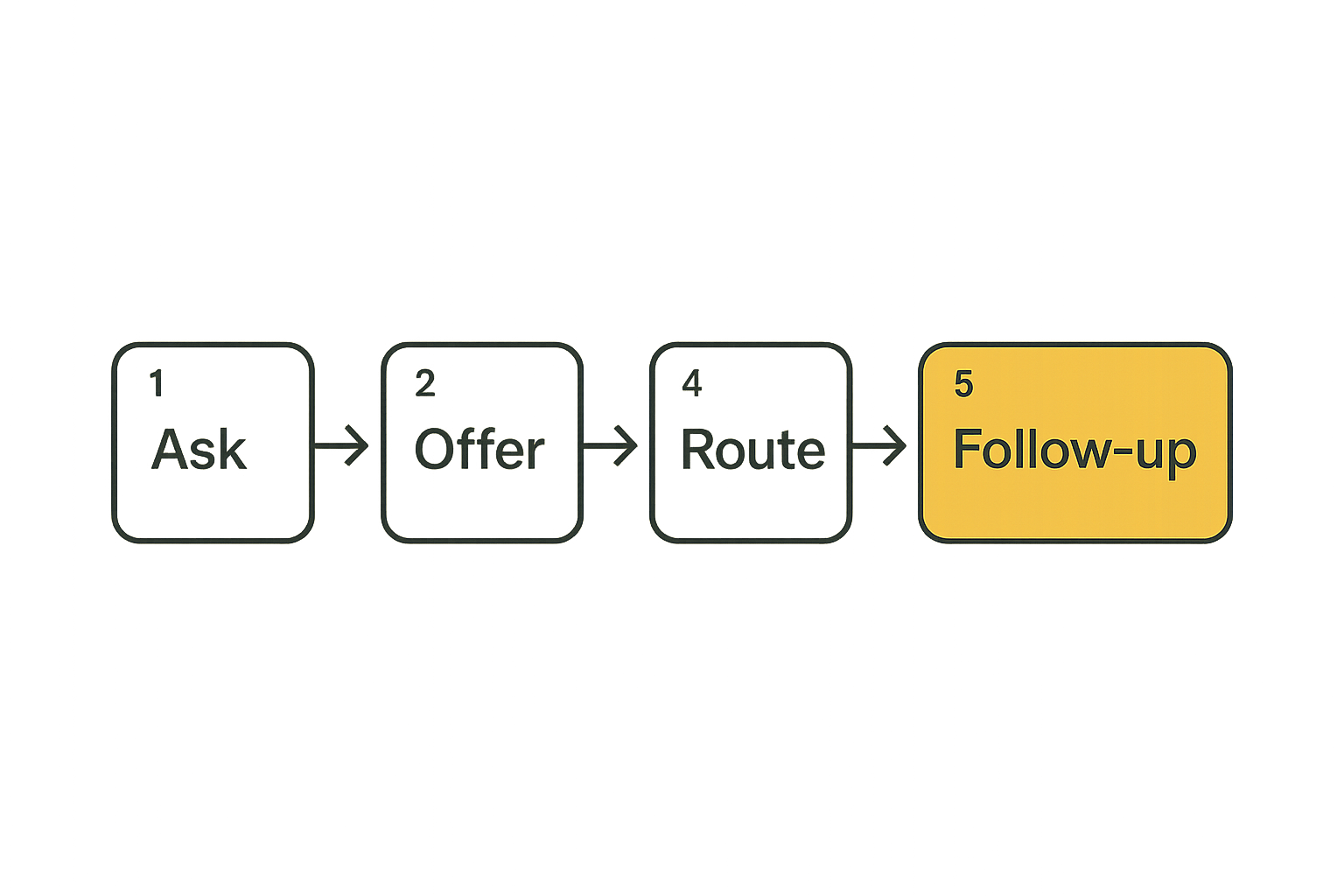
A community action system does not need to start with a complex platform. It does need a clear architecture. The minimum architecture has five parts: asks, offers, trust, routing, and follow-up.
This is the same basic operating pattern behind reliable local network design. If you want a deeper version of the architecture, the earlier d0rz piece on community building as local network architecture frames the same problem around durable infrastructure rather than louder engagement.
Asks, offers, trust, routing, follow-up
Each part answers a different operational question:
| Component | Practical question | Bad version | Working version |
|---|---|---|---|
| Ask | What needs to happen? | Vague request in chat | Specific need with context and urgency |
| Offer | Who can help? | Generic willingness | Skill, location, limits, availability |
| Trust | Is this match safe and appropriate? | Organizer intuition only | Visible relationship and verification rules |
| Routing | Who owns the next step? | Everyone assumes someone else will do it | Named owner and next action |
| Follow-up | Did it work? | Silence after introduction | Outcome, blocker, or retry path logged |
The practical question is not whether every community has all five. Every community already has them informally. The question is whether they are legible enough to operate.
What should be tracked without overbuilding
Track the smallest amount of information that improves routing. Anything more becomes administrative drag.
For an ask, track:
- What is needed
- Where it applies
- Who is affected
- When it matters
- What has already been tried
- Whether it is public, limited, or private
- Who owns follow-up
For an offer, track:
- Skill or resource
- Geographic or remote boundary
- Availability window
- Cost, barter, volunteer, or paid status
- Languages or accessibility constraints
- Trust basis: known by whom, previous work, public profile, reference
- Expiration or review date
The mistake teams make is designing for the perfect database before they can route ten real asks. Start with fields that change decisions.
Start with asks before programs
Programs feel organized. They have names, dates, partners, and planning documents. But many communities overbuild programs before they understand the demand signal.
Community action should begin with asks because asks reveal the shape of reality. They show what people actually need, what they are willing to say publicly, where support breaks down, and which resources are missing.
Turn vague needs into routable tickets
A vague ask sounds like this: Need help with business stuff.
A routable ask sounds like this: A local food vendor needs help fixing a broken online order form before Friday because customers cannot submit catering requests. They can share screenshots and meet by video after 5 pm.
The second version can move. The first version becomes conversation.
Use a simple intake pattern:
- Restate the need in one sentence
- Identify the desired outcome
- Capture deadline and urgency
- Capture constraints: cost, location, language, privacy
- Ask what has already been tried
- Decide whether the ask is public, trusted-group only, or private
- Assign an owner for the next handoff
This is not bureaucracy. It is translation. Local needs often arrive emotionally, incompletely, or through a friend of a friend. The operator's job is to convert that into something the network can safely act on.
When an ask should be rejected or reshaped
Not every ask should enter the network as written. Some are too broad. Some are extractive. Some create safety risk. Some are actually paid work being disguised as community help. Some ask for expertise the network does not have.
A healthy community action workflow has permission to say one of four things:
- Accept: the ask is clear, appropriate, and routable
- Reshape: the ask is valid but needs scope, context, or boundaries
- Redirect: another organization or professional channel is a better fit
- Decline: the ask is unsafe, abusive, illegal, or outside the network's purpose
Practical rule: A community that cannot decline bad asks will eventually burn out the people who respond to good ones.
Related reading from our network: security teams face a similar routing problem when they convert local trust into faster escalation, as described in community building incident response. The domain is different, but the workflow lesson is familiar: signals need owners, context, and safe escalation paths.
Build an offer inventory people can actually use
Most communities have more capacity than they can see. The issue is not that nobody can help. The issue is that offers are described in ways that cannot be matched.
I can help sometime is not an offer inventory. Neither is a list of names without constraints.
A useful offer inventory turns willingness into routable capacity. For example, a concrete local technology offer such as remote website and automation help for local businesses is easier to match because it says what kind of work fits, who it is for, and where the boundary sits.
Offer records need constraints
A strong offer record includes what the person can do and what they cannot do.
Bad offer:
- Happy to help with tech
Better offer:
- Can troubleshoot broken website forms, payment links, CSV cleanup, simple GitHub issues, and customer support routing
- Remote only
- Best for local small businesses and service providers
- Can do one triage session, then scope follow-up separately
- Not available for emergency production incidents or sensitive legal data
Constraints are not negative. They make routing possible. They prevent the network from wasting trust by sending the wrong asks to the wrong people.
Match availability before enthusiasm
Communities often confuse enthusiasm with capacity. Someone may care deeply and still have no time this week. Someone else may be quiet but available for a specific two-hour task.
For each offer, track availability in practical terms:
- Available now, this week, this month, or not currently active
- One-time help, recurring help, or paid project only
- Remote, local, on-site, phone, or async
- Comfortable with public contact or introduction only
- Languages and communication preferences
Related reading from our network: field-based freelancers face the same constraint problem in a different market; the guide to construction jobs for AI-assisted freelancers and gig workers is useful adjacent reading because it treats labor, documentation, and client follow-through as an operating workflow rather than a vague marketplace.
Design trust as a workflow
Trust is the part everyone says matters and almost nobody models cleanly.
In local community action, trust is not a binary. It is contextual. Someone may be trusted to translate a document but not to handle money. Someone may be excellent with small business websites but not appropriate for sensitive family matters. Someone may be new to the network but publicly verifiable through work history.
The practical question is not whether people are good. The practical question is what kind of trust is sufficient for this match.
Trust levels beat private memory
Private memory does not scale. If only one organizer knows that a provider did good work last month, the network cannot learn. If only one person knows that a match went badly, the network cannot protect itself.
You do not need a public rating system for everything. In fact, public ratings can create their own problems. But you do need operational trust levels.
Example trust levels:
| Level | Meaning | Example use |
|---|---|---|
| Open | Publicly visible, no sensitive access | Event setup, public resource sharing |
| Introduced | Known by one trusted participant | Simple referral, low-risk task |
| Verified | Prior work or reference confirmed | Business support, paid service intro |
| Sensitive | Requires discretion or safeguarding | Personal documents, family support, money handling |
| Restricted | Only handled by approved partners | Legal, medical, crisis, protected data |
This changes the conversation. Instead of asking whether someone is trusted in general, you ask whether the trust level matches the task.
Escalation paths protect the network
What breaks in practice is not only bad actors. It is ambiguity during awkward moments.
A provider stops responding. A requester changes scope. A payment dispute appears. Someone shares private information in the wrong channel. A volunteer is asked to do professional work for free. A personal conflict leaks into the routing process.
Escalation paths should be defined before they are needed:
- Who handles stalled matches?
- Who can remove or pause an offer?
- Who decides when an ask becomes sensitive?
- Who mediates disputes?
- Who documents lessons without gossip?
Practical rule: Trust is operational only when the network knows what happens after a mismatch, not just before an introduction.
The community action workflow from intake to follow-up
Community action becomes reliable when the path from signal to outcome is boring. Boring is good. Boring means fewer heroic saves.
The earlier d0rz article on the local network operating model is useful here because it treats community building as repeated operational loops: intake, matching, support, confirmation, and learning.
A numbered operating sequence
Use this sequence as a baseline. Adapt it to your group, but do not skip ownership and follow-up.
- Capture the ask. Write it in one sentence with outcome, urgency, and constraints.
- Classify the ask. Decide category, location, privacy level, and trust requirement.
- Check existing offers. Search for active capacity before broadcasting widely.
- Select a route. Choose direct match, small trusted broadcast, public post, partner referral, or decline.
- Name the owner. One person owns the next step, even if multiple people are involved.
- Make the introduction. Include context, boundaries, deadline, and expected next action.
- Confirm acceptance. The helper must explicitly accept, decline, or request clarification.
- Track status. Use simple states: open, routed, accepted, blocked, resolved, closed.
- Follow up. Confirm outcome with the requester, not just the helper.
- Learn and update. Adjust offer records, trust notes, templates, or routing rules.
The system does not need to be fancy. It needs to make the next action visible.
What changes when ownership is explicit
Ownership is the difference between a warm conversation and a working network.
Without ownership, people say things like: Someone should connect them with Ana. With ownership, someone says: I will ask Ana by 3 pm, and if she cannot help I will route to the small business channel.
Explicit ownership reduces social ambiguity. It also reduces duplicated work. Two organizers do not unknowingly message the same provider. A requester does not have to repeat their story five times. The network can see whether the action is moving or stuck.
A useful owner note can be short:
- Owner: Maya
- Next action: ask Luis if he can review the form issue
- Deadline: Thursday 5 pm
- Backup route: public offer board if Luis declines
- Follow-up date: Monday
This is the level of documentation that keeps community action from becoming private chaos.
Metrics that matter in community action
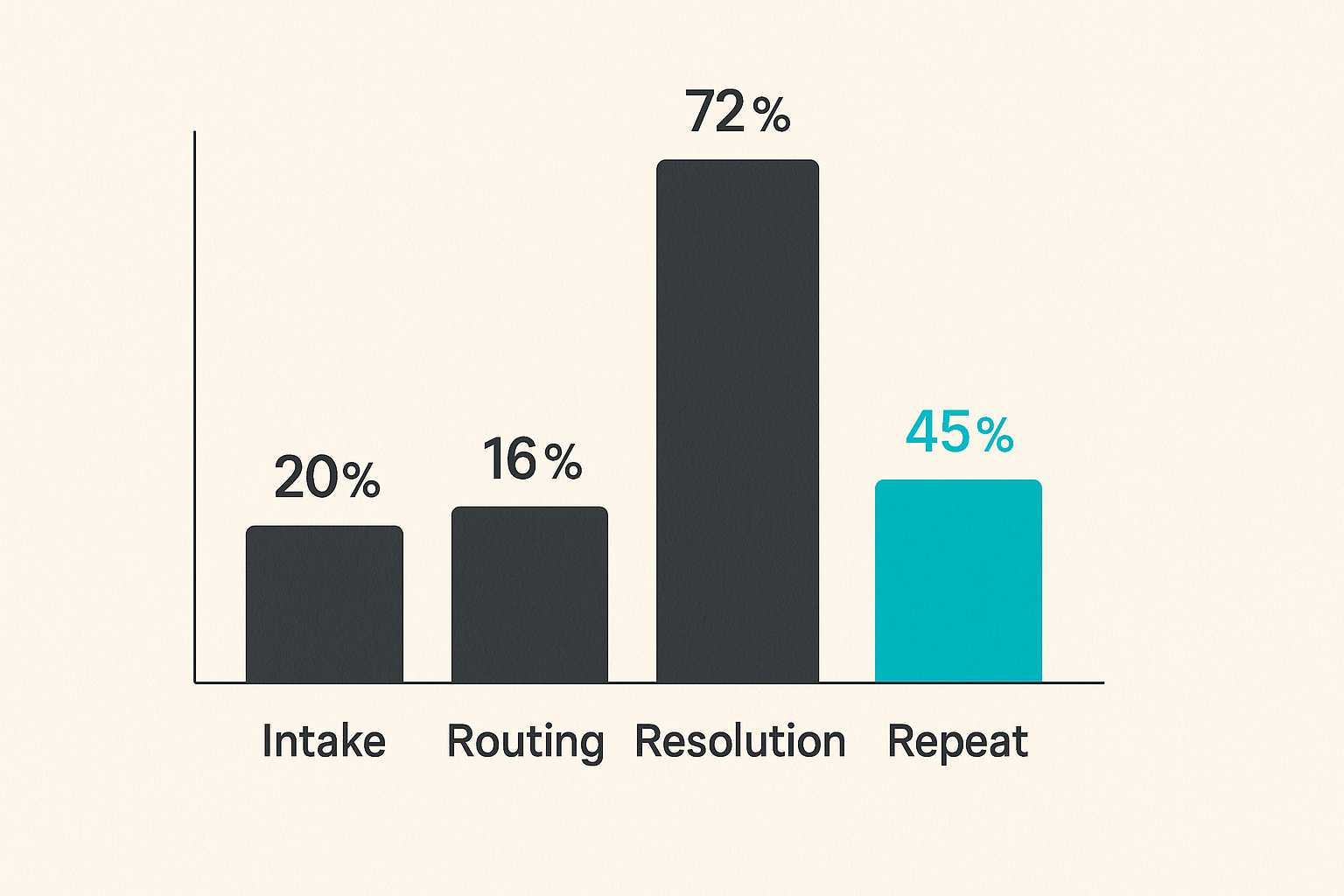
Measurement gets weird in community work because the easy numbers are often the least useful. A post with many reactions may produce no completed help. A quiet introduction may save a business owner six hours. A small trusted group may outperform a large public audience.
So measure the operating system, not the applause.
Measure latency, resolution, and repeatability
The best metrics are simple and operational:
- Intake latency: time from need appearing to ask being captured
- Routing latency: time from captured ask to first appropriate route
- Acceptance rate: percentage of routed asks where someone explicitly accepts
- Resolution rate: percentage of accepted asks that reach a useful outcome
- Blocker rate: percentage of asks stuck because of missing info, trust, cost, or availability
- Repeat match rate: whether certain categories can be handled reliably over time
- Follow-up completion: whether someone confirmed the outcome
These numbers do not need to be public. They are for operators. If small business automation asks always stall because nobody scopes them, build a scoping template. If translation asks are resolved quickly but transport asks fail, recruit differently. If public posts create many replies but low acceptance, tighten intake.
Avoid vanity engagement dashboards
Vanity metrics are not useless, but they are dangerous when they become the scoreboard.
A practical comparison:
| Vanity metric | Why it misleads | Better operating metric |
|---|---|---|
| Members in group | Says little about capacity | Active offers by category |
| Event attendance | Does not prove follow-through | Asks captured and resolved after event |
| Post reactions | Measures visibility | Accepted routes and completed outcomes |
| Newsletter opens | Measures attention | Replies converted into asks or offers |
| Volunteer signups | Often stale quickly | Confirmed availability windows |
The mistake teams make is optimizing for signals that feel good to report. In production, the network needs signals that improve decisions.
Related reading from our network: crypto payment teams have a very different domain, but their work around signals, holds, and settlement shows why workflows need state and context; see threat intelligence blockchain architecture for crypto payments for an adjacent systems view.
Common failure modes and what breaks
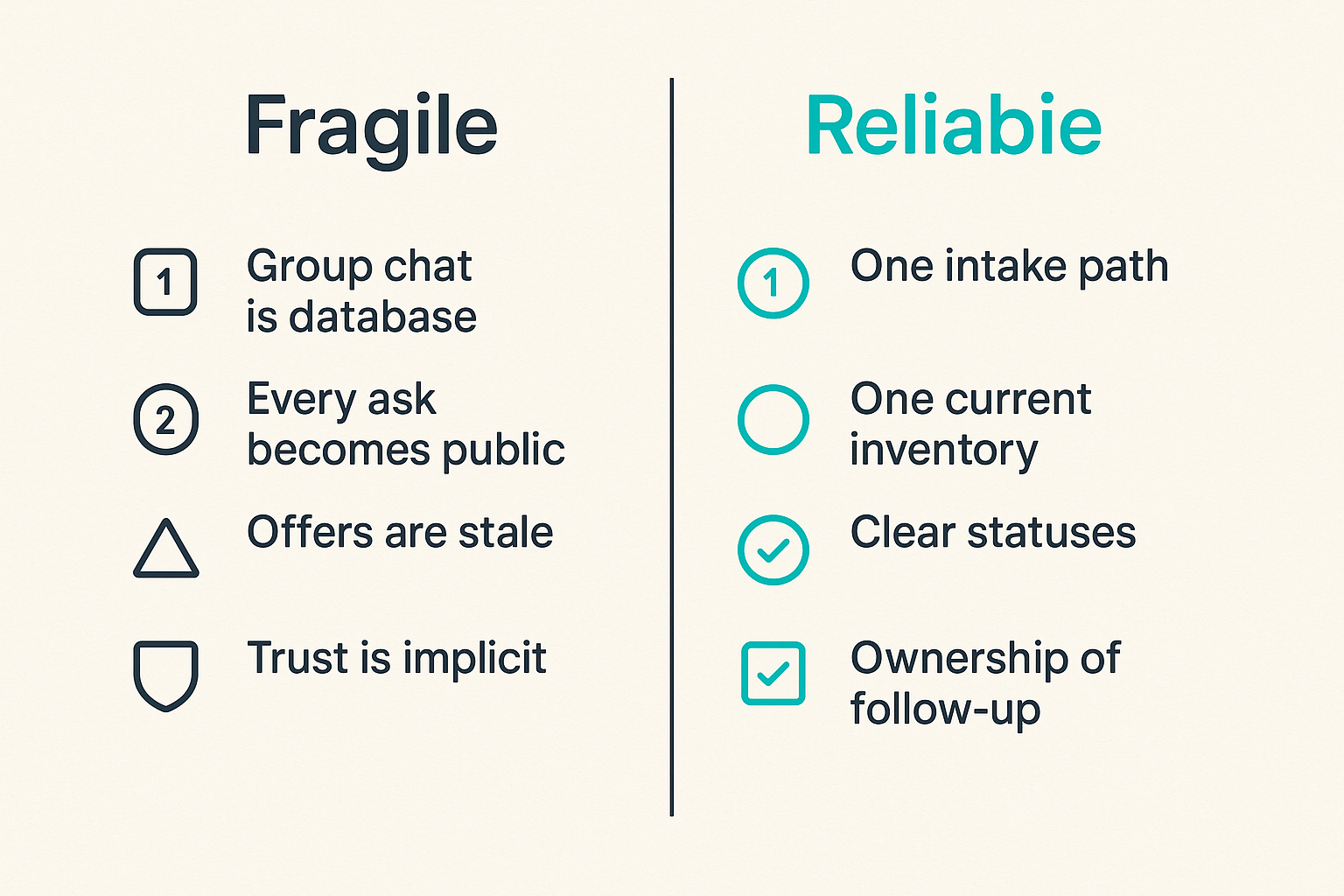
Community action usually breaks in predictable places. The failure is rarely that nobody cares. More often, caring is forced through a workflow that cannot carry it.
What fails
Common failure modes:
- The group chat is the database. Important asks disappear under casual conversation.
- Every ask becomes public. Sensitive needs get exposed or people stop asking.
- Offers are stale. People are routed to helpers who no longer have capacity.
- Trust is implicit. New organizers cannot tell which matches are appropriate.
- No one owns follow-up. Introductions happen, but outcomes are unknown.
- The same helpers are overused. Reliable people burn out because they are easy to remember.
- Programs replace listening. The network runs events that no longer match current needs.
- Tools multiply. Data is split across forms, sheets, chats, and directories with no source of truth.
What breaks in practice is continuity. A person asks once, gets no clear response, and does not ask again. A helper volunteers, receives mismatched requests, and disengages. An organizer spends nights manually stitching context across channels. The network looks active from the outside and brittle from the inside.
What works
Working systems are usually less dramatic:
- One intake path for new asks, even if discovery happens elsewhere
- One current inventory of active offers
- Clear statuses for open work
- Lightweight trust levels
- Named owners for handoffs
- Expiration dates for stale offers
- Follow-up dates for every routed ask
- Retrospectives on repeated blockers
Practical rule: A local network becomes stronger when it remembers outcomes, not when it remembers conversations.
This does not require turning community action into a corporate ticket queue. It requires enough structure that people do not have to re-create the network from scratch every time something matters.
Tooling and automation choices
Tools are where community action can get overcomplicated fast. Someone wants a CRM. Someone else wants a custom app. Another person says a spreadsheet is enough. Everyone is partly right and partly avoiding the real design question.
The practical question is: what state must be shared so the network can route work safely?
Use lightweight systems before custom platforms
Start with the workflow, then choose tools. A lightweight stack can work if roles are clear:
- Public form for ask intake
- Shared sheet or simple database for active asks and offers
- Private notes for sensitive routing context
- Calendar reminders for follow-up
- Messaging channel for operator coordination
- Public page for selected offers and non-sensitive asks
The key is not the tool. The key is source of truth. If the sheet says an ask is open but the chat says it was solved, the system is already split. If sensitive trust notes are mixed into a public database, the system is unsafe.
A useful minimum data model:
Ask
- id
- title
- category
- location
- urgency
- privacy_level
- trust_requirement
- status
- owner
- next_action
- follow_up_date

Offer
- id
- provider
- category
- constraints
- availability
- location_mode
- cost_model
- trust_level
- review_date
This is enough to operate many local networks before custom software becomes necessary.
Where automation helps and where it hurts
Automation helps with reminders, duplicate detection, stale offer review, status changes, and summarizing non-sensitive intake. It can also help draft clearer ask descriptions from messy submissions.
Automation hurts when it pretends to own judgment. It should not decide sensitive trust questions by itself. It should not auto-route personal crises to strangers. It should not publish private asks because a form field was wrong.
Good automation pattern:
- Intake form creates draft ask
- Operator reviews privacy and trust level
- System suggests matching offers
- Operator chooses route
- System sends follow-up reminder
- Outcome is logged by a human
Bad automation pattern:
- Form submission instantly posts to public channel
- Keyword match tags a helper
- No human checks sensitivity
- No one confirms acceptance
- No one follows up
The mistake teams make is automating before they understand failure modes. Automation should reduce coordination load, not hide accountability.
How d0rz.com fits community action operations
Community action needs places where asks and offers can be visible enough to route, but not so vague that they become noise. That is the product-fit layer for d0rz.com.
The site is not trying to replace local relationships. That would be the wrong promise. The useful role is more specific: make local asks and offers easier to publish, discover, evaluate, and follow up on.
A practical layer for local asks and offers
For community builders, organizers, and freelance community leaders, the hard part is often not deciding whether help exists. It is finding the current, concrete version of that help.
A d0rz-style record can support community action because it encourages operational clarity:
- What is being asked or offered
- Where it applies
- Whether it is remote, local, or hybrid
- What kind of person or business it fits
- What constraints exist
- How someone should respond
That is already better than a buried social post. It gives organizers something to route to and something to review later.
Product fit without pretending software creates trust
Software can make an ask visible. It cannot guarantee the match is safe. Software can publish an offer. It cannot prove the provider will follow through. Software can reduce ambiguity. It cannot replace local judgment.
That is the right boundary.
For d0rz.com, the architectural fit is as a coordination surface for practical local networks: a place where asks, offers, trust context, routing, and follow-up can become more legible. The network still needs operators. It still needs norms. It still needs escalation paths. But it does not have to run entirely on memory and scattered messages.
Closing checklist for reliable community action
Community action in 2026 is not a content strategy. It is not a vibe. It is not a calendar full of events.
It is the local operating capacity to notice needs, understand offers, apply trust, route work, and confirm outcomes. If you build that capacity, participation becomes more useful. If you do not, more participation just creates more unprocessed signals.
Operator checklist
Use this checklist before expanding your next campaign, group, or local initiative:
- Can people submit asks through a known path?
- Can an organizer turn a vague ask into a routable record?
- Are active offers visible with constraints and availability?
- Do you distinguish public, trusted, sensitive, and restricted asks?
- Does every routed ask have one owner?
- Do helpers explicitly accept or decline?
- Is there a follow-up date for every match?
- Are stale offers reviewed or expired?
- Are repeated blockers turned into new offers, partners, or templates?
- Can a new operator understand the current state without interviewing the founder?
If the answer is no, the next improvement is probably not a bigger event. It is a better workflow.
The practical next move
Pick one category of community action that already appears in your network: small business help, translation, transport, paperwork, repairs, childcare, tech support, hiring, or freelancer referrals.
Do not redesign everything. Run a two-week operating test:
- Capture every ask in that category.
- Build a small offer inventory.
- Assign one owner per route.
- Track status and follow-up.
- Review what stalled.
- Update the rules.
That small loop will teach you more than a strategy document. It will show where trust is missing, where offers are vague, where demand is real, and where your current community action system depends too much on private memory.
Try d0rz.com
d0rz.com is for people building practical local networks where asks, offers, trust, routing, and follow-up matter. Try d0rz.com.