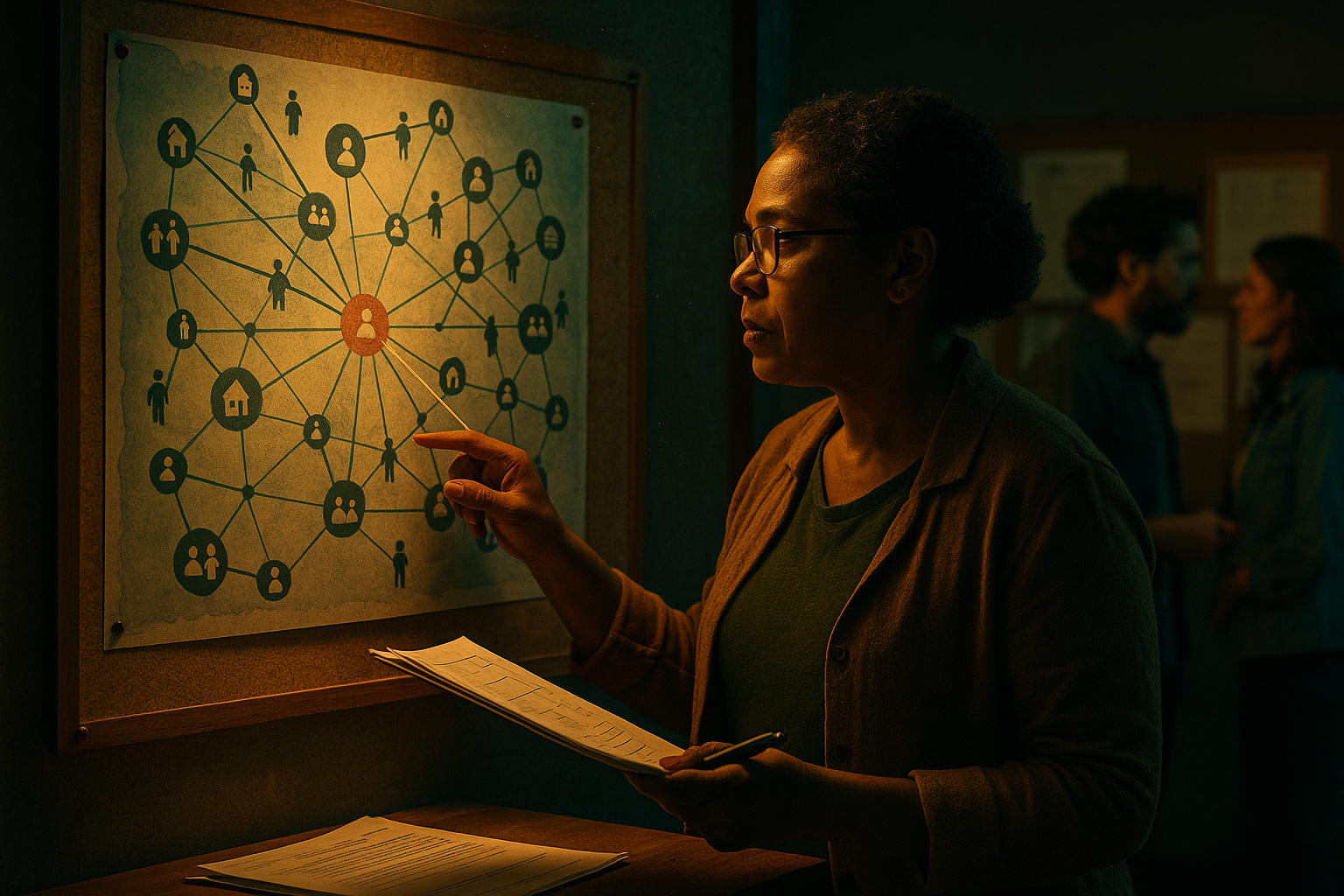
A community operations consultant usually gets called after the network already feels messy.
People are showing up, but asks disappear. Offers get posted, but nobody knows who should route them. A volunteer says they can help, then three people DM them separately. Someone asks for a contractor recommendation, and the same five trusted names keep circulating while newer providers stay invisible.
Teams think the problem is engagement. The real problem is coordination architecture.
That changes the conversation. A community operations consultant is not there to make the group feel more alive. The practical question is whether the network can turn participation into useful action: who needs what, who can help, who is trusted for what, what happened next, and what should be improved before the next cycle.
In 2026, local community work is more operational than most people want to admit. Mutual aid groups, neighborhood business circles, freelancer networks, parent communities, creator meetups, civic coalitions, and local service directories all face the same workflow problem. The UI might be a chat group, spreadsheet, newsletter, or marketplace. The real system is state, trust, routing, follow-up, and memory.
Table of contents
- Why a community operations consultant is an operating role
- What breaks when community operations are informal
- The community operations consultant diagnostic
- Designing the ask-to-outcome workflow
- The operating model: roles, rules, and cadence
- Tooling choices for local network operations
- Metrics a community operations consultant should track
- What works and what fails in implementation
- Hiring or becoming a community operations consultant
- Where d0rz.com fits local network operations
Why a community operations consultant is an operating role

The work is not facilitation alone
Facilitation helps people talk. Community operations helps people coordinate after the conversation ends.
That distinction matters because many local networks confuse energy with reliability. A packed meetup can still produce no useful follow-up. A lively group chat can still fail to route a simple request for childcare, a part-time bookkeeper, a grant reviewer, or a website fix.
The mistake teams make is hiring for vibes when the failure is workflow. A good community operations consultant may run meetings, but their deeper work is to make sure the meeting produces structured state: open asks, active offers, ownership, next action, deadline, and feedback.
Practical rule: if nobody can tell what changed after a community interaction, the interaction did not become operations.
The consultant owns coordination design
A useful way to think about it is this: every community has a hidden ticketing system. The question is whether it is explicit or buried in memory.
Someone asks for help. Someone else knows a person. Another person has context about whether that provider is reliable. A fourth person remembers that the same request came up last month. If this all happens in private DMs, the system exists, but it is not inspectable. It depends on social memory and personal availability.
A community operations consultant makes the coordination layer visible enough to improve. They define how requests enter, how they are classified, how matches are proposed, how trust is represented, how conflicts are handled, and how the network learns from each outcome.
The output is a repeatable operating model
The output should not be a motivational strategy deck. It should be an operating model that someone else can run.
That usually includes:
- intake formats for asks and offers;
- routing criteria for different request types;
- escalation paths for sensitive or urgent needs;
- lightweight trust signals;
- follow-up templates;
- review cadence;
- owner roles;
- a small set of metrics;
- decisions about what stays public, private, or restricted.
Related reading from our network: teams building SOC workflows face a similar problem when noisy alerts need ownership, context, and triage rules instead of more dashboards in this alert detection and triage architecture guide.
What breaks when community operations are informal
Asks and offers lose context
Most community breakdowns start with low-quality state.
Someone posts, "Need help with my website." That could mean a broken contact form, a payment issue, a redesign, an accessibility problem, a DNS outage, or a freelancer referral. Without structured intake, the network cannot route well. The loudest or most available helper wins, not necessarily the right one.
Offers have the same problem. "Happy to help with marketing" is not operational. Is the person offering strategy, copywriting, paid ads, event promotion, local partnerships, or a one-hour audit? Are they paid, volunteer, discounted, or looking for referrals?
What breaks in practice is matching. The network appears active, but operators cannot tell which supply fits which demand.
Trust gets trapped in private messages
Local networks run on trust, but trust is often stored in the worst possible place: private conversations.
One organizer knows which electrician showed up on time. Another knows which grant writer is strong but overloaded. A third knows that a provider is excellent with nonprofits but not a fit for restaurants. None of that is necessarily appropriate for a public rating system, but it cannot remain entirely invisible either.
A community operations consultant does not need to turn trust into a crude star score. The better move is to define trust signals that are specific, contextual, and respectful.
Examples:
- "Completed two local referrals with positive follow-up."
- "Best fit for small urgent repairs, not long projects."
- "Requires clear scope before accepting work."
- "Known by organizer, not yet used by network members."
Practical rule: trust should be legible enough to route, but not so simplistic that it becomes reputation theater.
Follow-up becomes optional
Informal networks are good at starting loops and bad at closing them.
An ask is posted. Three people respond. Nobody records whether the requester got help. The same ask appears again two weeks later. The original helper is annoyed because their time was wasted. The organizer cannot tell if the network is working.
This is where community operations becomes more like service operations than event planning. Open loops need state. A request is not done when someone comments. It is done when the requester confirms an outcome or the operator marks it unresolved with a reason.
For a deeper local-network framing, the prior d0rz article on community building as an operating model is useful because it treats participation as infrastructure, not branding.
The community operations consultant diagnostic
Map the current routing paths
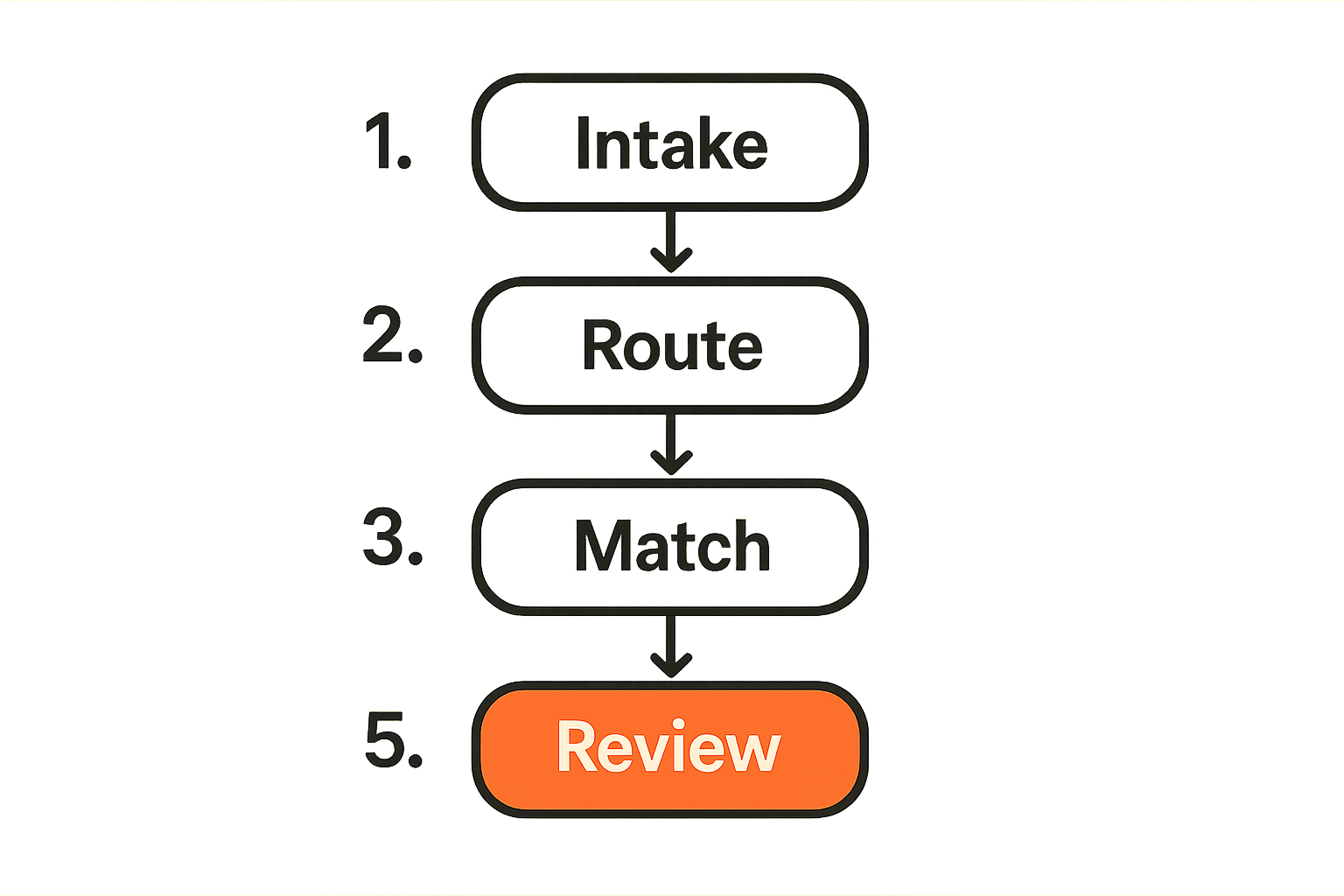
Before changing tools, map how work currently moves.
Take ten recent asks from the community and trace them:
- Where did the ask originate?
- Who saw it first?
- Who decided it mattered?
- Who knew a possible helper?
- How was the helper contacted?
- Was the requester updated?
- Was the outcome recorded?
- Did the network learn anything from it?
The practical question is not whether the current process is elegant. It is whether it is observable. If nobody can reconstruct the path, the consultant has found the first problem.
Separate demand, supply, and trust
Many community databases fail because they mix three different objects into one messy directory.
Demand is what someone needs. Supply is what someone can provide. Trust is why the network should route one to the other.
Those are related, but they should not be identical fields. A member may offer bookkeeping, but only for nonprofits. A vendor may be trusted for emergency repairs, but not large projects. A volunteer may be available this month, but not next month.
Here is a simple comparison:
| Layer | Bad version | Operational version |
|---|---|---|
| Demand | "Need help" | Request type, urgency, location, budget, constraints |
| Supply | "Can help" | Service category, capacity, geography, terms, response time |
| Trust | "Recommended" | Source, prior outcome, fit notes, sensitivity limits |
| Follow-up | "Handled" | Matched, declined, unresolved, completed, needs review |
This table is not bureaucracy. It is how a network avoids making every organizer a human search engine.
Find the manual bottlenecks
The bottleneck is usually not where the team thinks it is.
Teams think they need more members. Often they need fewer unqualified requests, clearer routing, and a stronger closeout loop. Teams think they need a better directory. Often they need a better intake process so the directory is actually usable.
Look for these bottlenecks:
- one organizer approving every match;
- too many requests arriving through private DMs;
- no standard way to describe offers;
- sensitive needs mixed with casual requests;
- no response-time expectation;
- no status field;
- no way to retire stale offers;
- no record of declined or failed matches.
Related reading from our network: software teams hit the same pattern when growth exposes weak release, support, and feedback loops, as covered in this operator guide to scaling a software product.
Designing the ask-to-outcome workflow
Start with intake quality
The ask-to-outcome workflow is the core system a community operations consultant should improve first.
Bad intake creates bad routing. If the request is vague, the operator either wastes time asking clarifying questions or routes poorly. Good intake does not need to be long. It needs to capture the fields that change the decision.
For local networks, that often means:
- what is needed;
- where it is needed;
- when it is needed;
- whether money is involved;
- whether the ask is public, private, or sensitive;
- what has already been tried;
- what a successful outcome looks like.
A request like "Need help fixing my checkout page before Friday; paid; WordPress; local bakery; contact form works but payment link fails" is dramatically easier to route than "Website help needed."
A real ask can also be a useful prototype. For example, a public request like seeking one business workflow to automate is operationally stronger than a generic "looking for automation work" post because it narrows the kind of workflow, the audience, and the expected scope.
Route by fit, not availability alone
Availability is only one routing signal. It is often overvalued because it is easy to see.
Fit includes:
- capability;
- location or service area;
- budget alignment;
- response speed;
- trust level;
- sensitivity level;
- language or cultural context;
- prior outcome;
- capacity.
The mistake teams make is sending every ask to whoever responds first. That rewards speed, not fit. In low-risk cases, that may be fine. In requests involving money, safety, housing, childcare, health, legal issues, or business-critical operations, speed alone is not enough.
Practical rule: route low-risk asks for speed, route high-impact asks for fit, and route sensitive asks through a narrower trust path.
Close the loop with outcome state
Every ask should end in one of a few states. Keep this boring.
A practical status set:
- received;
- needs clarification;
- routed;
- matched;
- declined;
- completed;
- unresolved;
- archived.
The point is not to make community work feel like enterprise software. The point is to stop losing work. A network that cannot distinguish "matched" from "completed" will overestimate its impact. A network that cannot distinguish "declined" from "ignored" will misread member behavior.
Related reading from our network: payment systems have the same lesson in a different domain; the checkout screen is not the system, because webhooks, reconciliation, retries, and settlement carry the real operational load in this crypto payments architecture guide.
The operating model: roles, rules, and cadence
Define who can decide
Community networks often avoid decision rights because they want to feel open. That is understandable, but it creates hidden power.
If nobody is officially responsible for routing, the most socially connected person becomes the router by default. If nobody can decline a bad-fit offer, the network accumulates clutter. If nobody owns follow-up, every request becomes an optional favor.
A community operations consultant should define decision rights without making the network rigid.
Common roles include:
- intake owner: reviews new asks for completeness;
- routing owner: suggests matches or paths;
- trust steward: maintains sensitive context and escalation rules;
- follow-up owner: checks whether outcomes happened;
- archive owner: retires stale requests and offers;
- escalation owner: handles urgent or sensitive cases.
One person can hold multiple roles in a small network. The role still needs a name.
Create routing rules people can inspect
Routing rules do not need to be public in every detail, especially where privacy is involved. But the logic should be explainable.
For example:
- urgent food, housing, or safety asks go to trusted responders first;
- paid business-service requests go to providers with complete offer profiles;
- volunteer requests expire after a defined period unless renewed;
- first-time providers can receive low-risk matches before sensitive referrals;
- unresolved asks are reviewed weekly before new campaigns are launched.
This reduces accusations of favoritism. It also helps new operators learn the system.
That changes the conversation from "Why did this person get the opportunity?" to "What routing rule did we use, and should we change it?"
Set a cadence that survives volunteers
Most community operating models fail because they depend on heroic attention.
A weekly review is usually better than constant reactive checking. A monthly offer cleanup is better than a stale directory. A quarterly trust review is better than pretending context never changes.
Cadence examples:
- daily: urgent intake check if the network handles time-sensitive needs;
- weekly: open ask review and unresolved loop cleanup;
- monthly: stale offer review and member capacity check;
- quarterly: routing rule review, trust policy review, and retrospective.
The cadence should match the risk level. A casual neighborhood tool-sharing group does not need the same operating rhythm as a network routing emergency childcare or small-business recovery support.
Tooling choices for local network operations
Do not start with the platform
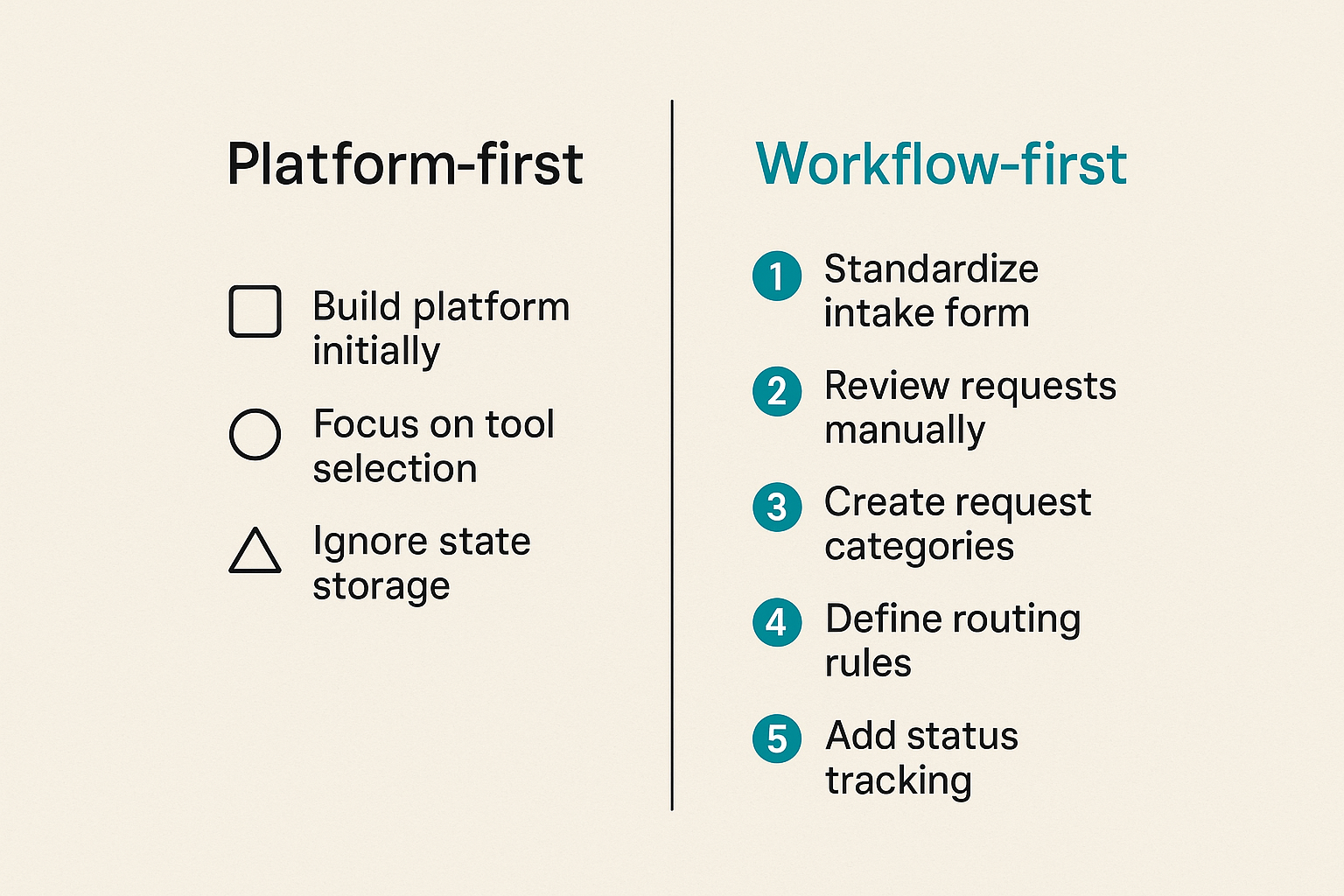
The platform is not the operating model.
A group chat can run a good workflow if intake, routing, and follow-up are clear. A custom platform can still fail if nobody owns state. The question is not "Which tool should we use?" The better question is "What state must persist after each interaction?"
You need a place to store:
- active asks;
- active offers;
- member capabilities;
- trust notes or references;
- routing decisions;
- outcome status;
- follow-up history;
- archive reasons.
That might be a spreadsheet, Airtable, Notion, a CRM, a marketplace, a lightweight custom app, or a purpose-built local network tool. Use whatever keeps the operating state visible to the right people.
Use simple systems until the workflow is proven
Premature tooling creates brittle operations.
Many teams buy or build a directory before they know how people describe useful offers. They launch a portal before they know which asks require human review. They automate matching before they understand trust signals.
A better path is to run the workflow manually for a short period, then automate the parts that are stable.
For example:
- Standardize ask intake in a form.
- Review requests manually for two weeks.
- Create three to seven request categories.
- Define routing rules for the most common categories.
- Add status tracking.
- Automate notifications only after the statuses are reliable.
- Review failed matches before expanding.
This is slower at the start and faster later. It prevents the common failure where the tool encodes the wrong behavior.
Integrate only where state matters
Integrations should reduce lost state, not create another notification stream.
Useful integrations might include:
- form submission to request database;
- status change to email update;
- provider response to routing log;
- calendar booking to follow-up task;
- payment or deposit status to service request;
- public listing update when an offer is renewed.
Do not integrate every chat, email, and form just because it is possible. If the integration does not improve routing, trust, follow-up, or reporting, it is probably noise.
Metrics a community operations consultant should track
Measure flow, not vanity activity
Member count is a weak metric. Message volume is a weak metric. Event attendance is useful, but incomplete.
A community operations consultant should care about flow metrics:
- number of qualified asks received;
- percentage of asks needing clarification;
- time from ask to first useful response;
- time from ask to match;
- match acceptance rate;
- completion rate;
- unresolved rate;
- stale offer rate;
- repeat provider load;
- requester satisfaction or qualitative outcome notes.
These metrics show whether the network is becoming more reliable. They also expose where the operator should intervene.
Track trust and response quality
Trust is not just "did someone respond." A fast bad referral damages the network more than a slower honest decline.
Useful quality signals include:
- responder was appropriate for the request;
- requester received a clear next step;
- provider accepted or declined within expected time;
- scope changed after introduction;
- requester would use the match again;
- operator had enough context to route confidently.
Be careful with public scoring. Local networks are relationship-heavy. A simplistic leaderboard can distort behavior and discourage people from admitting limits.
Use metrics to change the workflow
Metrics are only useful if they trigger decisions.
If clarification rate is high, improve intake. If match time is slow, review routing ownership. If completion is low, examine provider fit or requester expectations. If the same three providers get every referral, broaden offer discovery or create first-match opportunities for newer trusted members.
A useful monthly review might ask:
- Which request category is growing?
- Which offers are underused?
- Which matches failed and why?
- Which routing rule created friction?
- Which sensitive cases need a different path?
- Which member or provider is overloaded?
The operating model should learn. Otherwise the consultant is just producing reports.
What works and what fails in implementation
What works in production
The systems that work tend to be boring.
They make the common path clear. They keep exceptions visible. They avoid over-automating trust. They use human judgment where the cost of a bad match is high. They make status explicit enough that a new operator can step in without asking five people what happened.
What works:
- short structured intake;
- clear request categories;
- visible status fields;
- named owners;
- routing rules by risk level;
- lightweight trust notes;
- regular review cadence;
- closing the loop with the requester;
- retiring stale offers;
- documenting failed matches without blame.
The best community operations consultant is often the person who removes ambiguity before adding complexity.
What fails repeatedly
What fails is also predictable.
Teams build a directory with no freshness policy. They create a volunteer form and never contact the volunteers. They invite more members before they can route current asks. They treat every request as public. They let private DMs become the real operating system. They assume a good introduction equals a completed outcome.
Failure modes to watch:
- request overload without triage;
- unclear privacy boundaries;
- no definition of "done";
- over-reliance on one trusted organizer;
- matching based on popularity;
- stale provider listings;
- no escalation path;
- no archive process;
- no distinction between paid, volunteer, and mutual-aid work;
- unclear expectations around response time.
Practical rule: if the workflow only works when the founder is online, it is not a community operating system; it is a personal inbox.
A practical rollout sequence
A community operations consultant should avoid big-bang transformations. The safer implementation is staged.
- Audit the last 20 asks. Identify where requests came from, who handled them, what happened, and what was lost.
- Define request categories. Start with a small taxonomy that reflects real network demand.
- Standardize intake. Capture the minimum fields needed for routing.
- Create status states. Make every ask trackable from received to completed or unresolved.
- Assign owners. Name who reviews intake, routes, follows up, and archives.
- Write routing rules. Keep them simple and explainable.
- Run manually first. Operate the workflow for a few cycles before automation.
- Review failed matches. Fix category, trust, capacity, or expectation problems.
- Automate stable steps. Add notifications, reminders, or integrations only after the manual process works.
- Publish the operating model. Share enough of the process that members know how to participate well.
This sequence is not glamorous. It is how local networks stop depending on memory.
Hiring or becoming a community operations consultant
The skills that matter
The title can attract people from community management, operations, organizing, customer success, service design, nonprofit program management, marketplaces, and local business development. The background matters less than the operating instincts.
Useful skills include:
- process mapping;
- stakeholder interviews;
- intake design;
- taxonomy design;
- lightweight CRM or database setup;
- privacy judgment;
- conflict-aware communication;
- facilitation;
- follow-up discipline;
- automation literacy;
- metrics design;
- documentation.
A strong consultant can sit with ambiguity without turning everything into a giant system. They know when a spreadsheet is enough. They also know when a spreadsheet is hiding operational risk.
Questions to ask before an engagement
Before hiring a community operations consultant, ask practical questions.
- What kinds of asks does the network need to handle?
- Which requests are urgent, sensitive, or high-risk?
- Who currently routes work?
- Where do offers live?
- How does the network know whether a match succeeded?
- What information should never be public?
- Who can access trust context?
- What tools are already used?
- What work must remain human?
- What should be automated only after validation?
If the consultant starts by proposing a platform before asking these questions, be skeptical.
Deliverables that are worth paying for
Good deliverables make the network easier to run after the consultant leaves.
Valuable deliverables include:
- current-state workflow map;
- ask and offer intake templates;
- routing taxonomy;
- trust and privacy policy notes;
- status model;
- owner matrix;
- follow-up scripts;
- dashboard or review sheet;
- automation plan;
- operating handbook;
- training session for local operators.
Avoid paying for vague community strategy unless it translates into repeatable behavior. Strategy is useful only when it changes how asks, offers, trust, routing, and follow-up work next week.
Where d0rz.com fits local network operations
Make asks and offers operational
d0rz.com is built around a simple premise: local coordination gets easier when asks and offers are concrete enough to route.
For a community operations consultant, that matters because the first operational failure is usually ambiguity. If an offer describes what someone can actually do, under what constraints, and for whom, the network can match it more intelligently. A listing like same-day website form and workflow debugging is more useful to an operator than a vague "tech help available" note because it exposes category, urgency, and scope.
This does not replace human judgment. It gives human judgment better inputs.
Use public coordination without overbuilding
Local networks need a middle ground between private DMs and heavyweight platforms.
Public asks and offers can make coordination more visible while still allowing sensitive details to move through narrower channels. The operator can see patterns: which needs repeat, which providers are active, which categories lack supply, and where follow-up is breaking.
That is the practical fit for d0rz.com. It is not trying to turn every neighborhood, organizer circle, or freelancer network into a social feed. It gives people a way to make useful local intent visible: what is needed, what is offered, and where coordination should happen next.
For networks already thinking about safety, access, and response, the d0rz post on security operations for local networks extends the same operating-model logic into risk and incident response.
Try d0rz.com
If you are acting as a community operations consultant, start by making one ask or offer concrete enough to route. d0rz.com is for people building practical local networks where asks, offers, trust, routing, and follow-up matter.
A community operations consultant earns their keep by turning participation into reliable coordination. The closing test is simple: can the network understand the ask, find the right offer, make a trusted route, and learn from the outcome?