

A community synonym sounds like a small naming decision until the network starts to operate. One organizer says community. Another says marketplace. A city partner says resource directory. A volunteer says mutual aid group. A founder says local network.
Then the work starts breaking in different places. People do not know whether they are supposed to post, request help, offer help, wait for approval, pay, volunteer, refer, or follow up. The same group of people is using five words for five different operating models.
Teams think the problem is finding a warmer word for community. The real problem is choosing language that matches how coordination actually happens.
That changes the conversation. A community synonym is not just copy on a landing page. It is a routing decision, a trust decision, a support decision, and a promise about what happens after someone raises their hand.
Table of contents
- Why community synonym decisions are operational decisions
- Build a working vocabulary before you build programs
- Compare common community synonym options
- Map language to the actual coordination workflow
- Trust rules matter more than naming
- What breaks when the wrong community synonym drives the system
- What works: an operating model for local networks
- Implementation sequence for community synonym cleanup
- Metrics that prove the language is working
- How d0rz.com fits this workflow
Why community synonym decisions are operational decisions
Labels create expectations
The word community carries a lot of emotional weight. It suggests belonging, shared norms, repeated participation, and some level of mutual obligation. That can be useful. It can also be dangerously vague.
If you call something a community, people may expect conversation. If you call it a network, they may expect connection and routing. If you call it a marketplace, they may expect prices, providers, reviews, and dispute handling. If you call it a directory, they may expect search, not follow-up.
The mistake teams make is treating these words as interchangeable. They are not. Each one trains users to behave differently.
Practical rule: Choose the word that describes the coordination you are prepared to operate, not the feeling you hope people will have.
For local organizers, this matters because the cost of confusion shows up in human work. Someone has to answer the vague messages. Someone has to explain the rules. Someone has to repair the trust gap when the promise implied by the label does not match the experience.
The word affects routing
Routing is the practical question. When a resident asks for a ride, a contractor offers same-day repair help, or a freelancer wants introductions, where does that request go? Who sees it? Who can respond? What happens if nobody responds?
A word like group does not answer those questions. A word like network gets closer, because it implies paths between people. A word like exchange implies both sides of a transaction. A word like hub implies central intake.
None of these is automatically right. The point is that naming should clarify how work moves.
Language becomes support policy
Eventually, every vague word becomes a support ticket. If people do not understand what to post, they ask an organizer. If providers do not know whether they can charge, they ask. If neighbors do not know whether a request is public, they hesitate.
A useful way to think about it is this: your vocabulary is the first version of your operations manual. If the vocabulary is loose, the support burden rises.
Build a working vocabulary before you build programs
Define participant roles
Before choosing a community synonym, define the roles in the system. Most local networks have more than members. They have requesters, helpers, providers, organizers, sponsors, referrers, moderators, hosts, and sometimes paying customers.
A single word cannot carry all of that. You need role language that maps to action.
For example:
- Requester: someone with a specific need.
- Provider: someone offering a service, skill, ride, delivery, repair, translation, or other help.
- Router: someone who connects a request to a likely provider.
- Organizer: someone responsible for health of the network.
- Sponsor: someone funding or legitimizing the work.
If everyone is just a member, no one knows who owns the next step.
Separate identity from transaction
Local networks mix belonging and action. That is normal. The problem starts when identity language hides transactional reality.
A person can be part of a neighborhood community and still pay for childcare. A volunteer can offer free help one day and paid help another day. A local business can participate as a neighbor and as a vendor.
Do not force one moral category onto every interaction. Instead, separate identity from transaction state.
participant:
  relationship: neighbor
  role_today: provider
  offer_type: paid
  visibility: local_public
  follow_up_required: true
This is not bureaucracy. It is a way to reduce awkwardness. The system should make it clear whether the current interaction is volunteer help, paid work, referral, barter, donation, or simple information sharing.
Write the glossary where work happens
A glossary hidden in a strategy document will not help. Put terms close to the form, post template, intake workflow, moderator guide, and weekly review.
If you use ask, define it near the place someone creates one. If you use offer, explain what a valid offer includes. If you use network, make clear that connection is not the same as guaranteed fulfillment.
For deeper background on the operating layers behind this, the prior d0rz piece on local network architecture is useful because it frames community work as asks, offers, trust, and follow-up rather than vibes.
Compare common community synonym options
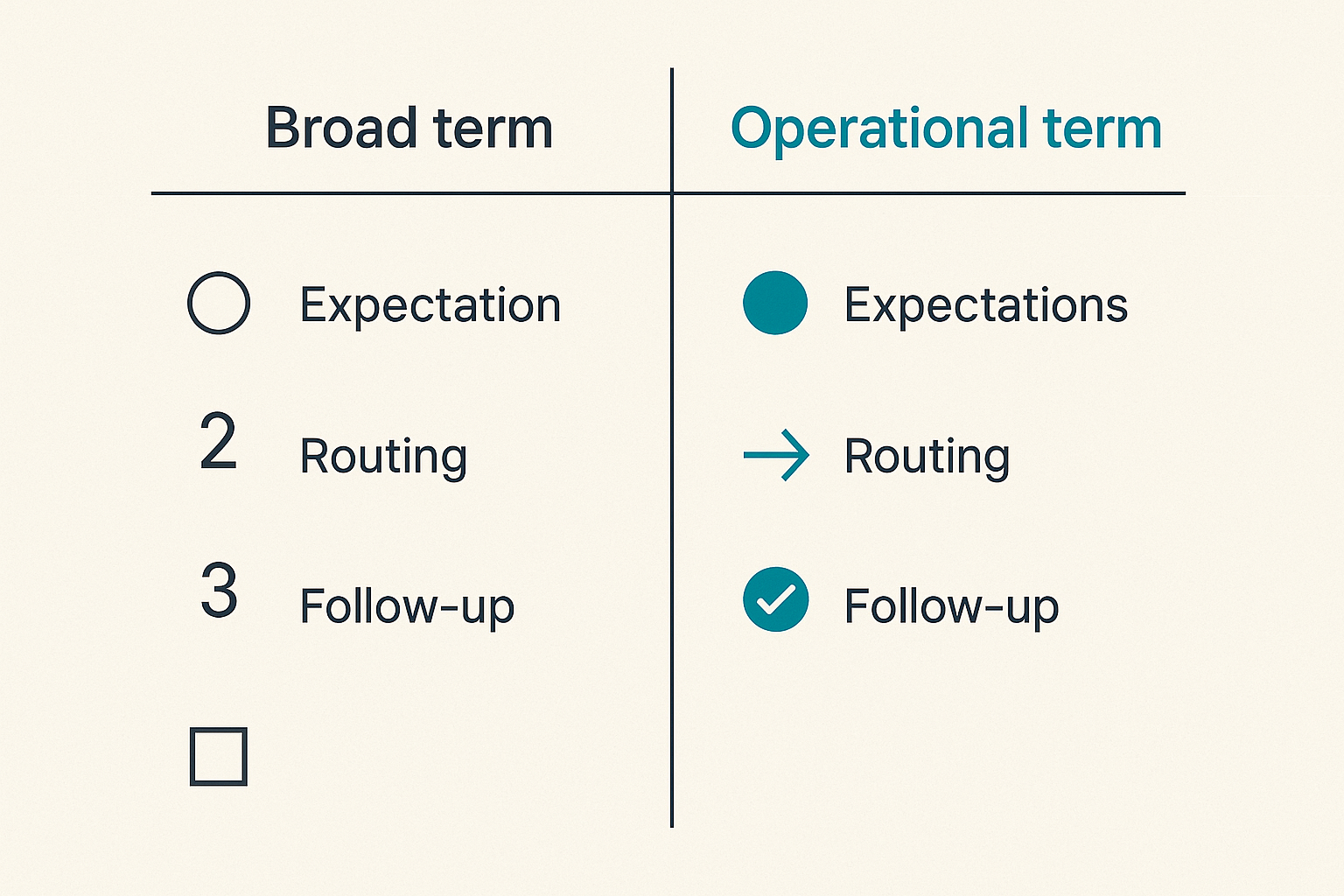
When community is too broad
Community is the broadest word and often the easiest to understand. It works when the main job is belonging, discussion, shared identity, or repeated participation.
But community becomes weak when the primary work is fulfillment. If someone needs a plumber, a ride, translation help, or a public workflow automated, they are not just seeking belonging. They need a path to a capable person and a way to know what happens next.
What breaks in practice is that broad community language creates broad posts. Broad posts create moderator labor. Moderator labor becomes the hidden operating model.
When network is more accurate
Network is often the better word when the system is about routing. It tells people that the value is in connections, not just membership.
A local network can include residents, freelancers, small businesses, volunteers, and civic partners without pretending they all participate the same way. It can also make room for weak ties. In many places, the useful connection is not your closest friend. It is the person two hops away who can actually solve the problem.
Related reading from our network: teams scaling software products face a similar naming-versus-operations trap, where growth language must map to release, support, and feedback systems in Scaling a Software Product.
When marketplace or directory creates risk
Marketplace and directory are useful words, but they create stronger expectations.
| Term | Best use | Implied promise | Common failure mode |
|---|---|---|---|
| Community | Belonging and participation | You are part of something | No clear next step |
| Network | Routing and relationships | We can help route needs and offers | Weak follow-up if no owner exists |
| Marketplace | Paid exchange | You can transact with confidence | Disputes, quality, and refunds become your problem |
| Directory | Searchable listings | You can find options | Stale data and no response tracking |
| Mutual aid | Solidarity and volunteer support | People help each other | Burnout if demand exceeds capacity |
| Hub | Central intake and coordination | Bring needs here | Bottleneck around the hub owner |
The practical question is not which term sounds best. It is which promise you can keep.
Map language to the actual coordination workflow
Capture the ask
A local network starts becoming operational when needs are captured in a way that can be routed. A vague post like need help soon is hard to match. A structured ask is easier.
A usable ask usually includes:
- What is needed.
- Where it is needed.
- When it is needed.
- Whether payment, volunteer help, trade, or referral is expected.
- What constraints matter.
- Whether the request can be public.
This does not mean every request needs a long form. It means the system needs enough context to avoid wasting everyone’s time.
Practical rule: If an ask cannot be routed without a private clarification thread, the intake format is doing too little work.
A public stream of current requests, like the d0rz asks page, makes the routing problem visible. It also shows why language matters: an ask is not a discussion prompt. It is a unit of work that should move toward a response.
Match to an offer
An offer is not just a profile. It is a capacity signal. It says who can do what, where, under which conditions, and with what response expectation.
The cleaner the offer language, the easier the match. For example, website help is different from general tech support. Same-day debugging is different from ongoing consulting. Translation help at a library is different from remote document review.
Matching does not need to be fully automated. In many local networks, human routing is still the right model. But even human routing improves when asks and offers use stable terms.
Close the loop
The loop is where many community efforts fail. Someone posts. Someone replies. Then the thread disappears.
Did the requester get help? Did the provider show up? Was the request withdrawn? Was there a safety issue? Should the offer be recommended again?
Closing the loop turns participation into memory. Without it, every week feels like starting over.
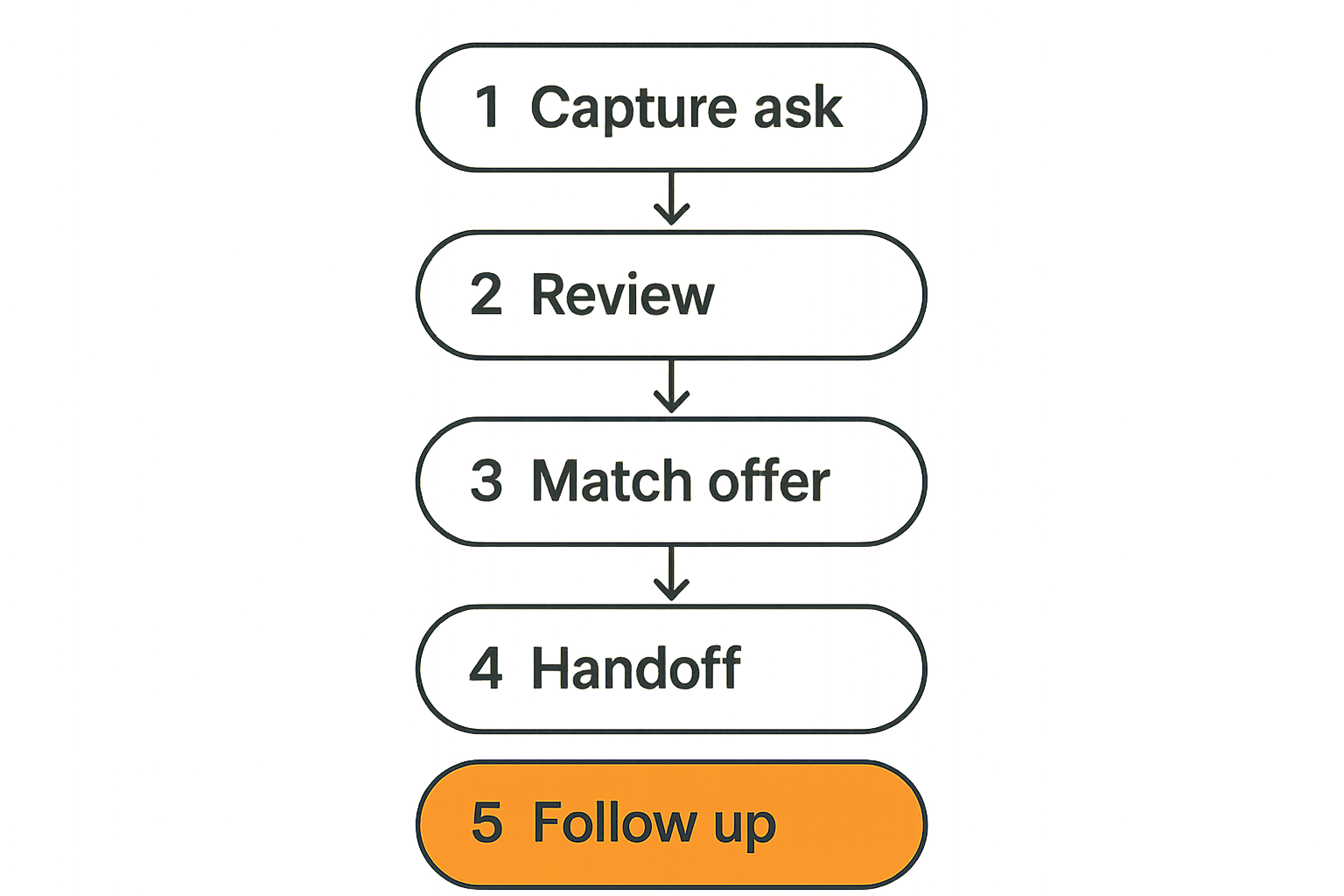
A minimal workflow looks like this:
- Ask submitted.
- Ask reviewed for clarity and safety.
- Relevant offers or people identified.
- Handoff made.
- Outcome recorded.
- Follow-up requested if unresolved.
That changes the conversation from engagement to throughput.
Trust rules matter more than naming
Visibility and privacy boundaries
Trust is not created by saying community more often. It is created by clear boundaries.
Local networks need to decide which asks are public, which are semi-private, and which should never be posted openly. A request for a ride to an appointment may need different handling than a request for help moving furniture. A request involving children, health, immigration, or conflict needs more care.
The word you choose should not hide these differences. If your synonym implies openness, but the actual work requires privacy, people will either overshare or stop participating.
Verification without bureaucracy
Verification is not one thing. It can mean identity, location, skill, availability, prior completion, organizer endorsement, or payment readiness.
The mistake teams make is jumping from no verification to heavy gatekeeping. That slows the network before it has enough signal. A better approach is tiered trust.
trust_level:
  new: can post low-risk asks
  known_local: can respond to standard asks
  vouched_provider: can receive routed referrals
  sensitive_work: requires organizer approval
Related reading from our network: security teams deal with the same problem in a stricter environment; Identity and Access Management for Cloud Security is a useful adjacent lens on roles, access, and escalation.
Escalation paths
Every network needs an answer to what happens when something goes wrong. Not a 40-page policy. A practical path.
Who handles a no-show? Who removes a harmful post? Who decides whether a provider can keep responding? Who contacts a requester if a need appears urgent?
Practical rule: If no one owns escalation, the most conscientious person becomes the unpaid incident response team.
Trust is operational. Naming can support it, but naming cannot replace it.
What breaks when the wrong community synonym drives the system
Engagement metrics replace fulfillment
If you call the system a community and optimize only for posts, comments, likes, event RSVPs, or newsletter replies, you may get visible activity without useful outcomes.
That is fine if the purpose is discussion. It is not fine if the purpose is local coordination.
Many teams end up celebrating participation because they cannot measure fulfillment. The practical question is: did the ask get a useful response?
Moderators become routers
When language is vague, moderators quietly become dispatchers. They rewrite posts, tag people, chase responses, calm misunderstandings, and remember who is reliable.
Some human routing is good. Hidden human routing is fragile. It depends on personal memory and burns out the people who care most.
A better system makes routing work explicit. Moderators should improve flow, not compensate for missing structure.
Members cannot tell what to do next
A weak vocabulary creates hesitation. People do not post because they are unsure if their need counts. Providers do not respond because they are unsure if paid offers are welcome. Organizers do not follow up because no status exists.
What fails is not goodwill. What fails is the action model.
Signs your wording is breaking the system:
- People ask if they are allowed to post normal needs.
- Providers apologize for mentioning paid services.
- Organizers manually explain the same categories every week.
- Old requests keep resurfacing because nobody knows if they were resolved.
- High-trust participants move coordination into private chats.
When useful work leaves the shared system, the network loses memory.
What works: an operating model for local networks
Start with asks and offers
The strongest practical vocabulary for local coordination is often asks and offers. It is plain, low-drama, and action-oriented.
An ask says: here is a need that could be routed.
An offer says: here is capacity that could be matched.
This pair avoids some of the baggage in community, marketplace, and directory. It does not force every interaction to be commercial. It also does not pretend every interaction is pure belonging.
The prior d0rz article on the local network operating model expands this pattern: participation becomes useful when asks, offers, trust, support, and follow-up are treated as operating components.
Use lightweight status states
Status is the difference between a post and a workflow. Local networks do not need enterprise software complexity, but they do need state.
A simple model might be:
| State | Meaning | Owner |
|---|---|---|
| New | Ask or offer has been submitted | Requester or provider |
| Needs clarity | More context is required | Router or organizer |
| Open | Ready for responses | Network |
| Matched | A likely handoff exists | Router |
| In progress | Someone is working on it | Requester and provider |
| Resolved | Useful outcome reached | Requester |
| Closed | No longer active | Organizer or requester |
This is where a community synonym becomes real. If you call the system a network, show the state of networked work. If you call it a marketplace, show transaction state. If you call it a hub, show intake and dispatch state.
Review unresolved work weekly
Local coordination decays if nobody reviews open loops. A weekly review can be short.
Ask:
- Which asks received no response?
- Which offers were useful but underused?
- Which categories are growing?
- Which handoffs failed?
- Which support questions repeated?
- Which participants need a direct check-in?
This review is where the operating model improves. Not in a brand workshop. Not in a new slogan. In the unresolved queue.
Implementation sequence for community synonym cleanup
Audit terms in the field
A community synonym cleanup should start with reality, not preference. Collect the words people already use.
Look at landing pages, forms, event descriptions, onboarding messages, moderator replies, social posts, group chats, partner decks, and actual participant language. You are looking for mismatches.
Common mismatches include:
- The website says community, but organizers say referral network.
- The form says request, but participants say job.
- The group says mutual aid, but most asks are paid services.
- The directory says verified, but nobody knows what was verified.
Related reading from our network: payments teams have a similar state problem, where checkout wording is only the surface and the real system is settlement, reconciliation, retries, and support in Crypto Payments in 2026.
Choose canonical terms and aliases
Pick a small set of canonical terms. Then allow aliases where they help people understand.
For example:
canonical_terms:
  ask:
    aliases: [request, need, job]
    definition: a specific need someone wants routed
  offer:
    aliases: [service, help, capacity]
    definition: a specific capability someone can provide
  local_network:
    aliases: [community, neighborhood network]
    definition: people and organizations connected for practical coordination
The canonical term keeps operations consistent. The aliases help with adoption.
Practical rule: Use one operational term in the database or workflow, but accept several human terms at the edge.
This matters for search, filtering, moderation, and analytics. If one person posts under gig, another under offer, and another under resource, you can still map them to a common workflow.
Ship changes in layers
Do not rename everything at once unless the system is tiny. People build habits around language.
A practical sequence:
- Identify the current terms causing confusion.
- Choose canonical terms for asks, offers, roles, and status.
- Update intake forms and post templates first.
- Update moderator scripts and onboarding messages.
- Add helper text where old terms are still common.
- Review support questions for two to four weeks.
- Remove or demote terms that keep causing wrong behavior.
The goal is not linguistic purity. The goal is fewer stalled requests, fewer awkward clarifications, and clearer ownership.
Metrics that prove the language is working
Track conversion from ask to response
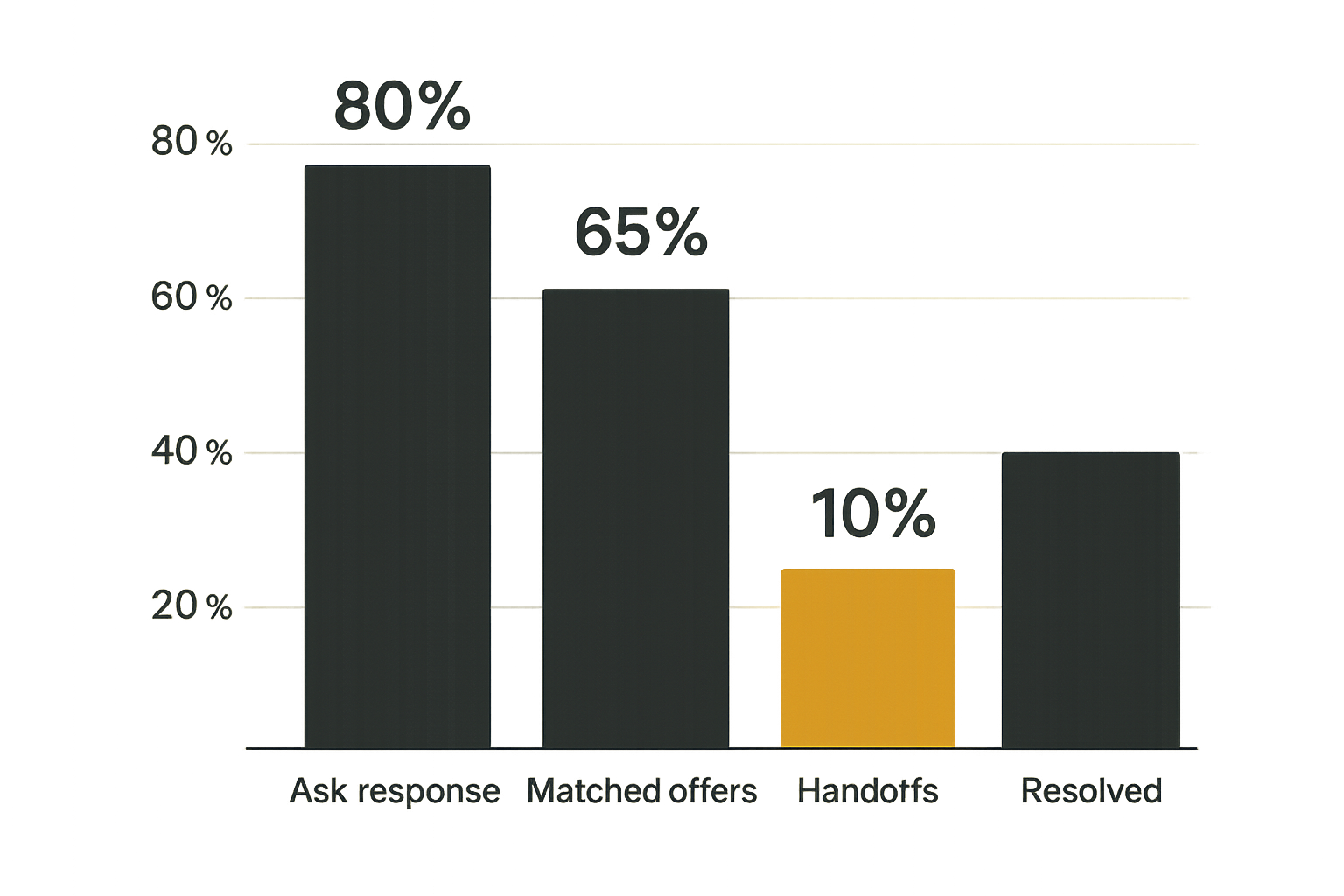
If the vocabulary is working, more asks should become useful responses. That does not mean every request is fulfilled. It means the system can move work.
Useful measures include:
- Percentage of asks with at least one relevant response.
- Percentage of asks matched to a known offer.
- Percentage of asks closed as resolved.
- Percentage closed because they were unclear, unsafe, out of scope, or expired.
Do not overfit too early. In a small local network, ten high-quality handoffs may matter more than a dashboard. But you still need enough tracking to know whether language is helping or hiding the work.
Measure time to useful handoff
Time matters because local needs often expire. A ride request, event setup need, broken website form, pet care gap, or delivery task has a window.
Measure the time between ask creation and useful handoff. Not just first comment. Not just first view. Useful handoff.
A useful handoff may be:
- A provider accepts the work.
- A router introduces two people.
- A requester receives a relevant option.
- An organizer closes the request as out of scope with a clear explanation.
The metric should reflect progress, not noise.
Watch repeated support questions
Repeated questions are vocabulary bugs. If people keep asking whether paid offers are allowed, your wording is unclear. If people keep asking whether a post is public, your privacy model is unclear. If providers keep asking how to respond, your workflow is unclear.
A simple support log can reveal where the language is failing.
| Repeated question | Likely vocabulary issue | Fix |
|---|---|---|
| Can I charge for this? | Offer types are unclear | Label paid, volunteer, trade, referral |
| Is this public? | Visibility is unclear | Show privacy state before posting |
| Who handles this? | Ownership is unclear | Add router or organizer role |
| Is this still open? | Status is unclear | Add open, matched, resolved, closed |
The best community synonym is the one that reduces clarification without reducing participation.
How d0rz.com fits this workflow
Where asks and offers become infrastructure
d0rz.com is built around a practical premise: local networks work better when asks, offers, trust, routing, and follow-up are visible enough to operate.
That does not require turning every neighborhood into a marketplace or every volunteer effort into software. It does require treating local coordination as more than posts in a feed.
An ask is a unit of demand. An offer is a unit of capacity. A local network is the routing layer between them. Once you see it that way, the word community becomes one possible description, not the whole system.
Product fit and non-fit
d0rz.com fits teams and independent operators who need a lightweight way to surface practical needs and local capacity. That includes community builders, freelance organizers, neighborhood connectors, small business helpers, and people coordinating local services.
It is not a fit if you only want a broadcast channel, a private chat group, or a purely content-driven audience. Those can be useful, but they do not solve the routing problem by themselves.
The practical fit is strongest when you care about questions like:
- What are people asking for right now?
- Who is offering relevant help?
- Which requests need follow-up?
- Which categories are underserved?
- Which trust boundaries matter before making a handoff?
That is the architecture beneath the naming decision.
Try d0rz.com
If your community synonym does not help people ask, offer, route, trust, and follow up, it is just a softer label. d0rz.com is for people building practical local networks where coordination has to work. Try d0rz.com.