

Local community network operations usually fail quietly. The chat is busy, the spreadsheet exists, the meetup had energy, and still the actual work depends on two or three people remembering who needed what.
Teams think the problem is participation. The real problem is routing. People may be willing to help, but the network has no reliable way to capture asks, match offers, verify trust, assign ownership, and close the loop.
That changes the conversation. Local community network operations is not a vibe, a newsletter, or a directory. It is a workflow architecture for turning local intent into dependable coordination.
The practical question is not whether your community cares. The practical question is whether the network can move a real request from signal to outcome without losing context, overloading volunteers, or making trust somebody’s private memory.
Table of contents
- Why local community network operations break in 2026
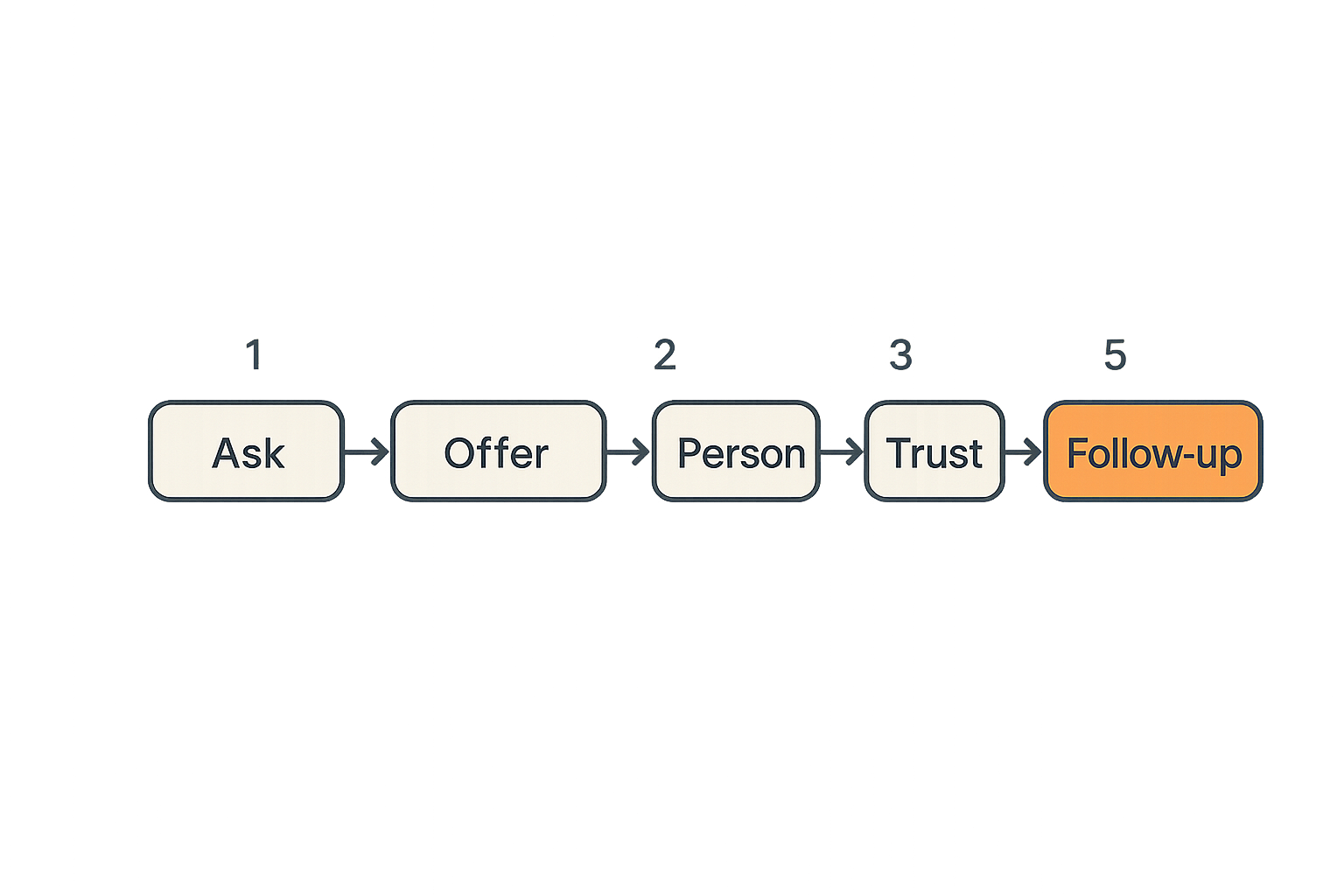
- The operating model: asks, offers, trust, routing, follow-up
- Map the network before you optimize it
- Build intake that produces usable signals
- Route work without becoming the bottleneck
- Trust and safety are operational controls
- Follow-up is the product
- What works: lightweight tooling and clear ownership
- What fails: common breakdowns in local community network operations
- Metrics that show whether the network is useful
- Where d0rz.com fits in the operating stack
- Closing checklist for local community network operations
Why local community network operations break in 2026
The calendar is full but the system is empty
Many local networks look active from the outside. There are events, posts, group chats, and introductions. But when someone needs a ride, a small business needs form debugging, a neighbor needs translation, or a freelancer needs a warm referral, the system often starts from zero.
The mistake teams make is treating activity as evidence of operational health. Activity is not throughput. A busy chat can still have no intake queue, no routing logic, no status tracking, and no record of what happened.
A useful way to think about it is this: the event calendar creates contact, but operations creates continuity. Without continuity, every request becomes a fresh manual search.
The ask-offer gap is an operations gap
Local networks usually have both demand and capacity. The problem is that they are stored in incompatible places. Asks are buried in DMs, comments, meeting notes, flyers, or memory. Offers are scattered across profiles, informal promises, and old introductions.
That gap is operational. It is not solved by telling people to participate harder. It is solved by designing a path where a request can be captured, classified, routed, accepted, completed, and reviewed.
For example, an offer like remote website and automation help for local businesses is much more useful when operators can route relevant small business asks toward it instead of hoping someone remembers it exists.
Why now means more routing, not more posting
In 2026, most communities are not short on channels. They are short on dependable pathways. People already receive too many messages, and more posting often increases noise faster than it increases outcomes.
What breaks in practice is the middle layer: the part between someone expressing need and someone accountable taking the next step. This is where local community network operations should focus.
Practical rule: If a request cannot be found, assigned, and checked later, it is not in the operating system. It is only in the conversation.
Related reading from our network: teams building software workflows face a similar coordination problem around local tools, credentials, and handoffs in Mac Tools for AI Agent Builders.
The operating model: asks, offers, trust, routing, follow-up
The five objects every network needs
A local network does not need a complex platform on day one. It needs five operational objects that people can understand and maintain:
- Ask: a specific request for help, connection, resource, or action.
- Offer: a specific capacity someone is willing to provide.
- Person or organization: the actor behind the ask or offer.
- Trust signal: context that affects whether a match should happen.
- Follow-up record: the outcome, status, or next step.
If these objects are not explicit, operators compensate with memory. That works until the network grows, the original organizer burns out, or the same five trusted people are asked to solve everything.
What a real coordination record contains
A useful coordination record is not long. It is structured enough to route.
| Field | Why it matters | Bad version | Better version |
|---|---|---|---|
| Need or capacity | Defines the unit of work | Help needed | Need two hours of QuickBooks cleanup |
| Location or scope | Prevents bad matches | Local | Oakland, remote ok |
| Time sensitivity | Drives priority | Soon | Before Friday at 3pm |
| Trust boundary | Protects people | Anyone can help | Referral preferred, no home visit |
| Owner | Creates accountability | Community | Maya owns next step |
| Status | Shows movement | Open | Routed, waiting on reply |
The practical question is not how much data you can collect. It is what minimum data lets a competent operator decide the next action.
Directory thinking versus operations thinking
Directories are useful, but they are passive. They answer who exists. Operations answers what should happen next.
| Approach | Primary question | Failure mode | Best use |
|---|---|---|---|
| Directory | Who is in the network? | Stale profiles and no ownership | Discovery and browsing |
| Group chat | Who sees this now? | Noise, repetition, missed asks | Fast broadcast |
| Operations queue | What needs action? | Requires discipline | Routing and follow-up |
| Relationship map | Who trusts whom? | Can become private knowledge | Sensitive matching |
A directory can support local community network operations, but it cannot replace them. The network needs state, not just names.
Map the network before you optimize it
Start with roles, not personalities
Most community builders start with personalities: the helpful person, the connector, the elder, the founder, the admin. That is understandable, but it makes the system fragile.
Start with roles instead:
- Intake owner: receives and cleans up asks and offers.
- Router: matches requests to possible helpers.
- Verifier: checks trust-sensitive details.
- Follow-up owner: confirms whether the match worked.
- Escalation owner: handles stuck, urgent, or unsafe cases.
One person can hold multiple roles early. The important part is that the roles are named. Once they are named, they can be handed off.
Separate capacity from willingness
Someone may be willing to help but unavailable this week. Another person may have capacity but only for paid work. Another may be available for errands but not childcare, money handling, or entering private homes.
The mistake teams make is flattening all willingness into a generic helper list. That creates bad matches and social pressure.
Track capacity in practical terms:
- What can this person actually do?
- What boundaries do they have?
- What locations or channels work?
- How often can they be routed requests?
- Do they want public visibility or operator-mediated referrals?
This is not bureaucracy. It is respect for people’s limits.
Find the hidden routers
Every local network has hidden routers. They are the people others text when something needs to happen. They know who is reliable, who is overwhelmed, who has a truck, who speaks Spanish, who can fix a website, and who should not be sent into sensitive situations.
You do not want to replace hidden routers. You want to reduce the load on them and capture enough context so the network does not collapse when they are unavailable.
Interview them. Ask what requests repeat, what introductions fail, and what information they wish they had before making a match. That is your initial operating model.
For adjacent context, Security Operations Local Networks makes the same point from a safety angle: response depends on ownership, context, and escalation, not just tools.
Build intake that produces usable signals
Bad intake creates support work
If intake is too vague, operators spend their time clarifying. If intake is too long, people do not submit. If intake is public by default, sensitive asks disappear into private channels anyway.
Good intake is short, structured, and honest about what happens next.
A practical ask form can start with:
- What do you need?
- Where is it relevant?
- When is it needed?
- Is this urgent, sensitive, or routine?
- Can this be public, semi-public, or operator-only?
- What would a successful outcome look like?
For offers:
- What can you help with?
- Where or how can you help?
- Free, paid, trade, or case-by-case?
- How often can the network route you requests?
- Are there types of requests you do not want?
Use categories without trapping people
Categories help routing, but they can also hide edge cases. Use broad categories first: errands, food, translation, business help, housing, childcare, transport, repairs, employment, forms, technology, mutual aid, introductions.
Then allow a short free-text description. Operators need both structure and nuance.
A simple classification model:
ask_type: business_support
location: bay_area_remote_ok
urgency: this_week
visibility: public_summary_operator_details
trust_level_required: referral_preferred
status: new
owner: unassigned
The status field matters because it turns a message into work. Without status, the network cannot distinguish new, routed, accepted, stuck, completed, and declined.
Minimum fields for asks and offers
Do not collect everything. Collect what changes routing.
Practical rule: Every intake field should either improve matching, reduce risk, or make follow-up easier. If it does none of those, remove it.
A public ask such as looking for small business automation projects in Winston Salem gives operators a concrete object to route around: location, type of work, and the kind of local business that would be a fit.
The same principle applies to non-technical help. A grocery run, translation request, or document help ask needs enough specificity to prevent endless clarification.
Route work without becoming the bottleneck
The routing sequence
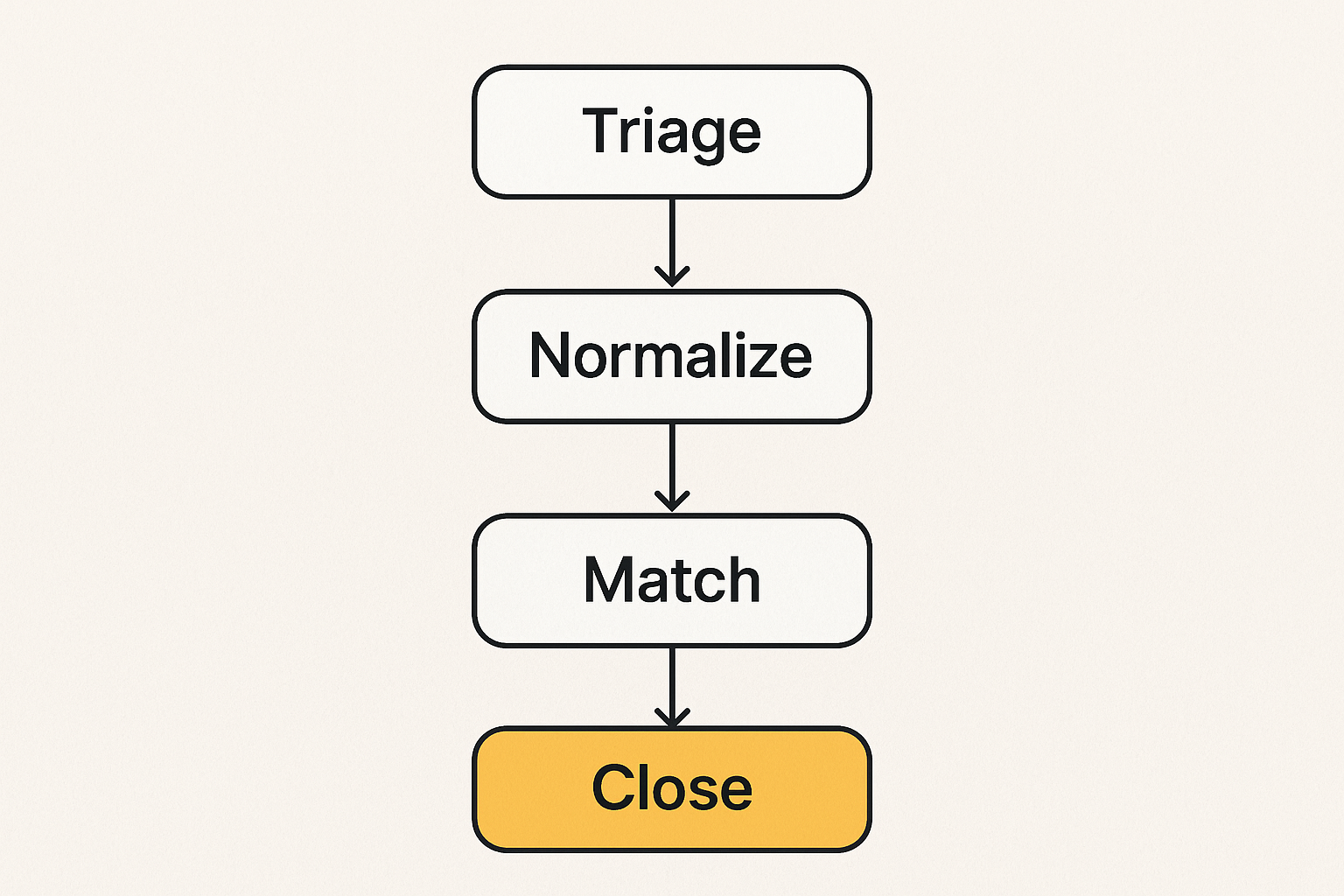
Routing should be boring. If every match requires improvisation, the network will not scale.
Use a simple sequence:
- Triage the request. Decide whether it is routine, urgent, sensitive, or out of scope.
- Normalize the record. Clean up the ask so another operator can understand it.
- Identify candidate offers. Search by category, location, trust boundary, and capacity.
- Check constraints. Confirm timing, payment expectations, safety needs, and communication preferences.
- Make the introduction or assignment. Be explicit about who owns the next step.
- Set a follow-up timer. Do not assume silence means completion.
- Close, reopen, or escalate. Record the outcome.
This is the difference between a friendly network and an operational one.
When automation helps and when it does not
Automation helps with reminders, duplicate detection, category suggestions, stale queue reports, and routing candidates. It should not blindly assign sensitive requests or override human trust judgment.
The mistake teams make is automating the social part before they have stabilized the workflow part. If the intake is messy, automation routes mess faster.
Related reading from our network: billing teams face similar workflow questions when choosing systems around state, controls, and reconciliation rather than demo screens; see Invoicing Software in 2026.
Escalation paths beat heroics
Escalation is not failure. Escalation is a designed path for work that cannot be safely or reliably handled by the normal queue.
Escalate when:
- The ask involves immediate safety risk.
- The request requires licensed professional support.
- The requester is vulnerable and details should not be broadly shared.
- No suitable helper responds within the expected time.
- A match reports discomfort, confusion, or boundary problems.
Heroics create dependency on individual judgment. Escalation paths create organizational memory.
Trust and safety are operational controls
Trust is contextual, not universal
Trust is not a badge you give someone forever. It depends on the task. A person may be trusted for public event setup but not for handling money. Someone may be excellent at translation but not appropriate for legal interpretation. A provider may be reliable for remote website help but not for urgent in-person work.
That changes the conversation. Trust signals should attach to context, not just identity.
Useful trust context includes:
- Who has worked with this person before?
- What kind of work was completed?
- Were there boundary issues?
- Is the next request similar or different?
- Is there a vulnerable person, money, home access, transport, or private data involved?
Design for small commitments first
Networks build trust through completed loops. Small commitments are safer and easier to verify than large ones.
Start with:
- A 20-minute call before a full project.
- A public meetup before a private home visit.
- A single errand before recurring support.
- A small paid task before a larger engagement.
- A referral-mediated introduction before direct contact.
Practical rule: Route the smallest useful next step, not the largest possible commitment.
This reduces risk and increases throughput. People are more likely to say yes when the commitment is clear.
What to do with sensitive asks
Sensitive asks need a different path. Do not force them into the same public flow as routine requests.
Create visibility levels:
| Visibility | Who can see it | Example |
|---|---|---|
| Public | Anyone in the network | Need a printer recommendation |
| Public summary | Public summary, private details | Need help with a benefits form |
| Operator-only | Trusted operators | Housing instability or safety concern |
| Referral-only | Specific vetted people | Home access, transport, childcare |
What breaks in practice is overexposure. People stop using the system if they feel the network makes private needs public. The system should let operators route without turning vulnerability into content.
Related reading from our network: social engineering programs deal with the same boundary between human trust, routing, and response in Social Engineering Security Definition.
Follow-up is the product
Closed loop beats good intentions
A local network earns trust when people see that requests do not disappear. Follow-up is not admin overhead. It is the proof that the network can coordinate.
A closed loop can be simple:
- Request received.
- Routed to a possible helper.
- Helper accepted or declined.
- Outcome confirmed.
- Notes captured for future routing.
If you skip the last two steps, you cannot learn. You also cannot tell whether your network is helping or merely introducing people.
Status states keep the network honest
Use a small set of states and enforce them.
statuses:
  - new
  - needs_clarification
  - routed
  - accepted
  - in_progress
  - waiting
  - completed
  - declined
  - escalated
  - closed_no_match
Status should be visible to operators and, where appropriate, to the person who submitted the ask. Visibility reduces duplicate messages and prevents the classic problem where three people are chasing the same thing while another ask has no owner.
Use follow-up to improve routing
Follow-up data should change future decisions. If a provider declines three requests because they are too busy, reduce routing frequency. If a category repeatedly has no offers, recruit capacity. If a certain kind of ask requires clarification every time, improve intake.
This is where operations becomes compounding. Every closed loop improves the next match.
What works: lightweight tooling and clear ownership
Use tools that expose state
The best tool is the one your operators will actually maintain. But it must expose state. A chat thread alone is weak because it hides ownership and aging. A spreadsheet can work if it has owners, statuses, and review cadence. A purpose-built network tool can work if it supports asks, offers, visibility, and follow-up.
What works:
- A shared queue for active asks.
- A searchable list of offers and capacity.
- Status fields that operators update.
- Notes with permission boundaries.
- Weekly review of stale or sensitive items.
What fails:
- One admin account everyone uses.
- Private DMs as the system of record.
- Public comments for sensitive routing.
- Endless tags with no operating rules.
- Tools chosen because they look polished but do not support follow-up.
Assign operators, not moderators
Moderators manage behavior in a channel. Operators move work through a system. Both matter, but they are not the same role.
An operator asks:
- What is the next action?
- Who owns it?
- What context is missing?
- What risk exists?
- When do we check back?
This mindset shift is critical. The network is not just a place where people talk. It is a coordination layer for real outcomes.
Make handoffs visible
Handoffs are where local networks leak. Someone says they will connect two people, then gets busy. A volunteer accepts an errand, then cannot make it. A business owner wants help, but the provider never gets the details.
Make handoffs explicit:
- Person A owns clarification by Tuesday.
- Person B owns introduction after clarification.
- Person C owns follow-up two days later.
- If no reply, the ask returns to the queue.
A visible handoff prevents silent failure.
What fails: common breakdowns in local community network operations
Everything becomes a group chat
Group chats are useful for fast broadcast, but they are poor systems of record. Important asks scroll away. New members lack context. Sensitive details spread too widely. Operators cannot easily answer what is open, stale, or completed.
The fix is not to ban chat. The fix is to separate conversation from state. Let chat create signals, then move real work into a queue.
Trust lives in one person’s head
If one organizer knows who is safe, reliable, overcommitted, or difficult, the network has a continuity risk. That person becomes the router, escalation path, memory bank, and emotional support layer.
This is how communities burn out their best operators.
Capture trust notes carefully and minimally. Avoid gossip. Record operational facts: completed task, no-show, boundary issue, prefers paid work, good with elder support, needs advance notice.
No one owns the unresolved queue
The unresolved queue is where credibility dies. These are the asks that were acknowledged but not completed. They create more damage than asks never submitted, because the person expected help.
Create a weekly unresolved review:
- What is still new?
- What is waiting on requester response?
- What is waiting on helper response?
- What needs escalation?
- What should be closed honestly as no match?
Practical rule: Closing no match is better than pretending the network is still working on something nobody owns.
Metrics that show whether the network is useful
Measure movement, not vanity
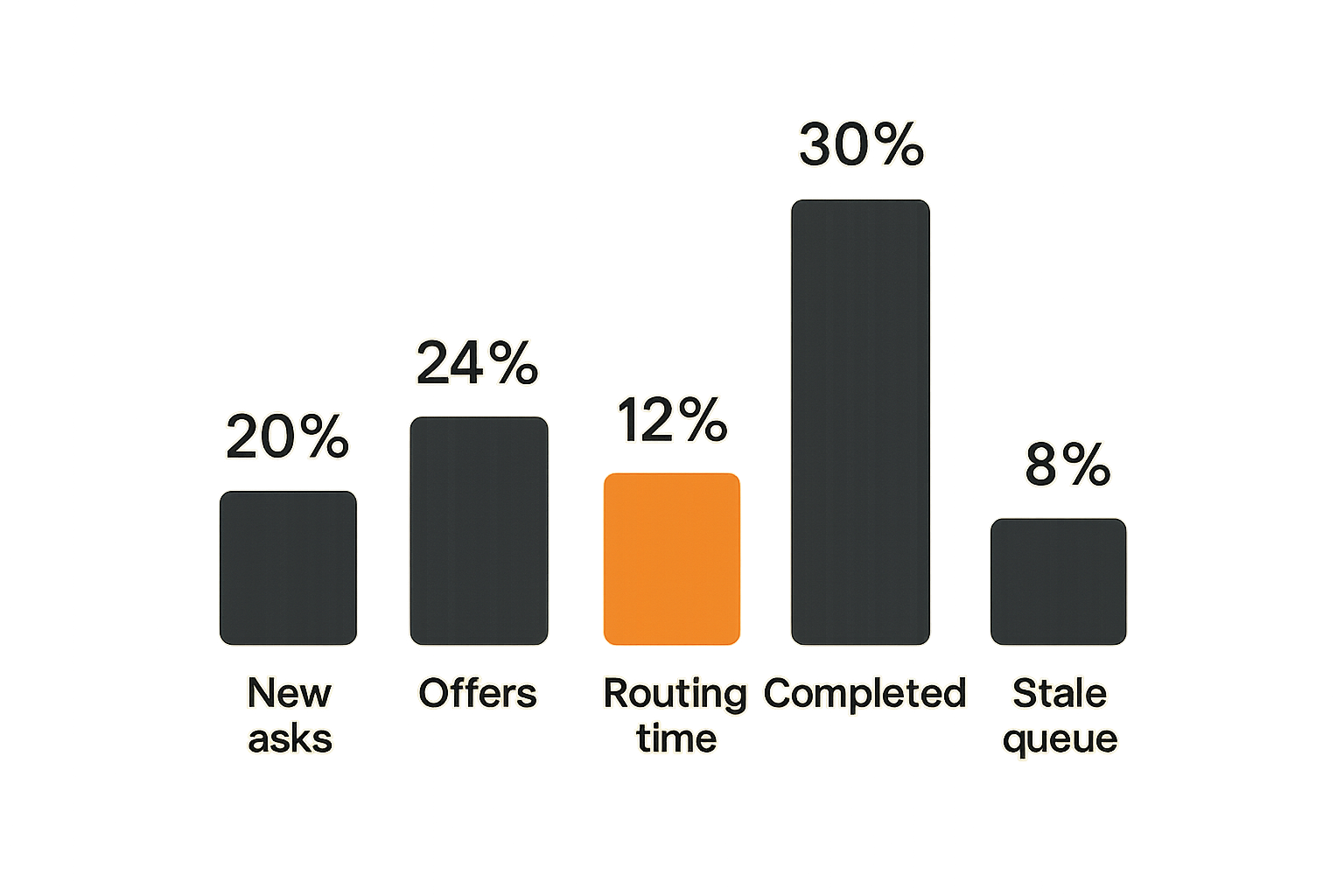
Follower count, member count, and event attendance are not useless, but they do not prove operational value. Measure movement through the system.
Useful metrics include:
| Metric | What it tells you | Watch for |
|---|---|---|
| New asks per week | Demand entering the system | Sudden spikes or silence |
| Offers available | Capacity by category | Categories with no coverage |
| Time to first routing | Responsiveness | Slow triage |
| Match acceptance rate | Fit quality | Bad routing or overused helpers |
| Completion confirmation | Outcome reliability | Introductions without follow-up |
| Stale queue count | Operational debt | Burnout or unclear ownership |
Do not turn metrics into performance theater. Use them to decide what to fix next.
A simple weekly operations review
Run a 30-minute weekly review with whoever operates the network.
Agenda:
- Review new asks and offers.
- Assign owners for unowned items.
- Check routed items with no response.
- Escalate sensitive or stuck cases.
- Close completed or no-match items.
- Identify one intake or routing improvement.
- Recruit capacity for one undercovered category.
This cadence is more valuable than a quarterly strategy session. Local network operations improve through small corrections.
Signals that require intervention
Some signals mean the system needs operator attention:
- Same people receive every request.
- Asks are public but offers are private.
- Helpers accept but do not complete.
- Requesters stop replying after intake.
- Sensitive asks bypass the system.
- Operators disagree on what status means.
- No-match outcomes are never recorded.
These are not moral failures. They are design feedback.
Where d0rz.com fits in the operating stack
A place for real asks and offers
d0rz.com is built around a simple operating idea: local networks need visible, routable asks and offers. Not vague profiles. Not endless announcements. Concrete units of coordination.
That makes it useful as part of a local community network operations stack. An operator can point people toward public asks and offers, then use those records as routing objects in the broader workflow.
The prior operating model in Community Building d0rz goes deeper on why local networks work better when they treat asks, offers, trust, support, and participation as connected infrastructure.
Use public signals without exposing everything
Not every detail belongs in public. But public summaries are powerful. They let capacity find need. They also make the network legible to people who are not already insiders.
For example, an ask can publicly describe the kind of workflow automation needed while keeping non-sensitive details only in follow-up. An offer can describe availability and boundaries without exposing personal contact information everywhere.
The practical question is what needs to be visible for routing, and what should stay operator-mediated.
Product fit for local operators
d0rz.com fits best when your network already has real activity but lacks reliable objects to coordinate around. If your current system is a mix of DMs, spreadsheets, and memory, creating structured asks and offers gives operators something to route, review, and improve.
It is not a replacement for judgment. It is a way to reduce the amount of judgment wasted on finding context that should have been captured already.
Closing checklist for local community network operations
What to implement this week
If you are starting from a messy but active network, do not redesign everything. Implement the smallest operating layer that creates state.
This week:
- Create one shared ask queue.
- Create one searchable offer list.
- Define five statuses.
- Assign one intake owner and one follow-up owner.
- Review unresolved asks once per week.
- Add visibility levels for sensitive requests.
- Record no-match outcomes honestly.
That is enough to change behavior.
What to avoid scaling too early
Do not scale branding before routing. Do not scale events before follow-up. Do not scale automation before intake quality. Do not scale public posting before trust boundaries.
The mistake teams make is expanding the surface area of the network before stabilizing the operating core. More members will not fix an unclear queue. More channels will not fix missing ownership. More enthusiasm will not fix unresolved requests.
The operator’s standard
The standard for local community network operations is simple: a real ask should have a place to land, a way to be routed, a person accountable for the next step, a trust-aware path, and a recorded outcome.
When that exists, the network becomes more than a crowd. It becomes coordination infrastructure.
Try d0rz.com
d0rz.com is for people building practical local networks where asks, offers, trust, routing, and follow-up matter. Try d0rz.com.